Celebrating 35+ Years

Which Wallpaper Hides Wall Imperfections Best?
A wall can look perfectly fine at noon and reveal every old patch, shallow dent, and uneven seam once the lamps come on. If you are asking which wallpaper hides wall imperfections, the short answer is textured, patterned, and matte-finish wallcoverings tend to be the most forgiving. The better answer is that the right choice depends on what is happening underneath the surface - and how much visual presence you want the wall to have.
Wallpaper is not a substitute for repairing active damage, loose drywall, or moisture problems. It can, however, turn minor cosmetic flaws into a nonissue while adding the color, depth, and character paint alone often cannot provide.
The best wallpaper for hiding wall imperfections
For everyday scuffs, small nail holes, faint patch marks, and slightly uneven walls, look first at wallpapers with texture and movement. Grasscloth, cork, embossed vinyl, paintable wallpaper, and designs with layered pattern all help break up light across the wall. That diffused effect makes a surface read as intentional rather than imperfect.
A smooth, solid, light-colored paper does the opposite. It reflects light evenly, so subtle bumps and seams can become much easier to see. This does not mean you have to choose a dark room or a busy print. It simply means the wallpaper should have enough dimension, variation, or pattern scale to keep the eye from settling on every flaw.
Textured vinyl: practical and highly forgiving
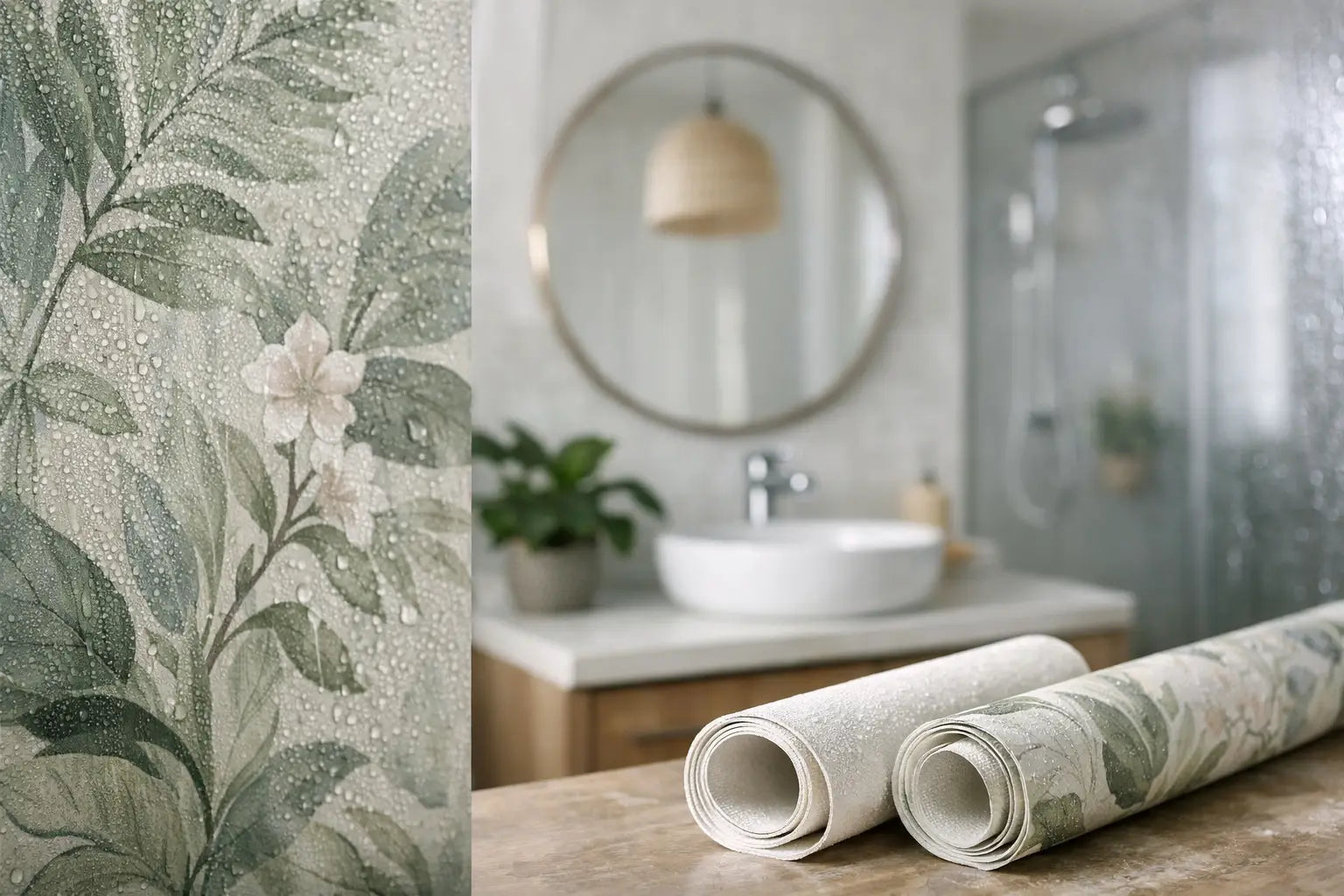
Textured vinyl wallpaper is one of the strongest choices for walls that need a little grace. Its raised surface can soften the appearance of minor irregularities, and its durable finish is especially useful in busy areas such as hallways, entryways, kitchens, laundry rooms, and powder rooms.
Look for linen-like embossing, plaster effects, woven textures, grasscloth-inspired designs, or subtle geometric relief. A medium-tone colorway gives you extra flexibility, since it is less likely than stark white or very deep solid color to highlight uneven spots. Vinyl is also generally easier to wipe clean, making it a practical finish for family homes.
Grasscloth and natural woven looks: beautiful with built-in variation
Natural grasscloth brings organic texture to a room, and its horizontal and vertical fibers naturally distract from small wall imperfections. Color shifts, visible seams, and variations in the weave are part of its character, not defects. On the right wall, that handmade look can create a rich, tailored backdrop for a dining room, bedroom, office, or sitting area.
There is a trade-off. Natural grasscloth can be more delicate than vinyl and may stain if exposed to splashes or heavy moisture. It is also not designed to make major wall defects disappear. If your wall is generally sound but visually imperfect, though, its texture can be remarkably flattering.
For a more carefree alternative, consider a vinyl or non-woven wallpaper printed to resemble grasscloth. You get a similar woven appearance with more durability and often easier installation and maintenance.
Embossed and paintable wallpaper: a smart reset for rough surfaces
Paintable wallpaper is an excellent option when you want texture but prefer to choose your own final paint color. Popular embossed styles include beadboard, linen, tin-tile-inspired patterns, and classic raised designs. Once painted, the relief catches light softly and gives the wall a finished architectural quality.
This category works particularly well for older homes, renovated basements, stairwells, and walls with light surface inconsistency. It is also a good choice when the rest of the room calls for a quieter backdrop rather than a decorative print. Keep in mind that paintable wallpaper still needs a stable, reasonably smooth surface. Raised texture can disguise small flaws, but it cannot bridge cracks or hold together failing drywall.
Medium-scale patterns: the most versatile visual camouflage
Pattern is one of the easiest ways to redirect attention. Florals, botanicals, abstract prints, traditional damasks, and softly layered geometrics all help disguise minor wall unevenness when they have enough movement in the design.
Medium-scale patterns are often the sweet spot. Very tiny, precise motifs can make a wall look busier without hiding much. Extra-large geometrics, stripes, and tightly aligned repeats can draw attention to walls that are out of plumb because the pattern itself creates a strong reference line. A relaxed botanical or painterly abstract is usually more forgiving than a crisp grid.
Color matters here, too. A print with two to four related tones creates depth without making the room feel chaotic. Think muted blue and cream, olive and warm neutral, clay and blush, or charcoal softened with beige. These combinations add visual interest while remaining easy to live with.
Which wallpaper hides wall imperfections in each room?
The room changes the answer because lighting, moisture, traffic, and viewing distance all matter. A wallpaper that looks beautifully forgiving in a low-light dining room may not be the best fit beside a steamy shower or in a bright, narrow hallway.
Living rooms and bedrooms
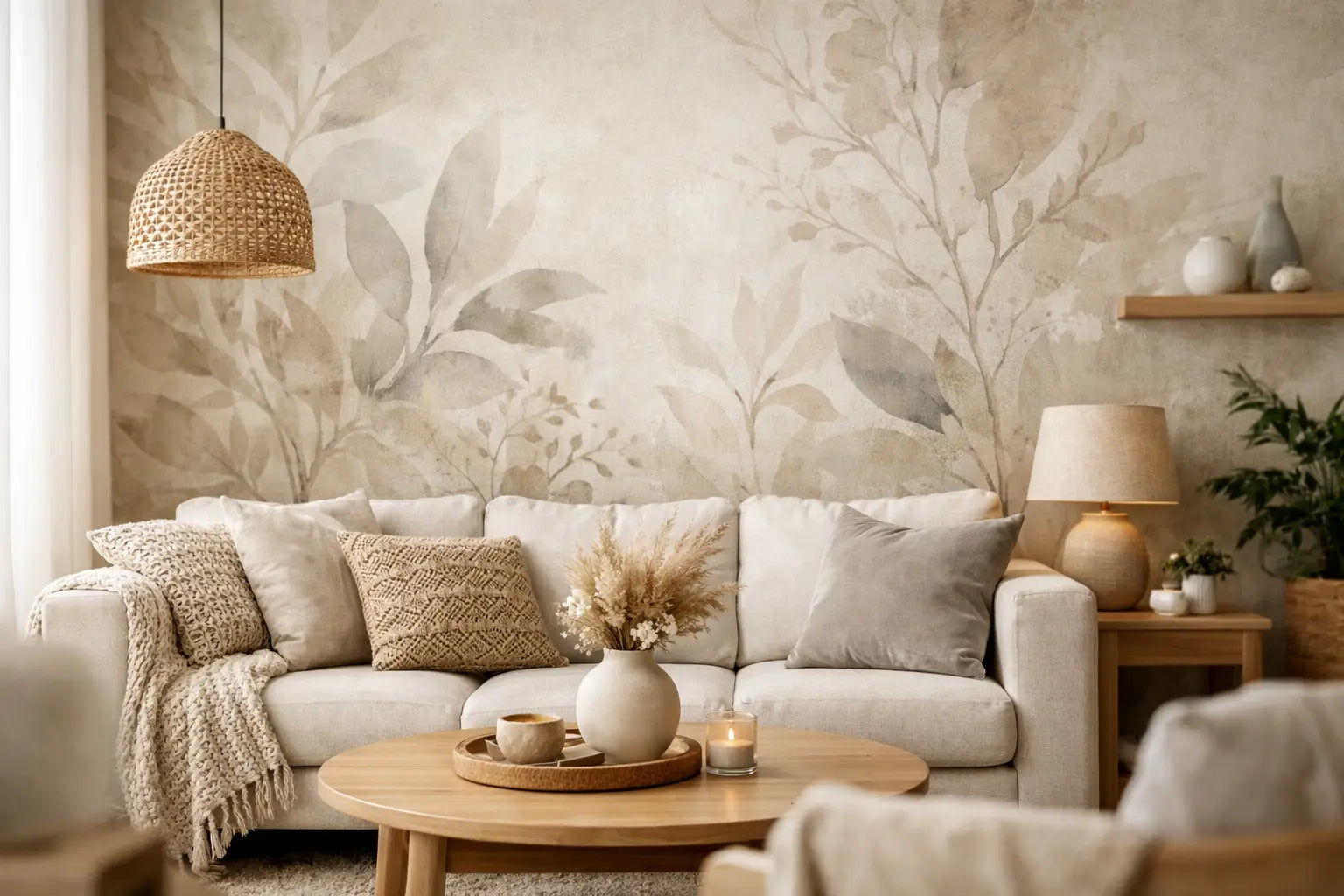
These are ideal rooms for grasscloth, non-woven botanicals, painterly murals, and layered traditional prints. Because people tend to view these walls from a comfortable distance, you have more freedom to use rich texture or a larger-scale pattern. Warm neutrals, soft greens, inky blues, and tonal prints can make an imperfect wall feel deliberately atmospheric.
Dining rooms and home offices
A woven texture, cork wallcovering, or classic damask can add polish while minimizing small surface flaws. These rooms often benefit from a more tailored look, so choose a design with natural variation rather than a perfectly flat solid. If the wall receives strong side lighting from windows, sample the material first. Raking light can make even minor texture more visible.
Powder rooms, kitchens, and high-traffic spaces
Vinyl is often the better choice in these hardworking spaces. Select an embossed finish or a pattern with visual movement, then pair it with good lighting and a well-primed surface. A small powder room is also a wonderful place for a bolder print, which can shift attention from a less-than-perfect wall to the room's overall personality.
Wallpaper choices that can reveal flaws
Not every beautiful wallpaper is a good camouflage wallpaper. If your walls are imperfect, be cautious with glossy finishes, metallic papers with a smooth ground, minimalist solids, and high-contrast stripes. These can emphasize dents, uneven patches, or crooked corners because they reflect light or create crisp visual lines.
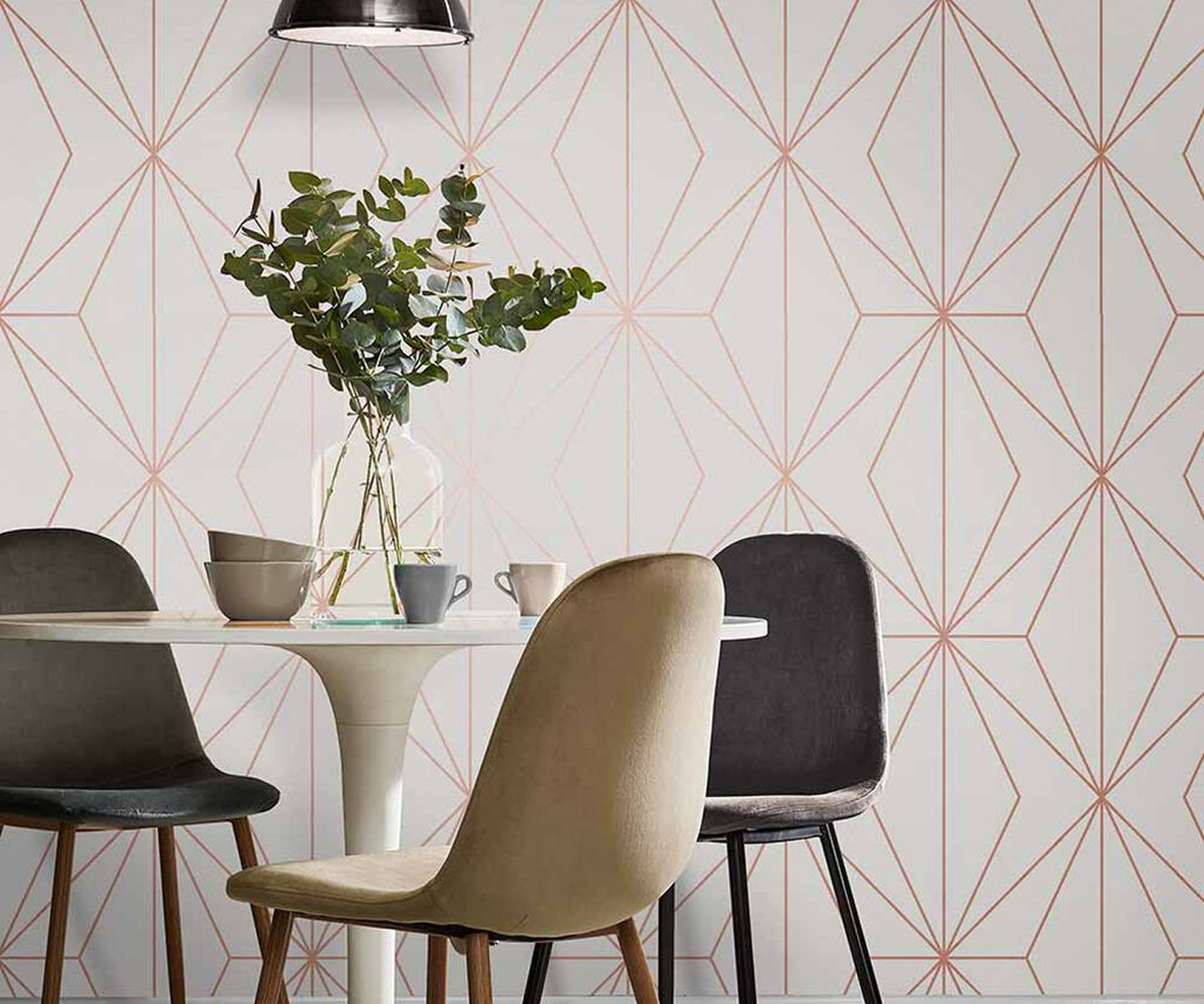
Fine, symmetrical geometrics deserve a closer look before ordering. They can be stunning on well-prepared walls, but alignment matters. If the wall bows or slopes slightly, the repeat may make that condition more obvious. This is where a sample is invaluable: place it on the wall at different times of day and look at it from across the room as well as up close.
Prep still matters, even with forgiving wallpaper
The most effective wallpaper works best when the wall is clean, dry, and stable. Fill nail holes and shallow dents, sand away rough patch edges, and remove any peeling paint. Old wallpaper should be fully removed or properly prepared before a new installation. If there is a crack that continues to widen, a soft or damp area, mold, or a loose drywall seam, address that problem before covering it.
A quality primer is worth the effort. It helps create a consistent surface, supports adhesion, and makes future removal far less stressful. For heavily patched walls, an installer may recommend a wall liner before the decorative paper. Liners can provide a smoother foundation, especially when the issue is widespread texture rather than a few isolated marks.
Professional installation is also worth considering for natural materials, mural panels, large repeats, and walls with challenging corners. The right installer can assess whether a flaw needs more prep and position seams thoughtfully so the finished room feels polished.
How to choose with confidence
Start by identifying the flaw rather than judging the wall as simply “bad.” Is it a few shallow dents? Choose texture. Is it uneven paint patches? A tonal print or woven look can help. Is the wall slightly wavy? Avoid strict stripes and grids in favor of an organic pattern. Is there moisture or damage beneath the surface? Repair first, then select the wallpaper.
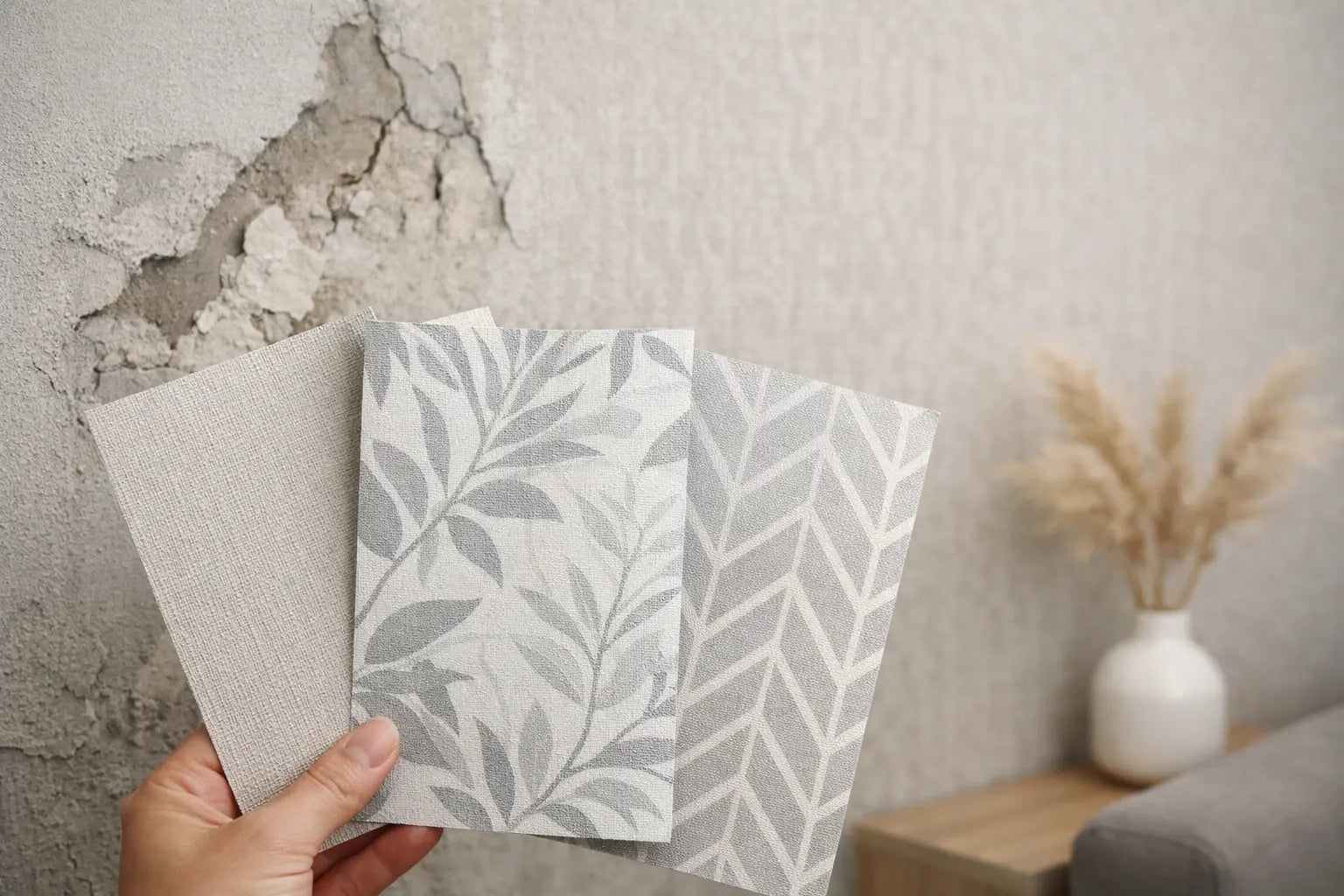
Samples make this decision easier. Hold them against the wall, check them under daylight and evening lighting, and stand back several feet. The wallpaper should make you notice its color, texture, and mood first - not the wall underneath it. At Wallpaper and Stuff, seeing materials in person can be especially helpful when comparing the tactile difference between a natural weave, embossed vinyl, and a printed non-woven design.
The best wallcovering does more than conceal a few imperfections. It gives the room a point of view. Choose a texture or print you genuinely want to see every day, prepare the surface thoughtfully, and those once-annoying walls can become one of your home's most distinctive features.