Celebrating 35+ Years

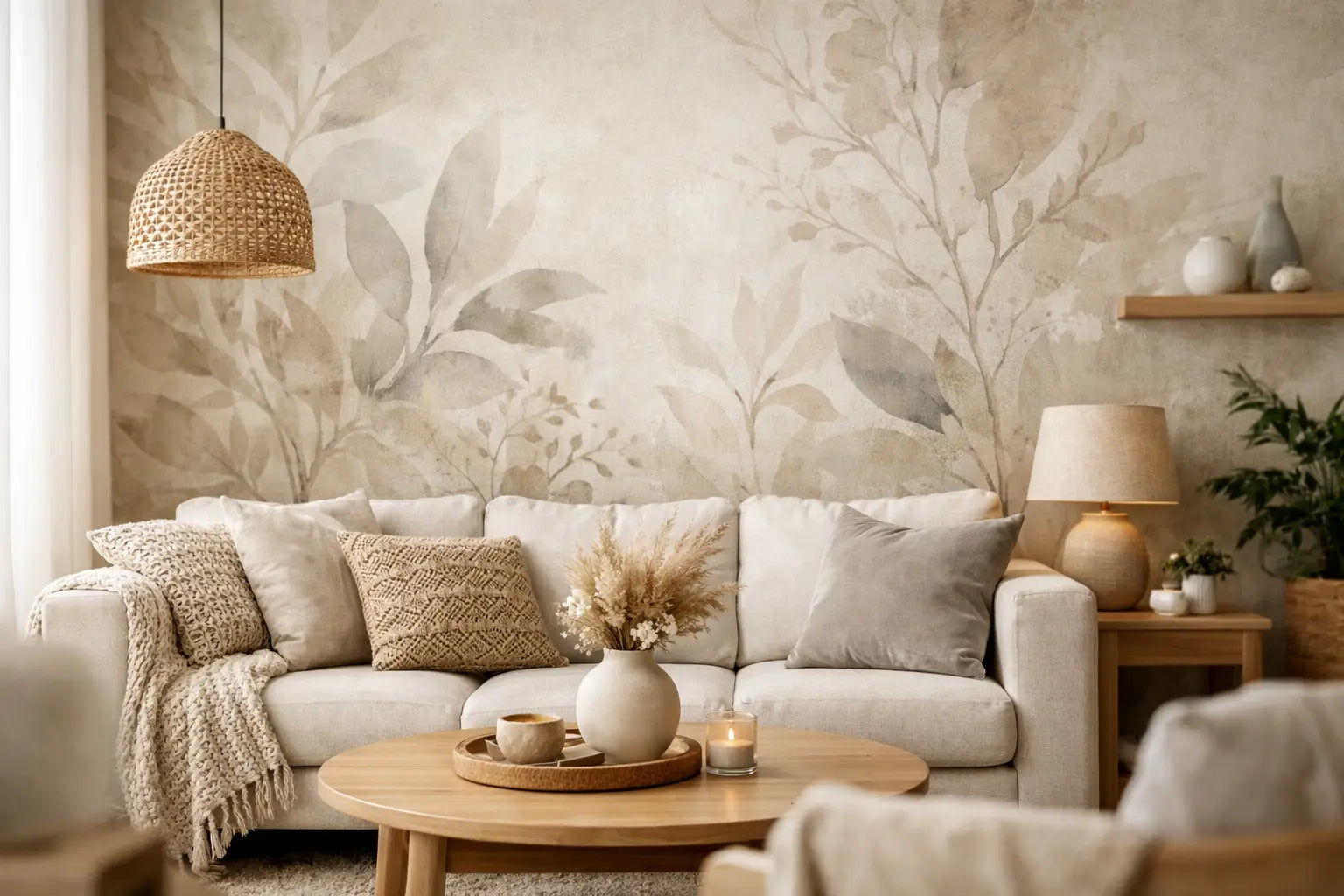
Wallpaper for Living Rooms That Feels Like Home
A living room has to do more than look good for a photograph. It hosts slow weekends, visiting family, movie nights, and the everyday moments that make a house feel personal. The right wallpaper for living rooms gives those routines a more considered backdrop, whether you want one striking focal wall or a fully layered, collected look.
Paint can refresh a room, but wallpaper adds something paint rarely can: pattern, dimension, and tactile character. A quiet linen-look wallcovering can make a new room feel established. A leafy botanical can bring energy to a room with simple furnishings. The best choice is not necessarily the boldest one. It is the one that suits the room's light, scale, and the way you want to live in it.
Start With the Feeling You Want to Create
Before narrowing by color or pattern, decide what the room needs. Is it a bright, casual gathering space that could use warmth? A formal room that needs a stronger point of view? A compact living room that feels flat or unfinished? Wallpaper can solve each of these challenges, but the approach changes.
For a calm, timeless room, consider subtle stripes, tonal botanicals, soft geometric prints, or grasscloth-inspired textures. These designs give the eye something to notice without taking over the furniture, art, and textiles. They work especially well when your sofa is a solid neutral or when you want the room to evolve easily with new pillows and accessories.
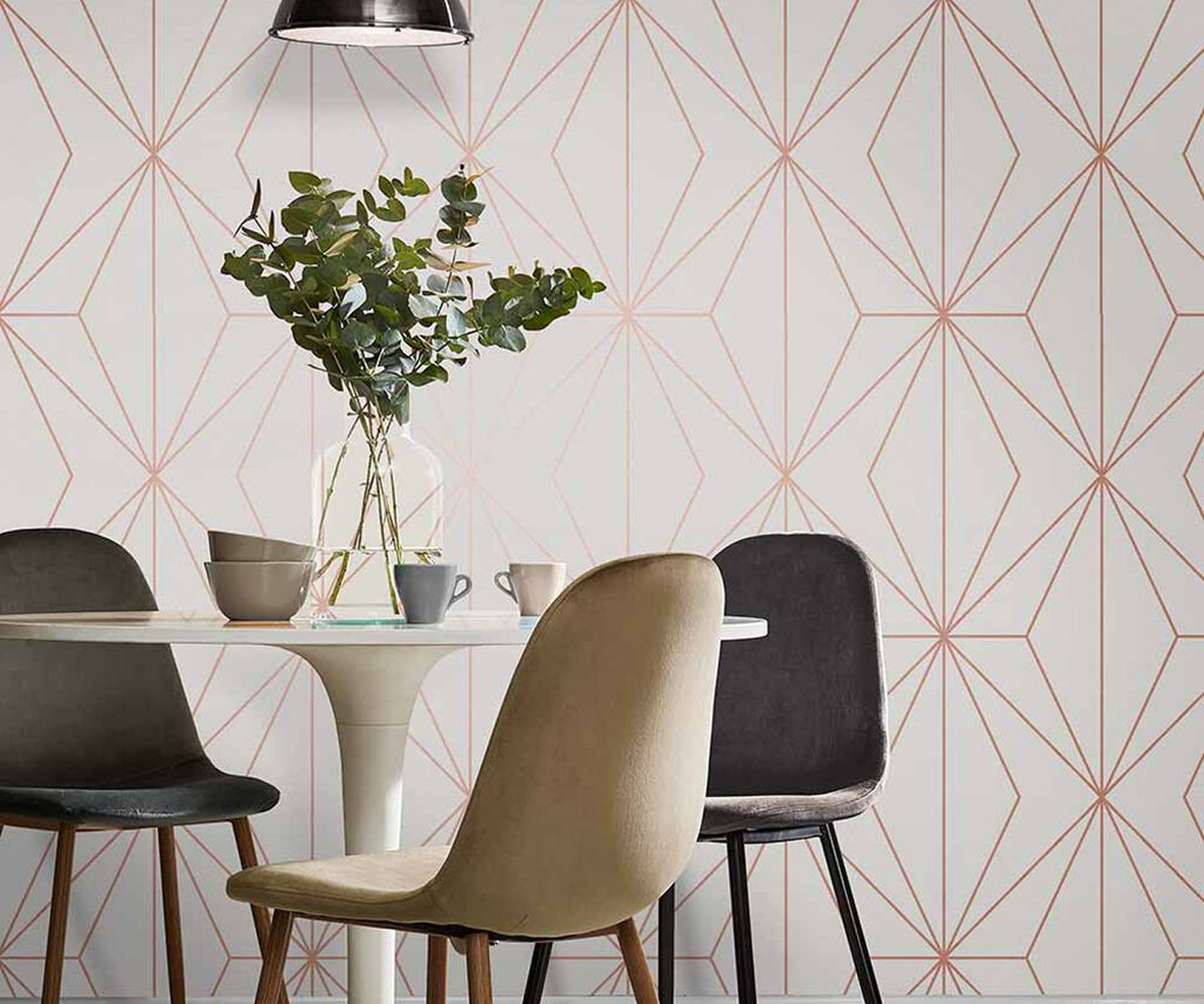
If the living room needs personality, look to larger-scale florals, scenic prints, graphic geometrics, or richly colored traditional patterns. These are natural choices for a fireplace wall, the wall behind a sofa, or a room with architectural details worth emphasizing. A confident pattern can also bring order to an open-plan home by giving the seating area a clear identity.
Choose Wallpaper for Living Rooms by Light and Scale
Natural light changes wallpaper more than many shoppers expect. A warm cream can look soft and inviting in a sunlit room yet turn more muted in a north-facing space. Deep blue, forest green, charcoal, and chocolate can create a beautiful enveloping effect, but they need enough daylight, layered lamps, or light-reflective furnishings to avoid feeling heavy.
This does not mean a small or darker living room must stay pale. Dark wallpaper can make a compact room feel intentional and cozy, particularly when it continues across all four walls. The trade-off is that it creates atmosphere rather than openness. If your goal is to make the room appear larger, a light-ground pattern with a gentle vertical movement or an airy organic motif is often a better fit.
Pattern scale deserves equal attention. Large-scale designs are not reserved for large homes. In a smaller room, a big pattern can actually feel cleaner than a tiny, busy repeat because it reads as a deliberate design statement. What matters is how much of the pattern will be visible around windows, doors, built-ins, and furniture. A room with many interruptions may be better served by a texture, small repeat, or less directional print.
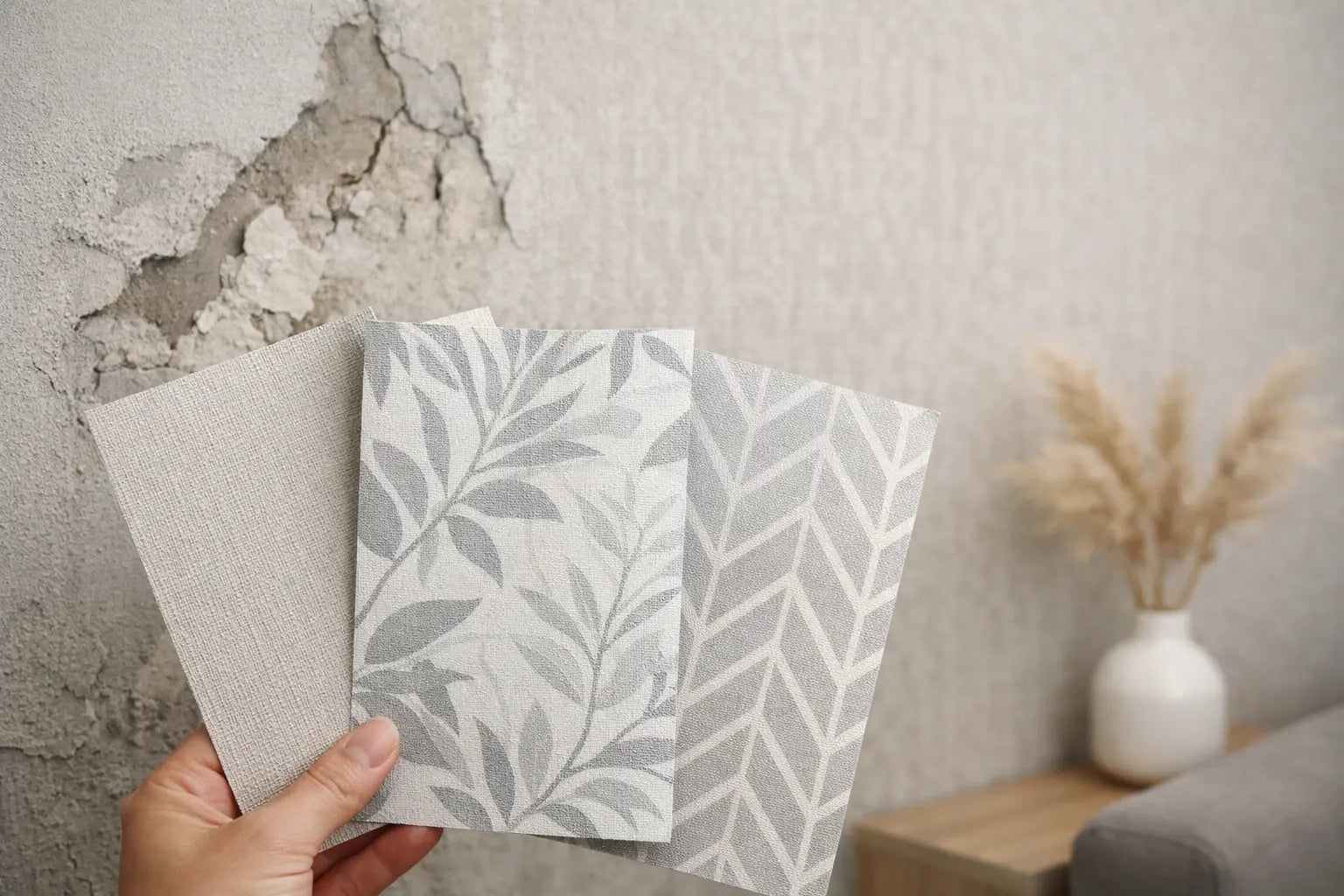
Samples are the practical step that turns a promising choice into the right choice. View them on the intended wall in morning light, afternoon light, and evening lamplight. Hold the sample beside the sofa fabric, flooring, trim color, and curtains. A pattern that looks perfect on a screen may read cooler, warmer, larger, or more textured once it is in your home.
Match the Material to Your Room and Routine
Wallpaper is a design decision, but material also affects the finished experience. Living rooms are generally less demanding than kitchens or baths, which opens the door to a wide range of decorative finishes.
Non-woven and vinyl for easy everyday style
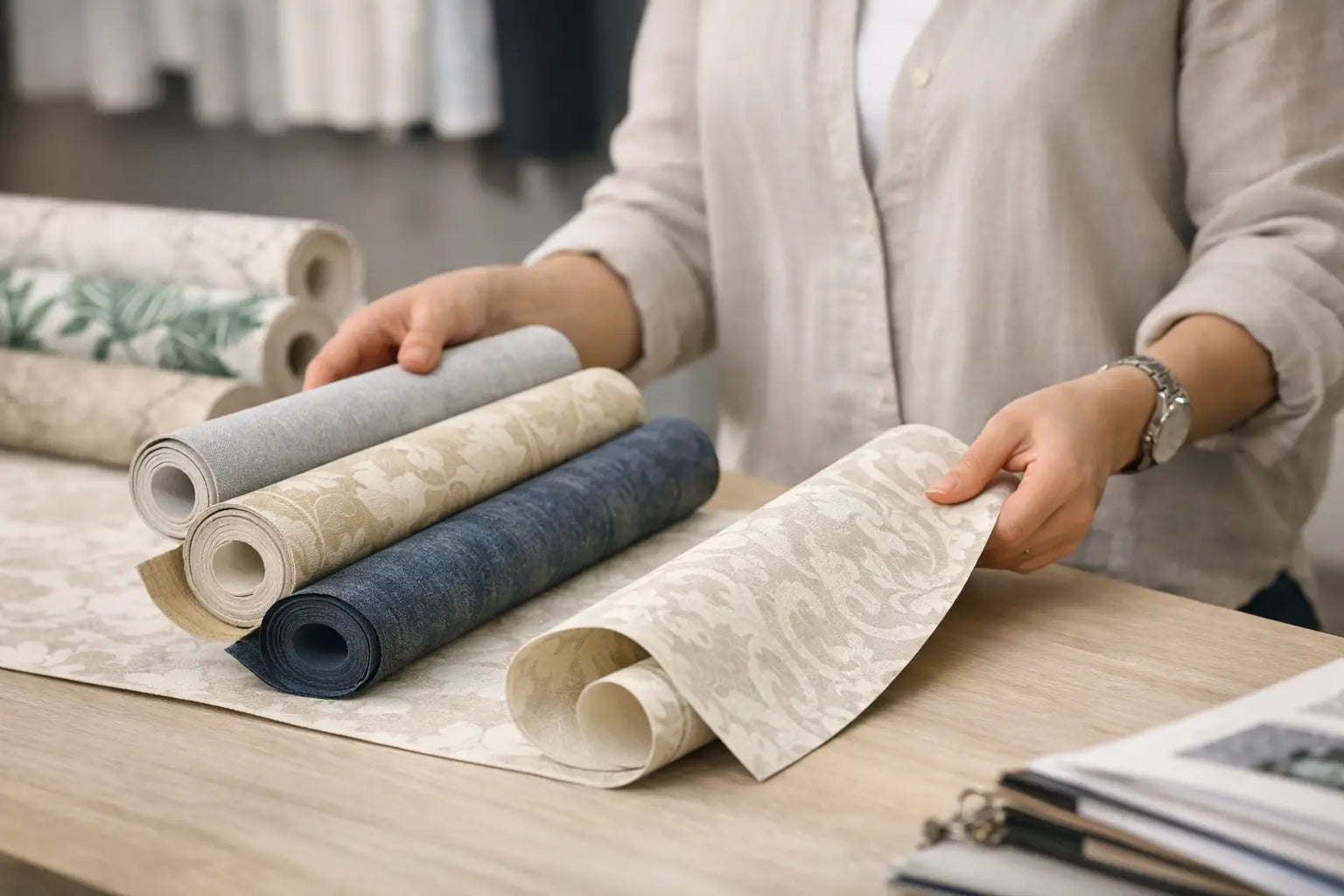
Non-woven wallpaper is a popular choice for its polished look and straightforward installation process. Many non-woven options are paste-the-wall, which can simplify hanging and future removal. It is well suited to homeowners who want pattern throughout the room without choosing a heavily textured surface.
Vinyl wallcoverings offer added durability and cleanability, making them practical for family rooms, homes with pets, or spaces where little hands and everyday traffic are part of life. Today’s vinyl designs can deliver convincing woven, linen, grasscloth, and printed looks, so practicality does not have to mean sacrificing style.
Grasscloth, cork, and other textured finishes
Natural grasscloth brings warmth that is difficult to duplicate. Its fibers, tonal variation, and visible seams are part of its appeal, giving a room an artisanal, layered quality. It is particularly effective behind a sofa, around a fireplace, or across a formal sitting room where texture can be appreciated up close.
Natural materials come with trade-offs. Color variation is expected, seams are visible, and matching a repeat is not the goal in the way it is with a printed wallpaper. Grasscloth is also less forgiving in high-contact areas. For shoppers who love the look but want more consistency or easier maintenance, a grasscloth-inspired vinyl can be a smart alternative.
Cork, flock, crystal beaded styles, and other specialty wallcoverings make a stronger decorative statement. They are often best used where their finish can be seen and enjoyed rather than hidden behind large furniture. Think of them as an architectural layer, not simply a pattern on the wall.
Decide Between an Accent Wall and a Fully Papered Room
An accent wall is a natural starting point when you are introducing wallpaper for the first time. The wall behind the sofa is often the easiest choice, especially if it is uninterrupted and visible upon entering the room. A fireplace wall can work beautifully too, provided the pattern will not compete with a dramatic mantel, heavily veined stone, or a large television.
A fully papered room creates a more complete, tailored effect. It is ideal for living rooms with strong trim, balanced windows, or a separate footprint from the rest of the house. A softer all-over print, grasscloth, or tonal texture can make four walls feel sophisticated rather than overwhelming. In an open concept area, full-room wallpaper can also define the living zone without adding a physical divider.
If you are uncertain, let the pattern guide the decision. Bold, high-contrast prints often shine on one focal wall. Low-contrast textures and medium-scale repeats have the flexibility to cover an entire room. There are exceptions, of course. A dramatic print wrapped around all four walls can be extraordinary when the room is small, the lighting is intentional, and the furnishings are edited.
Build a Cohesive Room Around the Wallpaper
Wallpaper should not force every other choice in the room to match. Instead, pull two or three colors from the design and repeat them with restraint. A botanical print might inspire olive velvet pillows, warm wood tables, and ivory upholstery. A blue-and-cream geometric could pair with natural linen drapery, antique brass, and a muted rust accent.
Pay attention to undertones. Cool gray upholstery can clash with a wallpaper that carries creamy beige or yellow-green notes, even if both seem neutral at first glance. Bringing samples together prevents these near-misses and helps you see which elements should be warmed up, softened, or simplified.
Texture matters as much as color. Smooth printed wallpaper looks especially good with nubby upholstery, woven shades, wood, and ceramics. A richly textured grasscloth benefits from cleaner fabrics and fewer competing small patterns. The goal is contrast with connection: enough variation to make the room interesting, with a shared color story to keep it settled.
Plan Before You Order
Measure every wall carefully, including height and width, then account for windows, doors, and the wallpaper’s pattern repeat. Pattern matching creates waste, and larger repeats typically require more material than a plain or random-match design. Ordering the right quantity from the beginning is far easier than trying to locate a matching run later.
Also consider installation early. Straight walls and simple patterns may suit an experienced DIY installer, but specialty materials, large repeats, stair-step architecture, and rooms with many corners can benefit from a professional hanger. Good installation protects the investment and makes the finished pattern look as intentional as the choice itself.
For homeowners who want to compare colors and textures in person, Wallpaper and Stuff’s Smyrna showroom offers the advantage of seeing wallcoverings at full scale, not just as a small image. Whether you are drawn to a quiet neutral texture or a vivid print, start with a sample, live with it for a few days, and let the room tell you what belongs there.