Celebrating 35+ Years

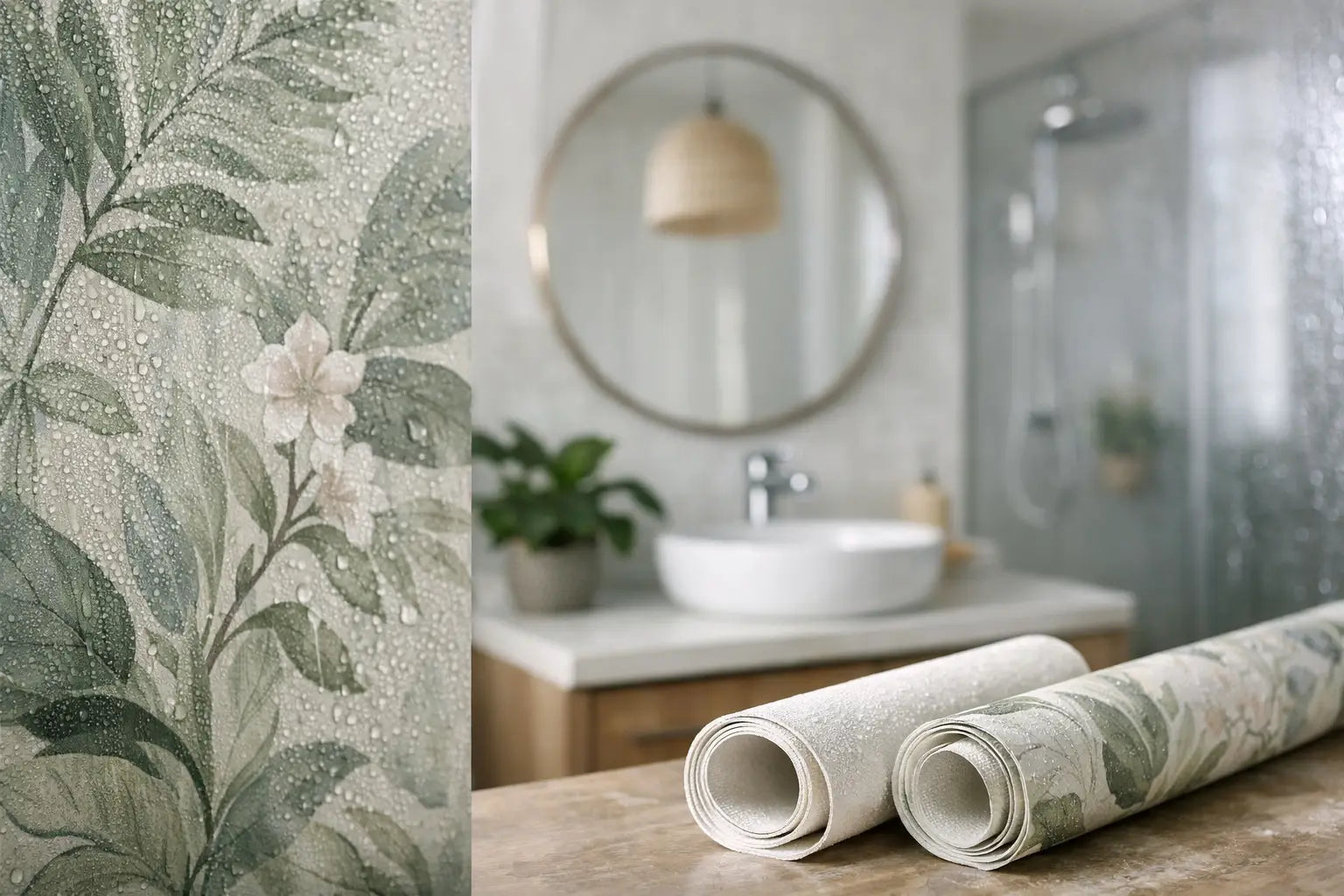
What Wallpaper Works for Humid Rooms Best?
A beautiful powder room print or a fresh laundry-room wall can make a practical space feel fully considered. But before choosing a pattern, ask what wallpaper works for humid rooms in real-life conditions, not just in a perfectly styled photo. Moisture, temperature swings, and limited ventilation can challenge both the wallcovering and the adhesive behind it.
The right choice is usually a washable vinyl wallcovering installed over properly prepared walls. Still, humidity is not one-size-fits-all. A well-ventilated half bath has very different needs than a compact bathroom used for daily hot showers. Matching the material to the room is what helps a wallpapered wall stay polished for years.
What Wallpaper Works for Humid Rooms?
For most humid spaces, solid vinyl wallpaper is the most dependable option. Vinyl has a nonporous surface that resists moisture better than natural fibers and uncoated paper. It is also typically washable, making it a practical choice for bathrooms, laundry rooms, mudrooms, and kitchens where occasional splashes, steam, fingerprints, and everyday cleaning are part of the picture.
Vinyl-coated wallpaper can also work well in rooms with moderate humidity. It offers a protective surface layer over a paper or non-woven backing, with more decorative options than many commercial-looking vinyl styles. The trade-off is that it may not stand up as well as solid vinyl in a bathroom that gets consistently steamy.
For a guest powder room with no shower, your options can open up considerably. A quality non-woven wallpaper may be a lovely choice, especially when the room has good airflow and the walls remain dry. Non-woven materials are stable, breathable, and often easier to install and remove than traditional paper wallpapers. They are not, however, the first choice for a shower bath with poor ventilation.
Always check the manufacturer’s care and installation information for the specific wallpaper you love. “Washable” and “scrubbable” are useful ratings, but they do not mean every wallcovering is designed for heavy steam or direct water exposure.
Start With the Room, Not the Pattern
Humidity comes from more than showers. A bathroom may have a powerful exhaust fan and a window, while a laundry room may hold damp clothing, a utility sink, and little circulation. Kitchens add another layer with cooking steam and grease. Before narrowing your search by color or motif, take an honest look at how the room behaves.
A powder room is generally the easiest place to use wallpaper. There is often no tub or shower, so moisture is limited. This is a wonderful setting for expressive botanical prints, bold geometrics, textured looks, or even more delicate materials, provided the walls are sound and dry.
A full bathroom requires more care. If hot showers regularly fog the mirror and leave condensation on the walls, choose a vinyl wallcovering and make ventilation part of the project. Run the exhaust fan during showers and for at least 20 to 30 minutes afterward. If the fan is weak, noisy, or ineffective, improving it may matter more than upgrading the wallpaper itself.
Laundry rooms and kitchens tend to fall in the middle. A washable vinyl or vinyl-coated wallpaper is an appealing balance of durability and design. Keep wallpaper away from the immediate splash zone behind a utility sink or range where possible, and use a backsplash, tile, or another water-resistant surface where frequent direct contact with water is expected.
Materials to Choose Carefully in Humid Spaces
Some of the most beautiful wallcoverings are not suited to high-moisture rooms. Natural grasscloth, cork, paper-backed fabrics, flocked papers, and crystal-beaded styles bring remarkable texture and dimension, but moisture can cause staining, lifting seams, uneven color changes, or damage to delicate surfaces.
Grasscloth deserves special consideration because it is often selected for its warm, tailored texture. In a dry dining room, bedroom, or entry, it can be exceptional. In a shower bathroom, it is a risk. Even a well-ventilated powder room calls for thoughtful placement away from the sink and a clear understanding that natural fibers have natural variations and are less forgiving of moisture.
Paintable wallpaper can be practical in some bathrooms, especially when paired with a bathroom-rated paint. Yet it is not automatically the best answer for high humidity. The finished result depends on the wallcovering material, the paint system, and careful seam work. If you want a low-maintenance surface with a strong pattern, vinyl remains the simpler choice.
Installation Makes the Difference
Even the best wallcovering can fail if it is installed over damp drywall, old adhesive residue, or walls with active mildew. Wallpaper should never be used to hide a moisture problem. Fix leaks, repair water damage, and address mold before starting any decorating project.
Walls should be clean, dry, smooth, and properly primed with a wallpaper primer suited to the wallcovering and surface. Primer helps create a consistent base, improves adhesion, and makes future removal more manageable. In bathrooms, pay close attention to corners, ceiling lines, and areas near fixtures, where condensation can settle.
Use the adhesive method specified by the manufacturer. Some non-woven papers are paste-the-wall, while others require paste on the paper. Vinyl products may call for a particular adhesive to handle their weight and conditions. Skipping those instructions can lead to curling edges or seams that open over time.
Seams are especially important in humid rooms. They should be firmly but gently rolled according to the manufacturer’s guidance, without squeezing excess paste onto the face of the wallpaper. Wipe away adhesive immediately with a clean damp sponge if the wallcovering allows it. Once the room is in use, consistent airflow is the best protection against moisture lingering at those seams.
Style Choices That Work Hard and Look Beautiful
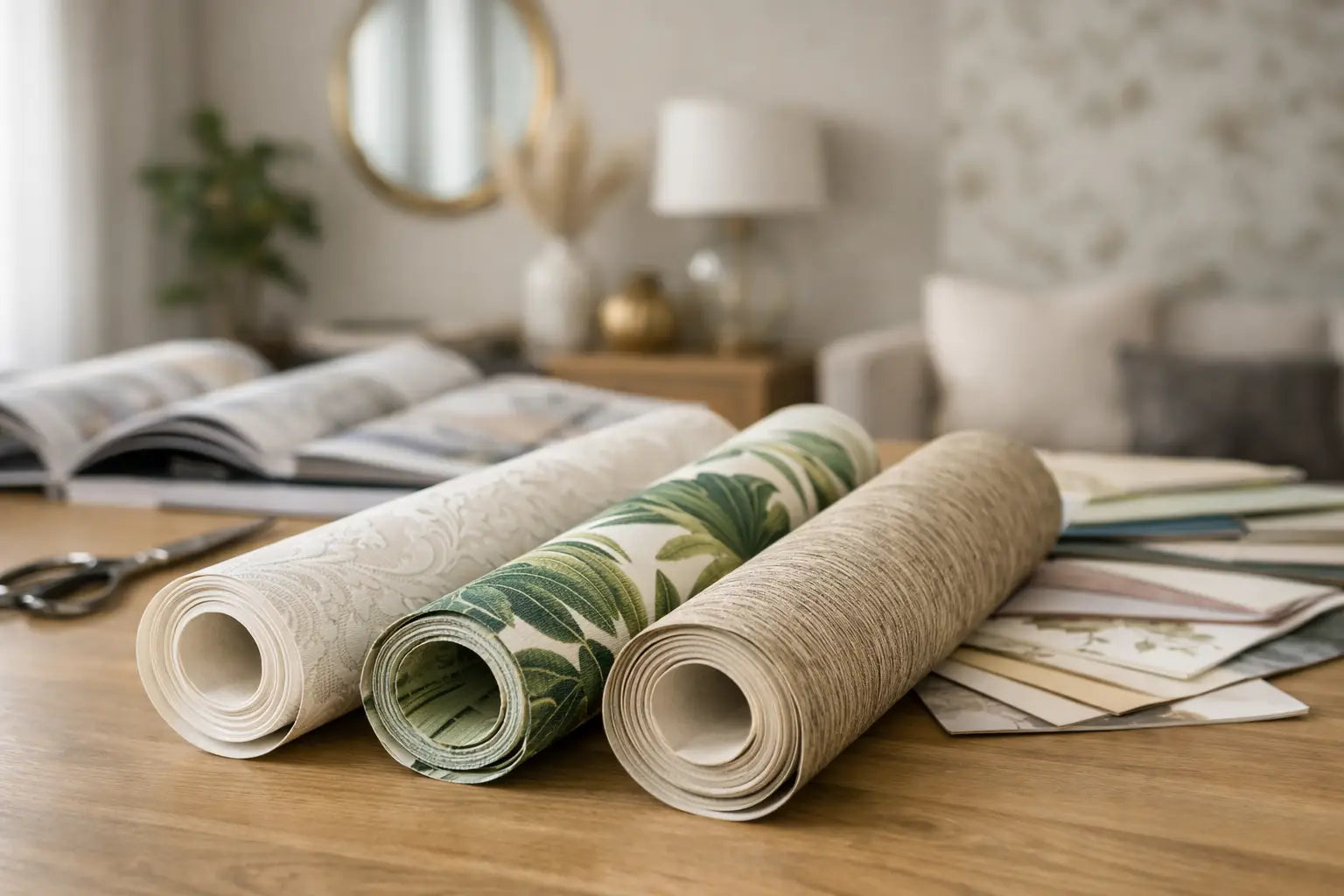
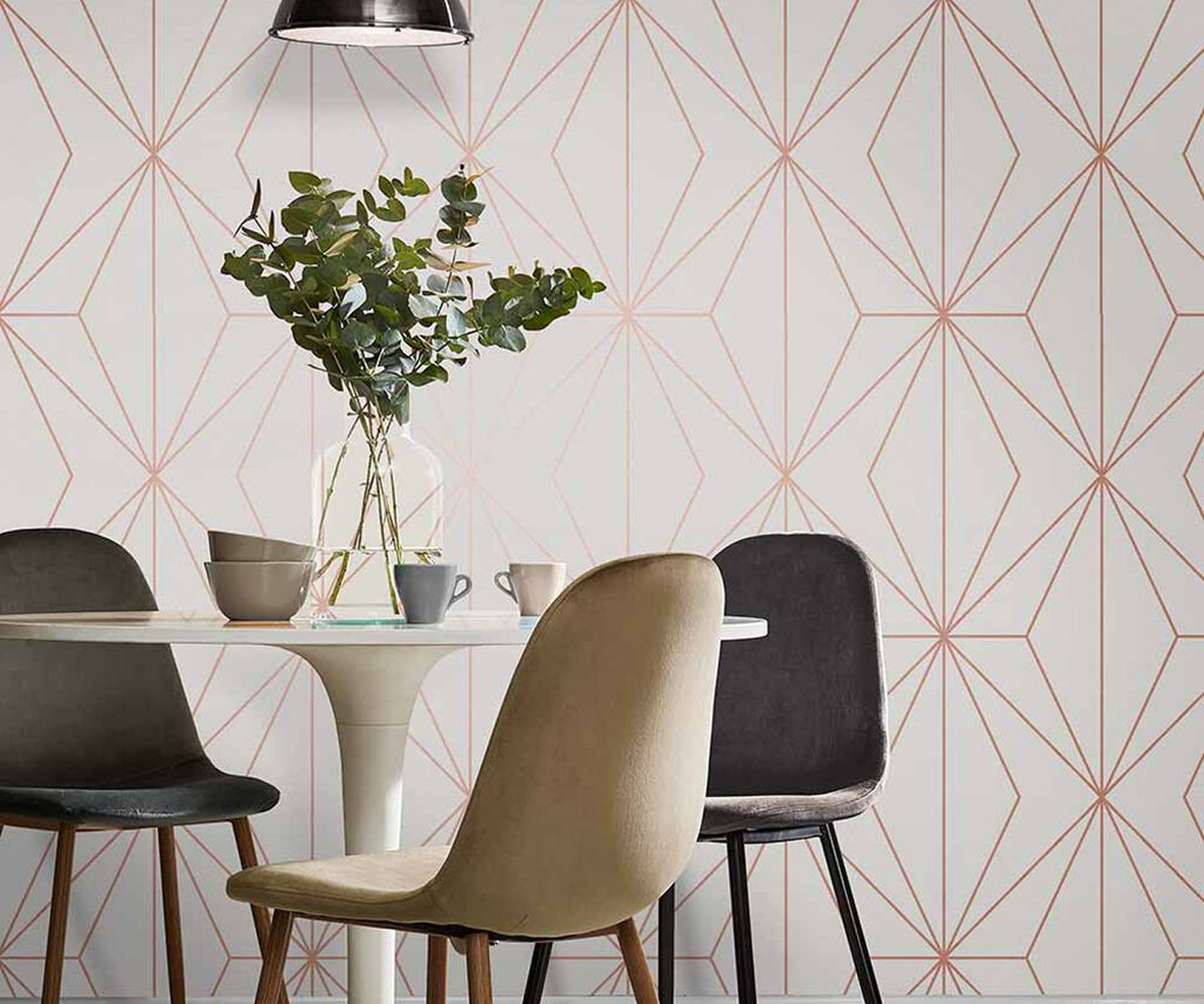
Choosing a performance-friendly material does not mean settling for a plain wall. Vinyl wallcoverings are available in refined linen effects, classic stripes, cheerful florals, leafy botanicals, graphic geometrics, and subtle textured finishes. A washable surface can still deliver the depth and character that makes wallpaper more memorable than paint.
For a small bathroom, a light-ground pattern can brighten the room without making it feel boxed in. Vertical stripes and upward-moving botanical designs can visually lift a low ceiling. If you prefer drama, a deep blue, rich green, or black-and-cream print can turn a powder room into a jewel-box moment. Because powder rooms are smaller, they are also an ideal place to try a pattern that feels too bold for a large living area.
In laundry rooms, consider wallpaper with a forgiving multicolor pattern or a softly textured vinyl. These designs make utility spaces feel intentional while being more accommodating of the room’s everyday activity. In kitchens, a washable print above wainscoting or outside the main cooking and sink zones can add warmth without asking the wallpaper to perform like tile.
A Smart Way to Shop Before You Commit
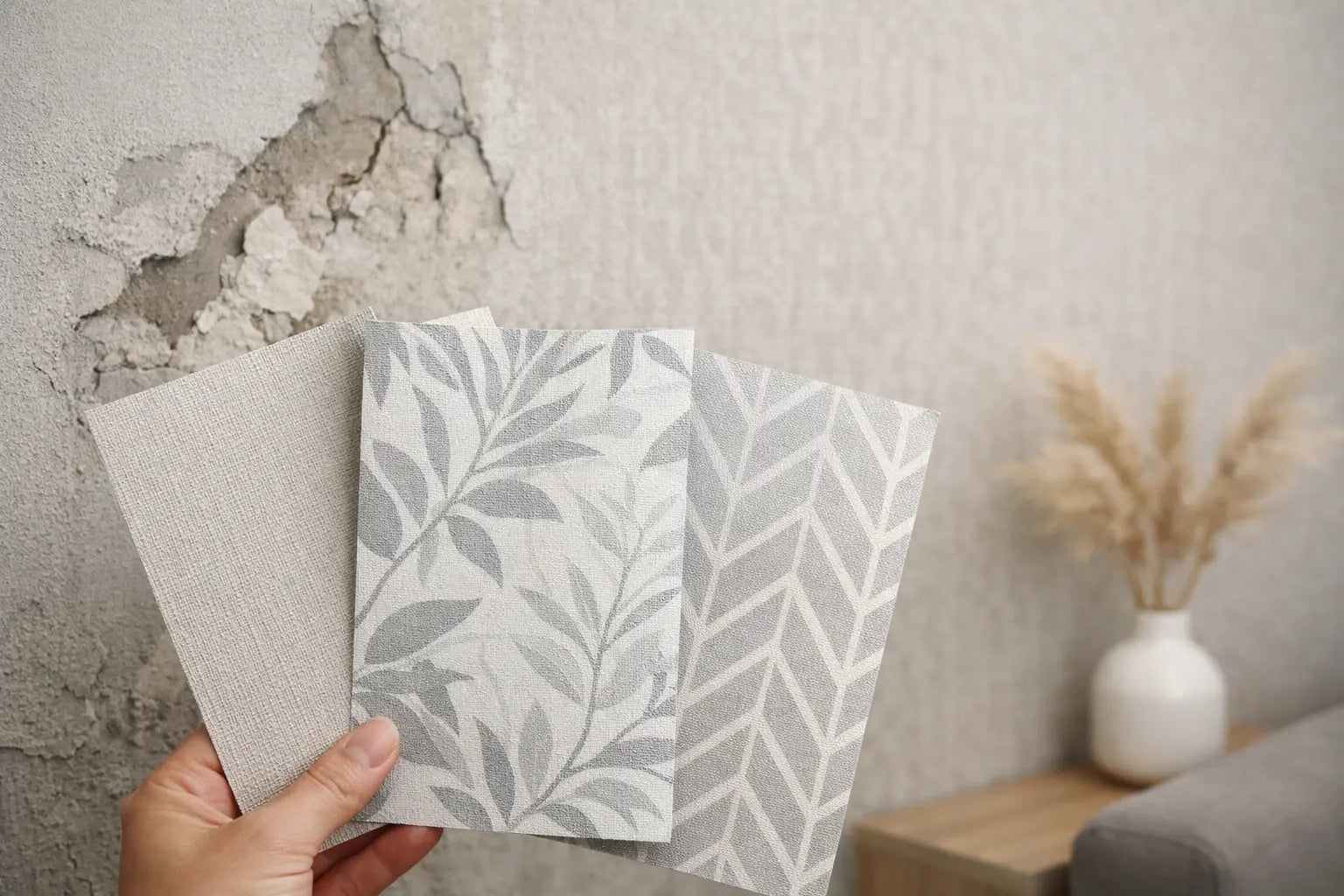
A sample is particularly valuable when humidity is part of the decision. View it at different times of day, hold it next to tile, cabinetry, and hardware, and feel the surface. A sample can help you decide whether a finish looks right in the room, but it also gives you a chance to review the product details before ordering.
At Wallpaper and Stuff, shoppers can compare in-stock materials and patterns in person at the Smyrna showroom or narrow the options from home with samples. When speaking with a wallpaper professional, describe the room clearly: whether it has a shower, how often it is used, whether it has an exhaust fan, and where the wallpaper will sit in relation to sinks or tubs. Those details lead to a better recommendation than a style description alone.
The best wallpaper for a humid room is the one that fits both your design vision and the room’s actual moisture level. Choose a washable vinyl for demanding conditions, prepare the wall carefully, and give the space the ventilation it needs. Then you can enjoy a wall that brings color, pattern, and personality to the room without creating a maintenance worry.