Celebrating 35+ Years

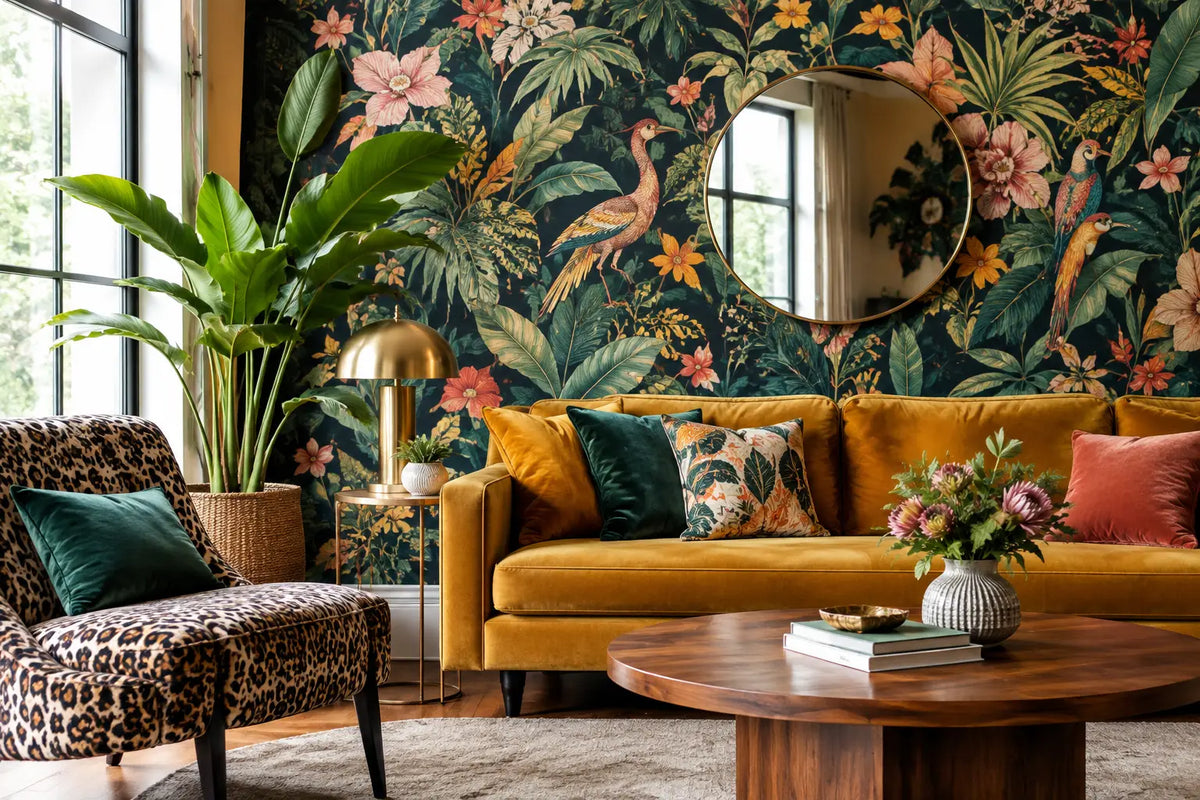
Maximalist Wallpaper Trends for Rooms With Personality
A powder room wrapped in oversized tropical leaves. A dining room where a moody floral repeats from ceiling to baseboard. A bedroom that gets its entire point of view from one richly patterned wall. Maximalist wallpaper trends are not about filling a room with random decoration. They are about choosing pattern, color, and texture with enough confidence to make a space feel finished, personal, and memorable.
For homeowners who are ready to move beyond a safe neutral backdrop, wallpaper offers an immediate shift in atmosphere. The best current looks feel collected rather than chaotic: expressive prints balanced by thoughtful furnishings, strong color stories, and materials that reward a closer look.
What Defines Maximalist Wallpaper Trends Now?
Maximalism has matured. The current direction is less about using every color at once and more about creating visual abundance with intention. A large-scale botanical can feel dramatic but refined in a living room. A traditional chinoiserie-inspired scene can give a dining room the depth of a collected interior. Even a playful animal print can look polished when its palette relates to the flooring, millwork, or upholstery around it.
Scale is a major part of the look. Small, tightly repeated motifs still have a place, especially in a classic bath or hallway, but larger patterns are leading the conversation. Oversized blooms, dramatic branches, scenic panels, graphic geometrics, and loose hand-painted marks make a stronger statement from across the room. They also photograph beautifully, which is one reason this style continues to appear in design-forward homes.
Color is becoming richer, too. Deep olive, ink blue, oxblood, ochre, chocolate brown, plum, and warm coral bring dimension that plain white walls cannot. That does not mean every maximalist room has to be dark. Bright grounds with saturated greens, pinks, blues, and citrus tones can feel equally bold, particularly in sunny kitchens, breakfast rooms, and children’s spaces.
The Prints Making the Biggest Impact
Oversized botanicals and wild florals
Floral wallpaper has moved far beyond dainty bouquets. Look for painterly petals, climbing vines, oversized leaves, and garden scenes with a little movement. These designs can create a romantic, historic, tropical, or modern mood depending on the colorway and line work.
A dark floral ground is especially effective in a dining room, bedroom, or powder room where a cocooning effect feels right. For a lighter approach, choose a botanical with an airy background and a few high-impact colors. The pattern still delivers personality, but the room retains an open feel.
Scenic murals and story-driven walls
Scenic wallpaper is one of the most compelling maximalist choices because it brings architecture, landscape, and narrative to the wall. Woodland scenes, coastal illustrations, mountain views, pastoral sketches, and fanciful cityscapes turn a room into an experience rather than simply a collection of furnishings.
This trend works particularly well in dining rooms, foyers, and bedrooms with uninterrupted wall space. A mural or scenic repeat benefits from room to breathe, so avoid breaking it up with too many competing pieces of wall art. Let the wallpaper do the storytelling, then add lighting and furnishings that support its palette.
Geometrics with depth and movement
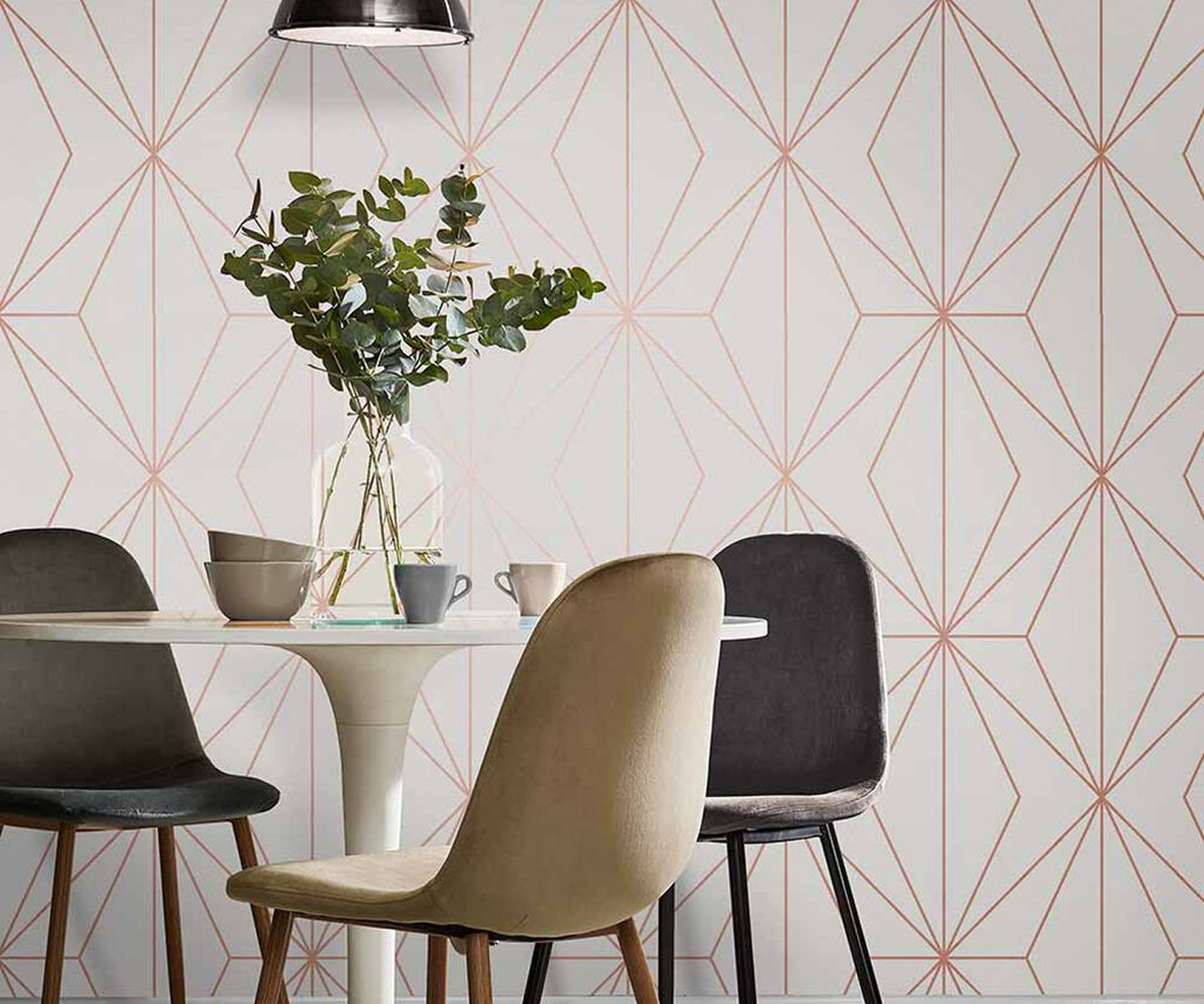
Maximalism does not have to mean floral. Bold geometrics offer a cleaner, more architectural version of the trend. Think wide stripes, interlocking shapes, Art Deco curves, oversized checks, or optical repeats in contrasting colors.
Geometric wallpaper can energize a home office, entryway, or contemporary living room. It is also a smart choice when you want a dramatic wallcovering that does not feel overly decorative. The trade-off is that crisp patterns make installation accuracy more visible, especially where lines meet at corners or around windows. Ordering enough material for pattern matching is essential.
Animal, toile, and conversation prints
Wallpaper with birds, tigers, monkeys, fish, insects, or imaginative illustrated scenes brings a welcome sense of humor to maximalist rooms. These prints are ideal when a space needs charm as much as color. A small bath, laundry room, bar area, or guest room can handle a little more whimsy because it is not asking to feel quiet or minimal.
To keep a conversation print elevated, repeat one or two colors from the paper in the room. A painted vanity, framed mirror, roman shade, or pair of towels can make the design feel deliberately chosen instead of simply loud.
Texture Is Part of the Pattern
The strongest maximalist rooms are not always the busiest. Sometimes the drama comes from material. Grasscloth, cork, flock, crystal-beaded papers, and dimensional wallcoverings introduce shadow, sheen, and tactile interest that paint cannot replicate.
Natural grasscloth lends warmth and variation to a study, dining room, or bedroom. Its seams and tonal shifts are part of the character, not a flaw, so it suits shoppers who appreciate an organic, handcrafted appearance. Vinyl can be a practical alternative in spaces that need easier cleaning and stronger durability, such as a busy hallway, children’s room, or powder room.
Flock and beaded finishes create a more formal, glamorous effect. Use them where lighting can play across the surface: behind a dining table, around a sitting area, or on a bedroom accent wall. Because these specialty materials can be more delicate or require particular installation methods, samples are especially valuable before making a final choice.
How to Use a Maximalist Print Without Overwhelming the Room
The easiest way to make a bold wallpaper feel right is to give it a clear role. In a small powder room, covering all four walls often looks more intentional than stopping at one accent wall. The limited square footage turns the room into a jewel box, and the pattern becomes part of the experience.
In a larger living room or bedroom, consider the room’s focal point. Wallpaper behind a bed, fireplace, or dining table creates structure and allows the remaining walls to stay quieter. If you decide to paper every wall, simplify other major surfaces. Solid upholstery, restrained window treatments, and a rug with only one or two related colors keep the room from feeling visually crowded.
Ceilings deserve more attention in this trend. A patterned ceiling can add surprise to an otherwise tailored space, especially when walls are painted in a shade pulled from the wallpaper. It works best in rooms with good proportions and a design that reads clearly from below. Very dark or densely patterned ceilings can make a low room feel lower, so scale and natural light matter.
Start With the Right Sample and the Right Scale
A wallpaper image on a screen cannot show the full effect of color, texture, or repeat size. A sample lets you see how the paper responds to daylight, evening lamps, flooring, trim, and nearby fabrics. Tape it at eye level, then look at it from the doorway and from across the room. What feels bold in your hand may read surprisingly calm once it is spread across a wall. The reverse can also be true.
Measure carefully before ordering. Large repeats create more waste than small ones, and murals may need to be ordered to the exact dimensions of the wall. Account for doors, windows, and pattern matching, but do not assume those openings eliminate the need for extra material. A wallpaper calculator can provide a useful starting point, while an experienced installer can help confirm more complex layouts.
For shoppers in the Atlanta area, seeing selections in person can remove much of the guesswork. Wallpaper and Stuff offers a large Smyrna showroom where color, finish, and scale can be compared side by side, from in-stock patterns to special-order options. That kind of hands-on comparison is particularly helpful when deciding between a smooth non-woven print, a textured grasscloth, or a high-impact specialty finish.
Make the Room Feel Collected, Not Crowded
Maximalist wallpaper works best when the rest of the room participates without competing. Pull a quiet background tone from the paper for trim or adjacent walls. Choose one stronger accent color for pillows, lampshades, or upholstered seating. Add a few materials that provide contrast, such as warm wood against a glossy geometric or antique brass against a deep botanical.
There is no rule that says bold wallpaper requires modern furniture, or that traditional prints belong only with antiques. A contemporary sofa can look striking against a classic scenic paper. A vintage chest can soften a sharp graphic pattern. Those contrasts are often what give a maximalist room its lived-in, layered appeal.
Choose the wallpaper that makes you pause, then give it enough room to speak. The right print can turn an overlooked wall into the detail guests remember long after they leave.