Celebrating 35+ Years


How to Clean Washable Wallpaper Without Damage
A beautiful wallpapered room should be lived in. Fingerprints around a light switch, a little kitchen splatter, or the occasional mark from a busy hallway do not have to take away from the pattern you chose. Knowing how to clean washable wallpaper lets you keep the color fresh and the finish looking polished without risking the surface underneath.
The key is restraint. Washable wallpaper is designed to handle light cleaning, but it is not automatically scrubbable, stain-proof, or suited to every household cleaner. A gentle approach protects the details that make wallcovering special, from crisp botanical prints to textured geometric designs.
Start by Confirming What “Washable” Means
Before bringing water anywhere near the wall, check the wallpaper label, installation instructions, or product specifications. Terms such as washable, extra-washable, scrubbable, and spongeable are not interchangeable.
Washable wallpaper generally tolerates a damp cloth and mild soap. Scrubbable wallpaper, often a durable vinyl wallcovering, can stand up to more frequent cleaning and slightly firmer pressure. Spongeable papers may only tolerate a lightly damp sponge and should be treated with extra care. Natural materials such as grasscloth, cork, flock, crystal beaded wallpaper, and many specialty finishes are usually not washable at all, even when they appear durable.
If the wallcovering came with no care information, assume the most cautious option. A clean, dry microfiber cloth may be all it needs. This matters especially with textured, metallic, hand-finished, or deeply colored papers, where excess moisture can leave a visible change in sheen.
What You Need to Clean Washable Wallpaper
For most routine cleaning, keep the supplies simple: a soft microfiber cloth or nonabrasive sponge, a bowl of clean water, mild clear dish soap, and a dry towel. White cloths are best because colored towels can transfer dye when damp.
Skip rough scrub pads, stiff brushes, powdered cleaners, bleach, ammonia, and solvent-based products. Even if they remove a mark, they can dull a vinyl coating, lift printed color, flatten an embossed design, or weaken the adhesive at the seams. Wallpaper is a decorative finish, not a countertop.
Vacuuming with a soft brush attachment can also be useful for dust, but use a light touch. It is particularly helpful on lightly textured washable vinyl, where dust can settle into the pattern.
Test a Hidden Spot First
Every wallcovering deserves a small test, including a product labeled washable. Choose an inconspicuous area behind furniture, near a baseboard, or inside a closet if the same paper is installed there.
Dampen the cloth, add only a trace of soap if needed, and gently wipe a small section. Blot it dry immediately. Wait for the area to dry completely, then check for color transfer, a change in finish, bubbling, or softened edges. If the test area looks unchanged, you can clean the visible wall with more confidence.
How to Clean Washable Wallpaper Step by Step
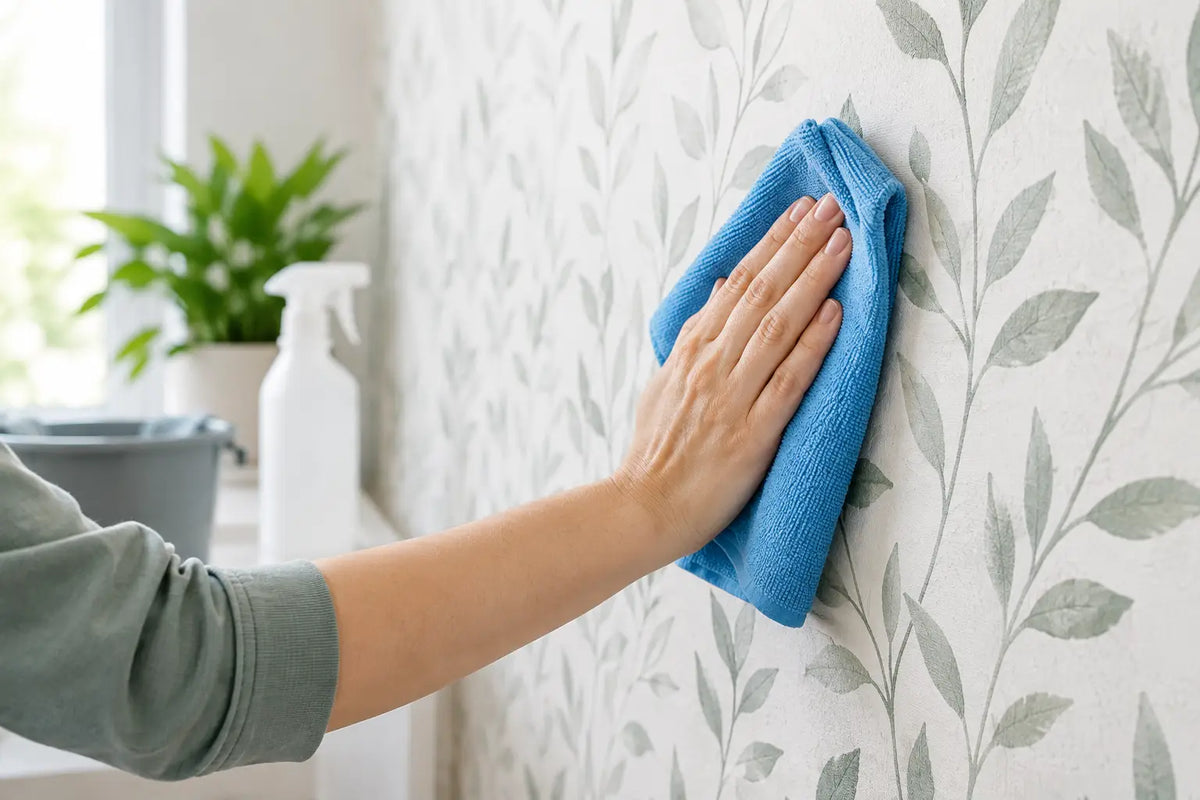
Begin by removing loose dust. Wipe from top to bottom with a dry microfiber cloth, using long, gentle strokes. Starting at the top keeps loosened dust from drifting onto an area you have already cleaned.
Next, mix a mild cleaning solution. Add just a few drops of clear dish soap to a bowl of lukewarm water. The water should feel barely soapy, not sudsy. Stronger is not better here, and too much soap can leave a film that catches light and makes a wall look patchy.
Dip your cloth or sponge into the solution, then wring it out thoroughly. It should be damp, never dripping. Water running down wallpaper can settle at seams and edges, which may cause lifting over time.
Clean one small section at a time, working from the top down. Use smooth strokes rather than vigorous circles, and avoid pressing hard. Follow the direction of the pattern or texture where possible. On embossed wallpaper, gentle wiping helps keep moisture from collecting in recessed areas.
After cleaning each section, go over it with a second cloth dampened only with clean water. This removes any soap residue. Then blot the area dry with a soft towel. Do not rub aggressively, and do not leave the wall wet to air-dry.
Pay close attention to seams. Wipe across them lightly rather than pushing moisture into the edge. If a seam is beginning to lift, do not keep cleaning around it with water. Let the area dry and address the seam separately with the appropriate wallpaper adhesive.
Removing Common Marks Without Overcleaning
Most everyday marks respond best to the least intensive method first. For fingerprints, try a dry microfiber cloth before using a damp one. Fresh food splatters and small drink marks can usually be lifted with a lightly soapy cloth, followed by a clean-water wipe and gentle blotting.
For a crayon mark or scuff, test a damp cloth first. If it remains, use a tiny amount of mild soap and work only on the mark. Avoid rubbing a wide area around it, since uneven pressure can change the finish on one spot of the wall.
Grease in a kitchen or dining area can be more stubborn. On washable vinyl, a very dilute dish-soap solution is often enough when used promptly. Treat the spot in small passes, changing to a clean section of cloth as soil lifts. If the stain will not move easily, stop before the wallpaper surface becomes shiny, faded, or oversaturated.
Ink, permanent marker, hair dye, nail polish, and deep-set grease are different situations. Strong chemicals may remove the stain but leave a larger, permanent blemish. For a distinctive paper, particularly one with a layered print or specialty texture, preserving the finish may be the better trade-off than chasing every trace of a stubborn mark.
Care for Textured and Specialty Wallcoverings
Texture changes the cleaning plan. A washable embossed vinyl can usually be cleaned gently, but a soft cloth is safer than a sponge that may catch on raised details. For a wallpaper with metallic accents, wipe softly and avoid abrasives that can scratch the reflective surface.
Grasscloth and other natural fiber wallcoverings require dry care unless the manufacturer specifically says otherwise. Water can create rings, change the color of the fibers, or alter the natural variation that gives the material its character. A light vacuum with a brush attachment or a dry microfiber cloth is usually the right choice.
Flock wallpaper needs similar caution. Its velvet-like surface can be crushed or matted by moisture and friction. Crystal beaded and delicate decorative papers should be dusted carefully rather than washed. The most design-forward finishes often ask for the most thoughtful maintenance.
Keep Cleaning Light and Regular
The easiest way to protect washable wallpaper is to avoid allowing dirt to build up. Dusting every few weeks, especially in hallways, dining rooms, and rooms with pets, is gentler than an occasional intensive cleaning. Wipe fresh splatters promptly, before they have time to settle into the surface.
Think about placement, too. In a high-touch area, durable washable or scrubbable vinyl may be the practical choice. In a powder room or bedroom where the wall is less likely to see spills, a more delicate textured paper may be well worth the extra care. The best wallpaper is not just about pattern and color. It is also about choosing a finish that fits the way your room is used.
For homeowners comparing materials in person, Wallpaper and Stuff's Smyrna showroom offers the advantage of seeing texture, sheen, and durability up close before a pattern goes on the wall. A sample can also help you understand how a finish responds to the light and activity in your own space.
A little care keeps wallpaper doing what it does best: adding dimension, personality, and a finished point of view to a room. Clean gently, dry thoroughly, and let the wallcovering remain the beautiful backdrop it was chosen to be.