Celebrating 35+ Years


How to Use a Wallpaper Calculator for Your Room
A wallpaper roll can look like plenty on the table, then disappear quickly once a bold botanical or tailored geometric starts climbing the wall. Knowing how to use a wallpaper calculator before you order gives you a clearer picture of how many rolls your room actually requires - and helps protect your project from an inconvenient shortage halfway through installation.
A calculator is designed to turn room measurements, roll dimensions, and pattern details into a useful estimate. The key word is estimate. Your final quantity can change with the size of the repeat, the placement of doors and windows, the shape of the room, and the way a particular wallcovering must be installed. A few careful measurements at the start make choosing your favorite print much more enjoyable.
Gather the Details Before You Calculate
Begin with a tape measure, a notepad, and the wallpaper specifications for the style you are considering. Measure in inches if the product page lists roll width, length, and repeat in inches. Staying with one unit of measurement prevents small conversion errors from becoming an extra roll or, worse, too little paper.
For a simple rectangular room, measure the width of each wall and add those numbers together. Then measure from the top of the baseboard or molding to the point where the wallpaper will end. This may be the ceiling, a picture rail, or the bottom of crown molding. Do not assume every wall has the same height, especially in older homes or rooms with sloped ceilings.
You will also need the roll width and roll length. Wallpaper is sold in several formats, including single rolls, double rolls, and bolts with different usable lengths. Read the listed coverage rather than relying on a roll's appearance. A narrow roll may require more strips, while a wider roll can reduce seams but may create more offcuts around windows and corners.
Finally, find the pattern repeat. This measurement tells you how often the design begins again vertically. It is one of the most significant details in wallpaper estimating because every strip may need extra length to align the pattern with the strip beside it.
How to Use a Wallpaper Calculator Step by Step
Most wallpaper calculators ask for wall dimensions, roll dimensions, and a pattern repeat. Enter the information exactly as it appears in the product specifications, then review the result as a purchasing guide rather than an automatic final answer.
Measure the walls you plan to cover
If all four walls will be papered, enter the total width and the wall height. For an accent wall, measure only that wall. A feature wall behind a bed may seem straightforward, but include the full width behind furniture. Wallpaper is installed on the wall, not just on the visible area.
For a room with different wall heights or bump-outs, calculate each section separately when possible. A bay window, chimney breast, stair wall, or angled ceiling is easier to estimate in smaller rectangles than as one complicated shape. Add the results together afterward.
Add the wallpaper specifications
Enter the roll width and length from the product listing or sample label. Then choose or enter the repeat category. Some patterns have no repeat or a very small repeat, which produces less waste. Others have a large repeat, particularly oversized florals, murals, and dramatic geometrics, and require more material for matching.
If the calculator asks about the match type, select it carefully. A straight match aligns the pattern horizontally across each strip. A drop match offsets it, often creating more waste. Random-match textures and certain grasscloth styles may not require the same vertical alignment, but they still deserve thoughtful planning because seams, shading, and panel placement affect the finished look.
Treat the result as your base quantity
The number shown by the calculator is usually the starting point for your order. Before checking out, compare it with your room's layout. If the answer is close to a whole-roll boundary, order the additional roll. Having enough material from the same dye lot is far more reassuring than trying to match a discontinued or sold-out pattern later.
Why Pattern Repeat Changes the Roll Count
Pattern repeat is where a simple square-foot calculation can fall short. Wallpaper is hung in vertical strips. Each strip must be cut long enough to cover the wall height, with a little allowance at the top and bottom for trimming. When the design repeats every 24 inches, 25 inches, or more, the installer may need to cut a longer piece than the wall itself to make the motif line up correctly.
Imagine a 96-inch-high wall and a 24-inch repeat. The strip length may work efficiently because 96 is a clean multiple of 24. Change the repeat to 27 inches, however, and more material can be lost at the end of each strip. The calculator accounts for this relationship when the repeat is entered accurately.
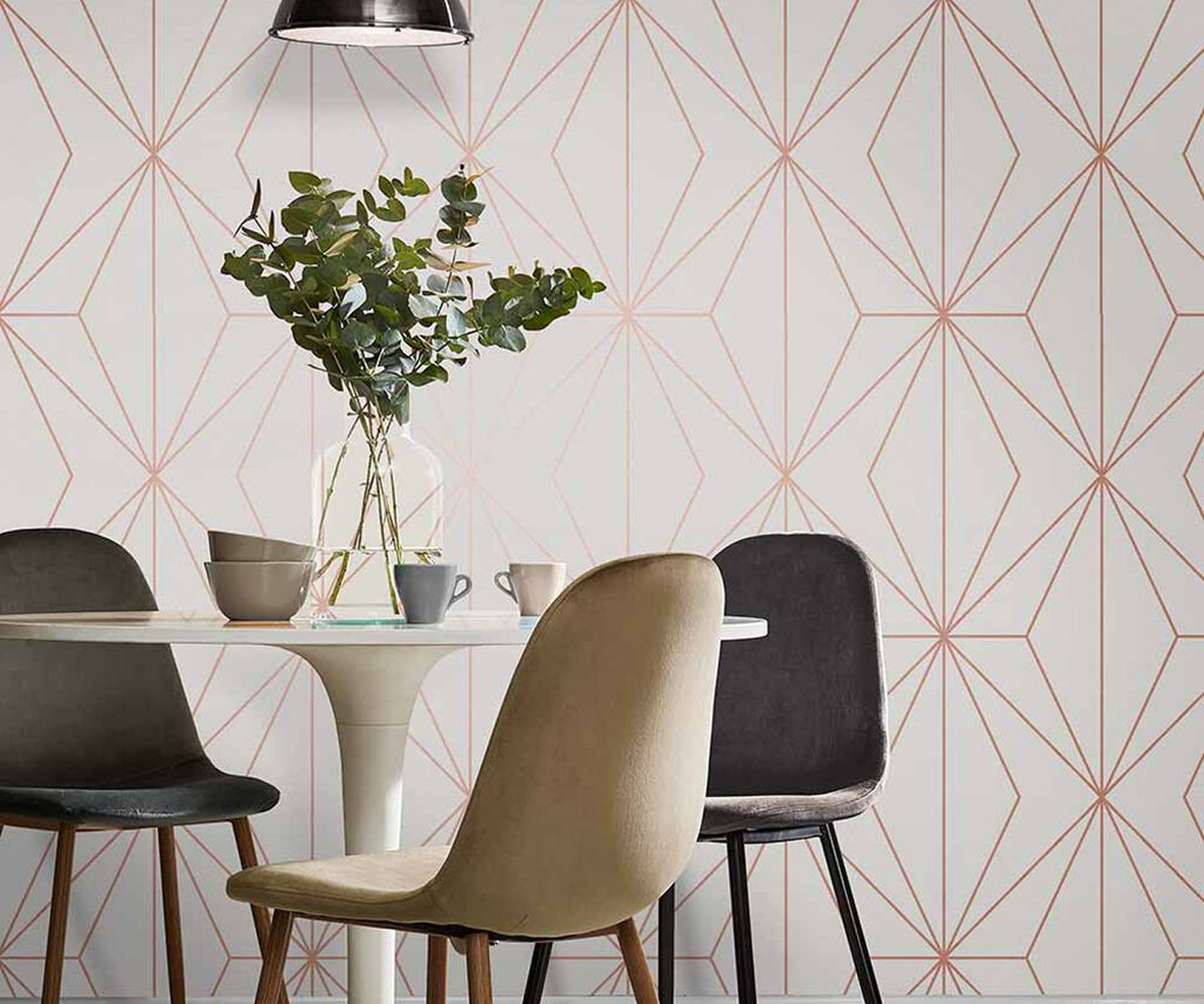
Large-scale prints are worth the extra planning. Their movement and visual impact can transform a dining room, powder room, or bedroom, but they are less forgiving of skimpy ordering. If a pattern has a prominent element you want centered over a vanity, fireplace, or headboard, allow for additional material so the layout can be adjusted for the strongest visual result.
Should You Subtract Doors and Windows?
Not always. A door or window opening does remove some wall area, but it also creates short pieces and cutouts that may not be useful elsewhere. On a standard room with one door and a couple of windows, many homeowners are better off leaving those openings in the calculation. The extra coverage helps account for trimming, matching, and an occasional installation mistake.
It can make sense to adjust for unusually large openings, such as a wall of French doors or a wide built-in bookcase. In that situation, calculate the wallpapered sections individually rather than subtracting a rough number from the total. This provides a more realistic strip count.
Keep ceiling height in mind, too. Tall rooms often produce fewer usable strips from each roll. Wallpaper above a two-story foyer, around a staircase, or over tall cabinetry may call for a professional measurement, particularly when the pattern has a large repeat.
Read the Calculator Result With the Material in Mind
Different wallcoverings call for different levels of caution. Standard non-woven and vinyl papers are generally straightforward when the specifications and repeat are correct. Textured products, including cork, flock, crystal beaded styles, and certain grasscloths, may need more consideration because their seams and natural variations become part of the design.
With grasscloth, for example, color and texture shifts from panel to panel are normal. The goal is not a perfectly uniform wall, but a rich, natural finish. Plan the layout before cutting and retain extra material for critical areas. For murals, do not rely on a general roll calculator alone. Confirm the number of panels, finished mural dimensions, and any recommended overlap directly from the product details.
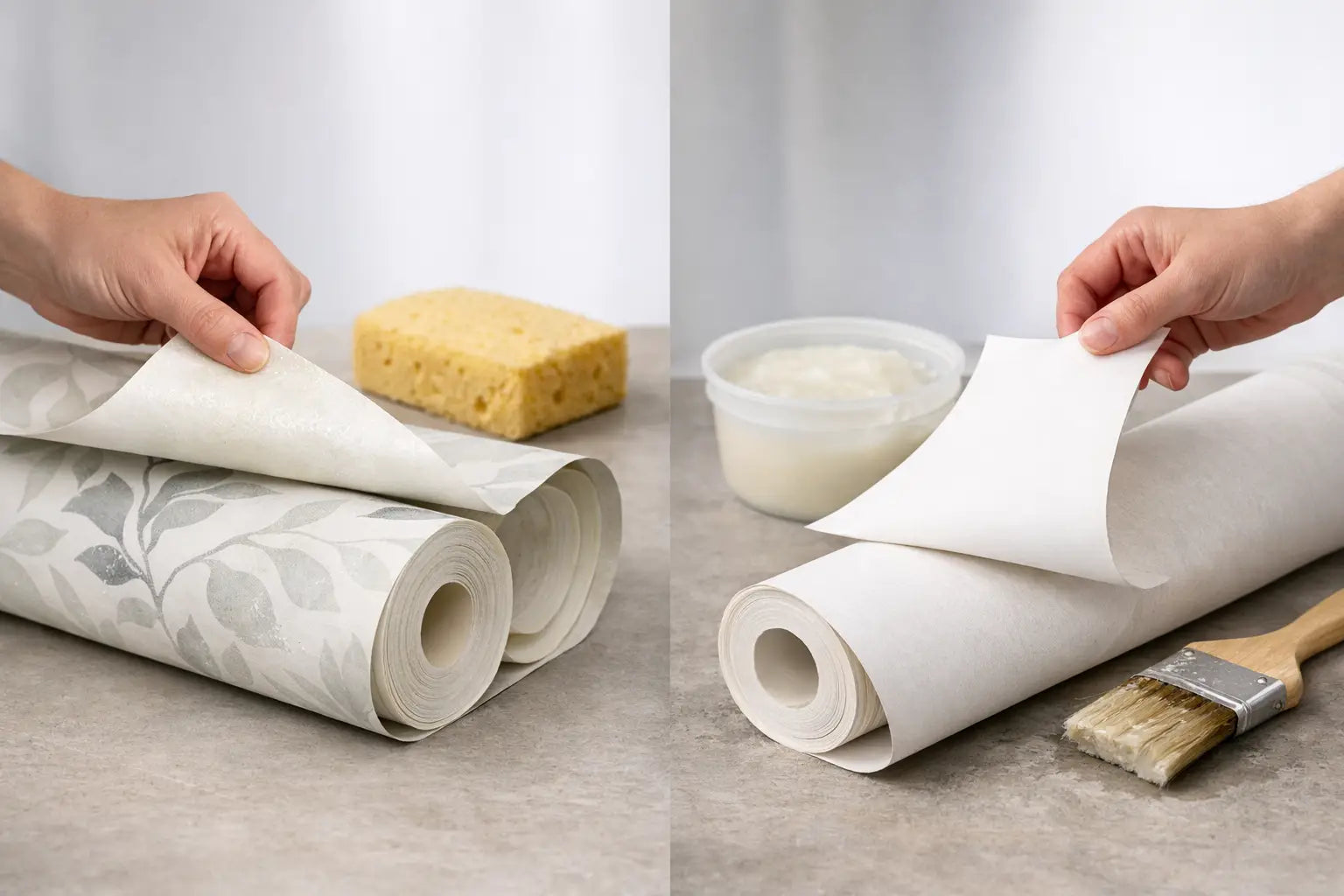
Also check whether the product is sold by the single roll, double roll, or bolt. The calculator may return a number of single-roll equivalents, while the wallpaper is packaged and sold in double-roll bolts. Ordering the correct packaged quantity is essential.
A Few Smart Checks Before Ordering
Take a moment to verify your measurements a second time. Measure the tallest point of the room, confirm the roll length, and make sure the repeat was not left blank. If you are ordering for more than one wall, confirm that every section is included.
It is wise to order all rolls at once. Wallpaper is produced in dye lots, and minor color variation can occur between runs. Keeping a small amount of unused wallpaper is helpful for future repairs, especially in active spaces such as entryways, dining rooms, and children's rooms.
Samples can also make the calculation more meaningful. Seeing the print at home reveals its scale, direction, and the way it works with trim, flooring, and light. A pattern that looks small online may have a generous repeat in person, while a subtle texture may be the perfect finishing layer for a quiet, collected room.
For shoppers who want a second set of eyes, the team at Wallpaper and Stuff can help turn measurements and a favorite wallcovering into a more confident order. Bring your dimensions to the Smyrna showroom or keep the product specifications nearby when planning from home.
A wallpaper calculator handles the math, but the best result comes from pairing that estimate with your room's real architecture and the character of the design. Leave room for pattern matching, thoughtful placement, and a little insurance. Then you can focus on the rewarding part: watching a beautiful wallcovering give the entire room a new point of view.