Celebrating 35+ Years

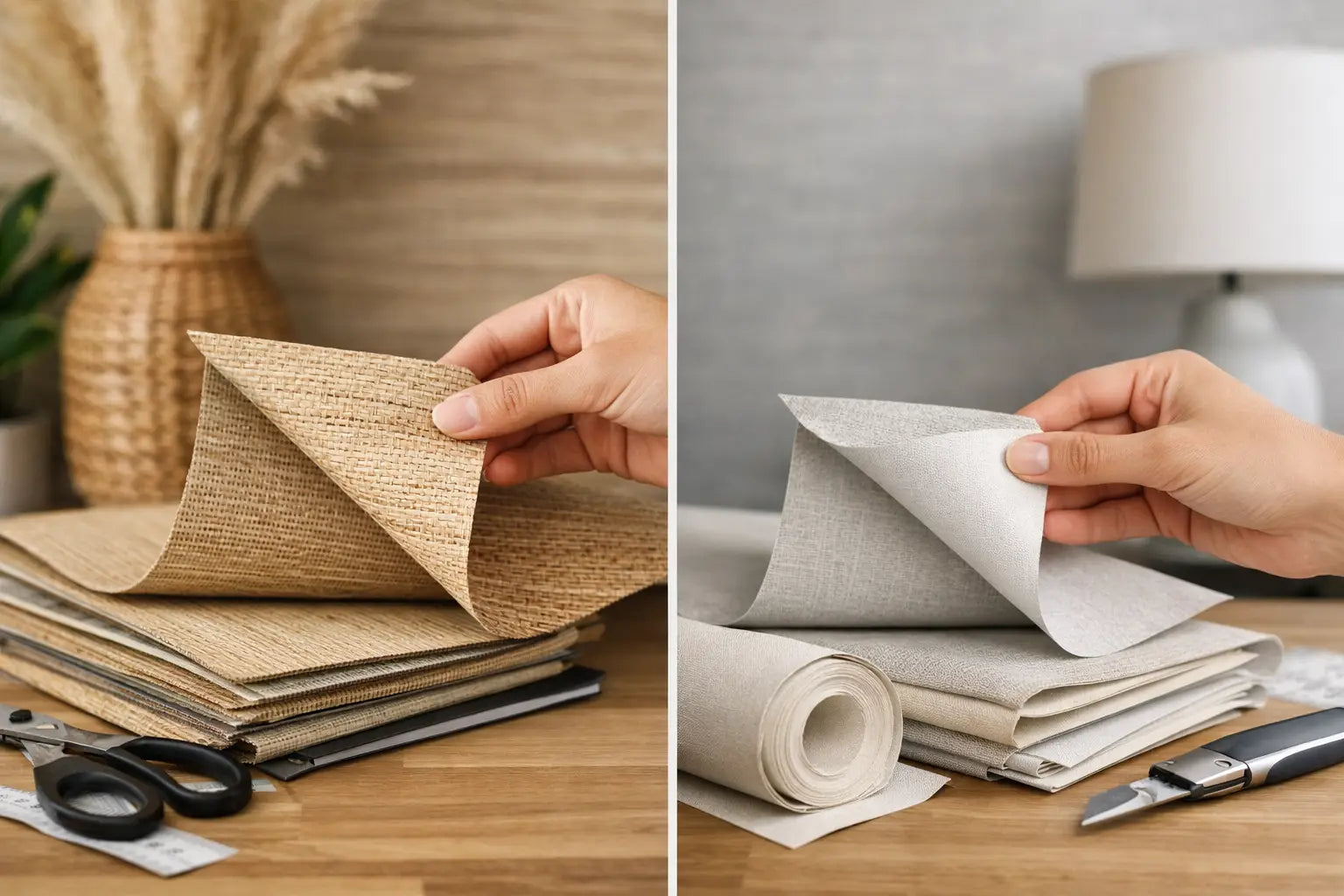
Grasscloth Versus Non Woven Wallpaper Compared
A wall can look completely different depending on whether it has quiet, handwoven texture or a crisp printed pattern. When comparing grasscloth versus non woven wallpaper, the right choice is less about which material is better overall and more about the atmosphere, maintenance level, and installation experience you want in the room.
Grasscloth brings natural dimension that paint cannot replicate. Non-woven wallpaper offers an enormous range of polished patterns with a more forgiving, practical format. Both can transform a dining room, bedroom, entry, or powder room. The best fit comes down to how you live with the space.
Grasscloth Versus Non Woven Wallpaper: The Main Difference
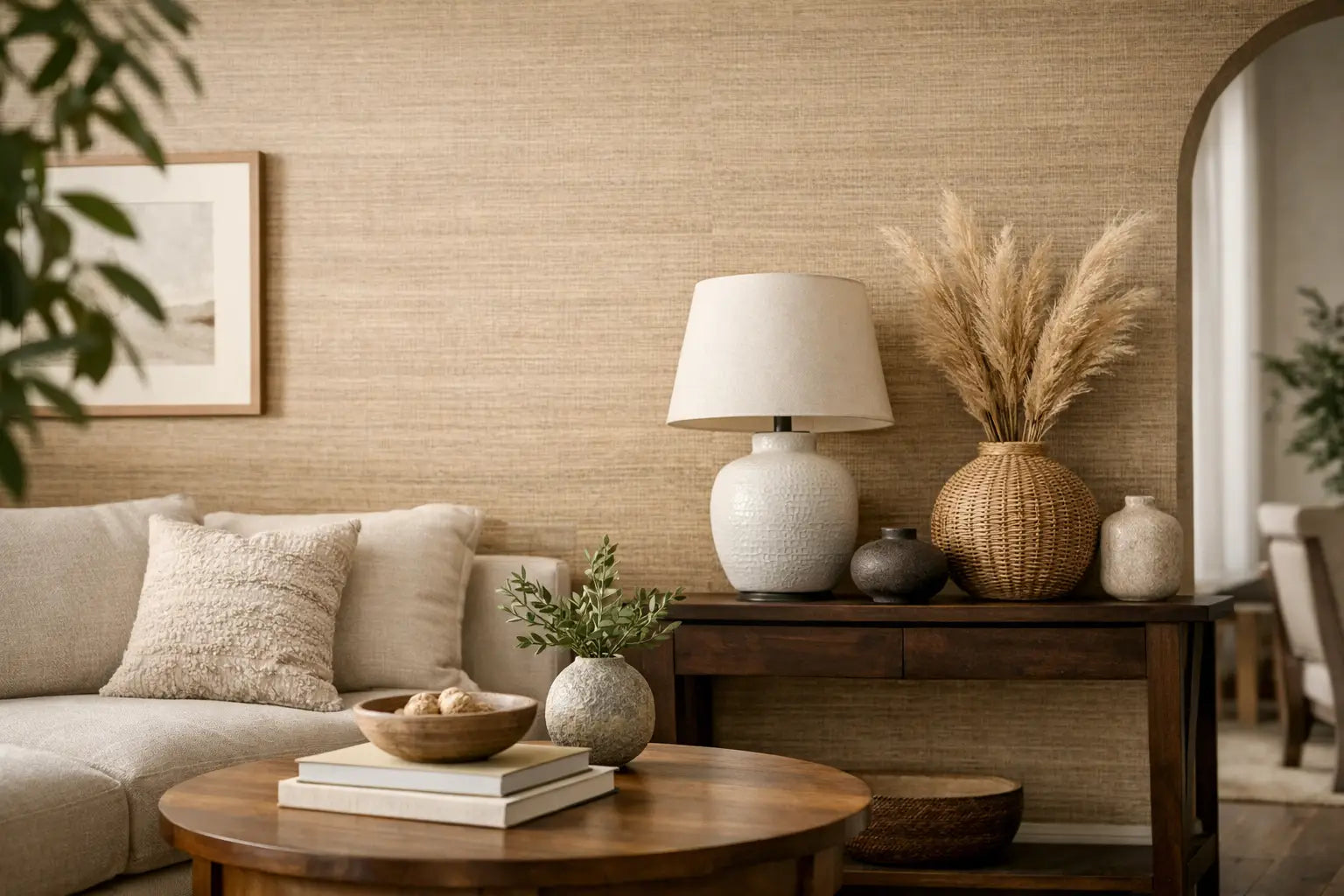
Grasscloth is a natural wallcovering made with woven fibers such as jute, sisal, hemp, raffia, or reeds. Its beauty is in the irregularity: variations in color, weave, and texture are expected. Each panel has its own character, so the finished wall feels layered, warm, and distinctly tailored rather than mechanically uniform.
Non-woven wallpaper is made with a blend of synthetic and cellulose fibers. It is a backing and material category, not a single visual style. A non-woven design can be a classic floral, a tailored stripe, a bold geometric, a faux grasscloth, or a soft painterly print. It typically has good dimensional stability, meaning it is less likely to expand when pasted and shrink as it dries.
The visual difference is immediate. Genuine grasscloth is tactile and organic, with visible fibers that catch the light throughout the day. Non-woven wallpaper can look smooth, printed, embossed, or lightly textured, depending on the design. It gives homeowners more control when they want a specific color, repeat, motif, or scale.
Choose grasscloth for natural depth
Grasscloth is especially effective in rooms that benefit from warmth and visual calm. It can make a formal dining room feel more inviting, give a bedroom a relaxed, collected look, or turn an entry wall into a memorable first impression. Neutral grasscloth is a classic choice, but colored options in deep green, indigo, rust, and charcoal can create a more dramatic effect.
One detail to understand before ordering: seams are part of authentic grasscloth's appearance. Because natural fibers vary from panel to panel, you may see shading differences at the seams. This is not a flaw. It is one of the characteristics that gives the material its handcrafted appeal. If a perfectly continuous, matched surface is your goal, a printed non-woven design may be the better choice.
Grasscloth also works best in spaces with relatively gentle daily use. Natural fibers are not generally washable in the way many vinyl wallcoverings are, and water or oil can leave marks. A formal living room, home office, dining room, or adult bedroom is often an excellent setting. In a busy mudroom, a splash-prone bathroom, or behind a frequently used kitchen banquette, consider the maintenance demands carefully.
Choose non-woven wallpaper for pattern flexibility
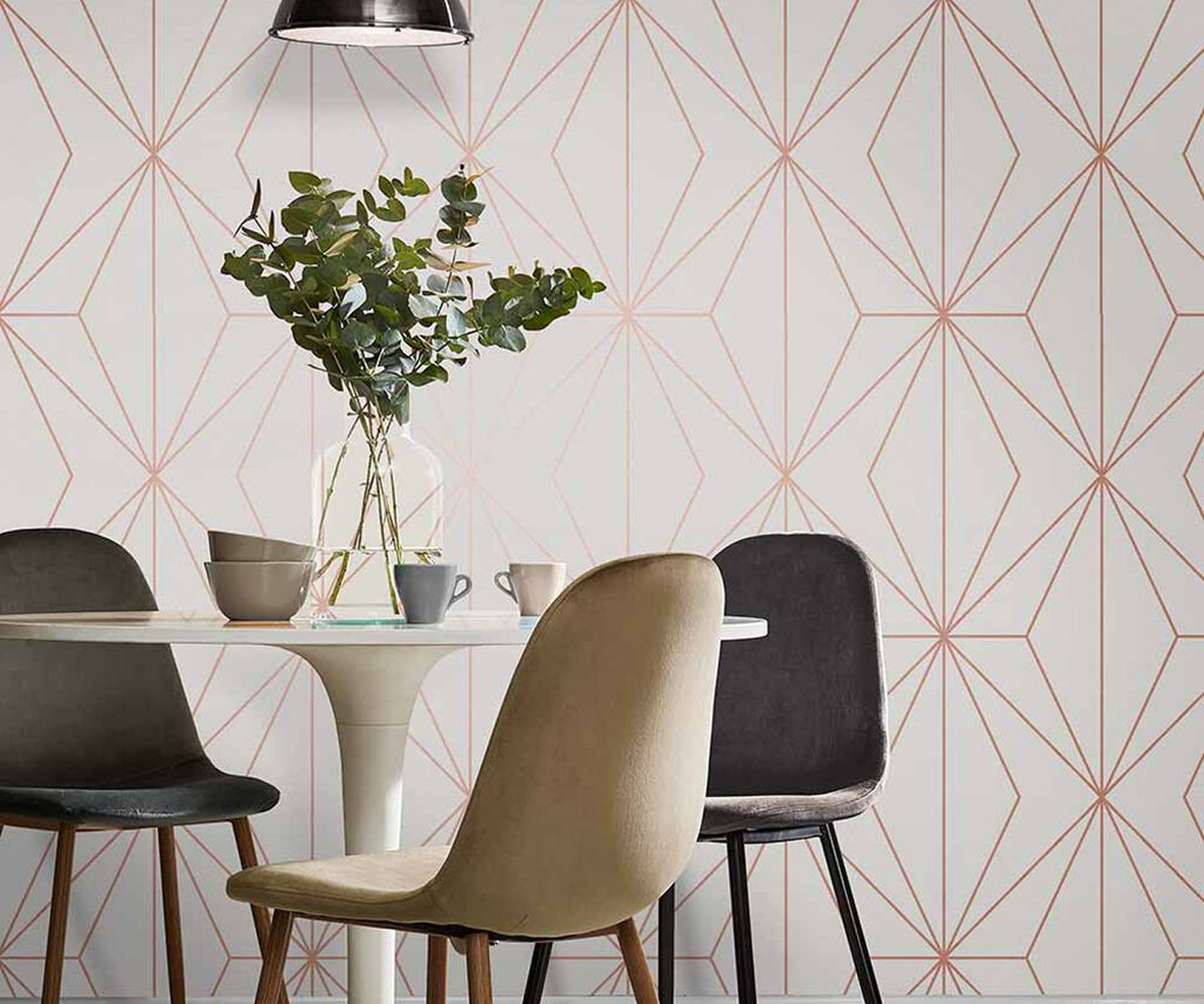
Non-woven wallpaper is a strong choice when the pattern itself is the star. It makes it easier to bring in botanical leaves, traditional damasks, cheerful florals, architectural geometrics, or subtle textures without committing to the natural variation of real fibers.
Many non-woven wallcoverings are designed for paste-the-wall installation. Instead of booking a strip of wallpaper in paste, the installer applies adhesive to the wall and hangs the dry paper. This can make handling cleaner and more efficient, particularly for larger patterns. Always follow the manufacturer instructions for the specific product, since installation methods and recommended adhesives can vary.
For homeowners who like to refresh their interiors over time, non-woven wallpaper can also be appealing because many styles are designed to strip away more cleanly when it is time for a change. That does not mean every removal will be effortless - wall preparation, adhesive choice, and prior paint condition all matter - but it is often a practical advantage over more delicate natural materials.
Texture, Pattern, and the Feeling of the Room
Start with the effect you want from the wall rather than the material name. Grasscloth is often chosen for its quiet confidence. It adds interest without asking for attention from across the room. In a space with sculptural lighting, wood furniture, art, or layered fabrics, its subtle texture can pull the entire design together.
Non-woven wallpaper can be just as refined, but it offers a broader range of expression. A delicate block print can soften a breakfast nook. A large-scale floral can give a powder room personality. A small geometric can make a compact office feel intentional. If you are decorating around an existing rug, upholstery fabric, or paint color, the range of available non-woven patterns may make coordinating easier.
There is also a useful middle ground: faux grasscloth printed on non-woven material. These designs capture the linear look of woven fibers while offering more consistent color, repeatable patterning, and, in some cases, easier care. It is a smart option for someone drawn to grasscloth's tailored texture but hesitant about visible panel variation or natural-fiber upkeep.
Installation Considerations Before You Order
Both materials deserve careful wall preparation. Walls should be clean, smooth, dry, and properly primed for wallpaper. Skipping this step can show through a light wallcovering, affect adhesion, and make future removal harder.
Grasscloth installation requires a particularly experienced hand. The material can be delicate, its edges need precise trimming, and paste can stain the natural fibers if it gets on the face of the wallcovering. Installers also need to plan panel placement thoughtfully, especially around corners, windows, and focal walls where shading variation will be most visible.
Non-woven wallpaper is often more installer-friendly, but it is not automatically a beginner project. Large repeats require accurate measuring and matching, while dark or high-contrast patterns can reveal uneven seams if they are not hung carefully. For a feature wall with a straightforward repeat, a confident DIY homeowner may be comfortable following the manufacturer directions. For a full room, stairwell, or expensive specialty paper, professional installation can protect the investment.
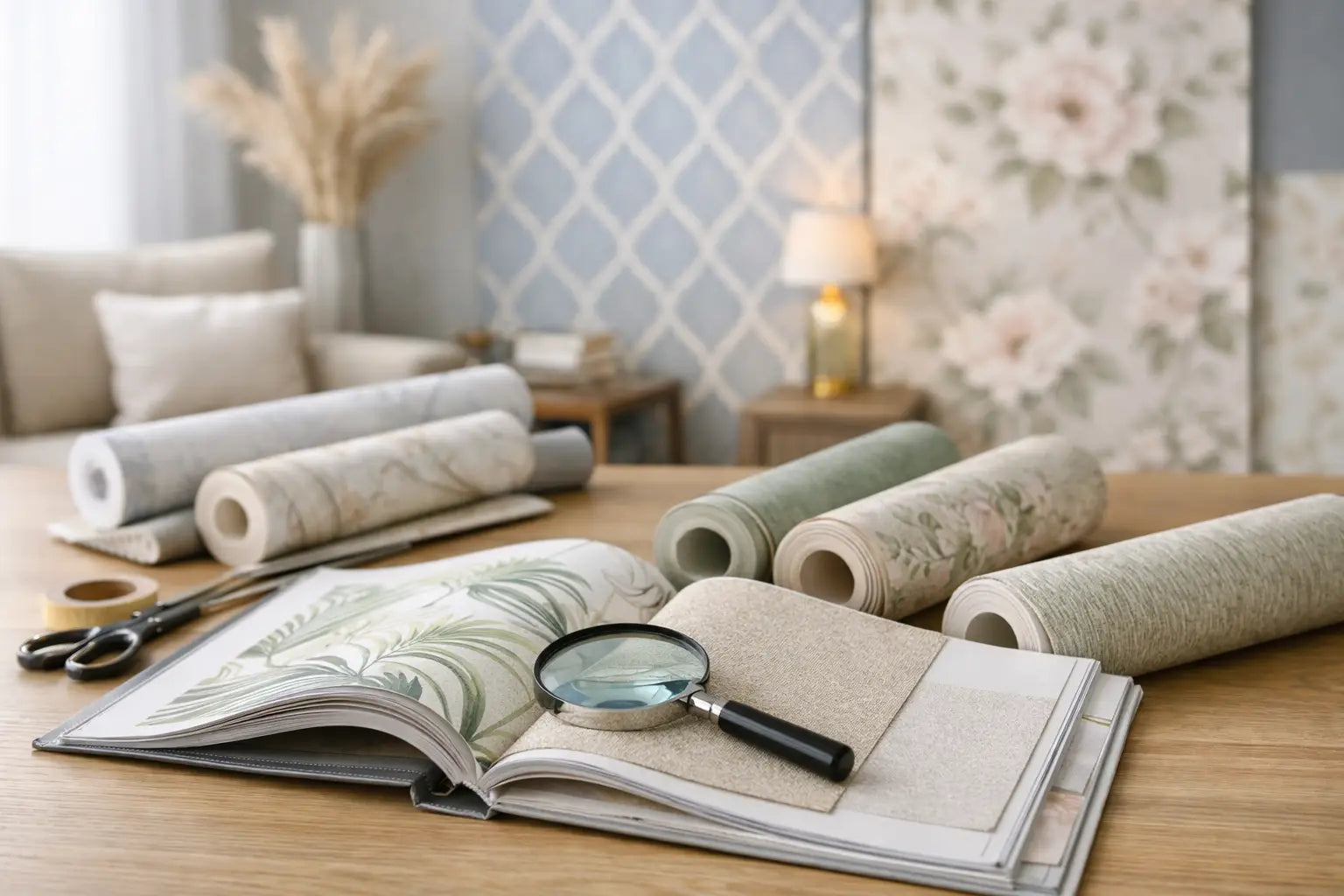
Before buying either material, measure the full wall area and account for pattern repeat, windows, doors, and extra material for trimming. Ordering a sample first is one of the most useful steps you can take. Look at it in morning, afternoon, and evening light, and place it next to flooring, cabinetry, and fabrics. A sample reveals much more than a screen can show, especially with texture and undertones.
Durability and Everyday Care
Neither grasscloth nor non-woven wallpaper should be treated as a universal solution for every room. The product's finish matters as much as its base material. Some non-woven wallpapers are washable, while others are intended for gentle care only. Some textured wallcoverings have special cleaning instructions. Check the care symbols and manufacturer guidance before selecting a paper for a high-traffic area.
Grasscloth calls for the most caution. Dust it lightly with a clean, dry cloth or a vacuum brush attachment used gently. Avoid scrubbing, soaking, or applying household cleaners unless the manufacturer specifically says otherwise. Its natural texture makes it beautiful, but it also means it is less suited to fingerprints, food splatters, and steamy conditions.
For homes with young children, pets, or frequent entertaining, non-woven wallpaper may be the easier decorative choice in active rooms. Save genuine grasscloth for places where its texture can be appreciated without putting it in constant contact with moisture and mess.
Which Wallpaper Is Right for Your Space?
Choose grasscloth when you want a natural, elevated backdrop and are comfortable with organic variation. It is a design-forward material that feels especially at home in spaces meant for gathering, resting, or making an impression.
Choose non-woven wallpaper when you want more pattern options, a potentially simpler installation process, and a material that may better suit a changing household or a frequently refreshed room. It can be traditional, modern, playful, or understated, which makes it one of the most versatile choices in wallpaper.
If you are deciding between the two in person, compare samples side by side rather than relying on a product photo. At Wallpaper and Stuff, seeing texture, scale, and color in the showroom can make the decision feel far more certain. The wall you choose is not just a background - it is a surface you will see every day, so select the one that makes the room feel more like home.