Celebrating 35+ Years

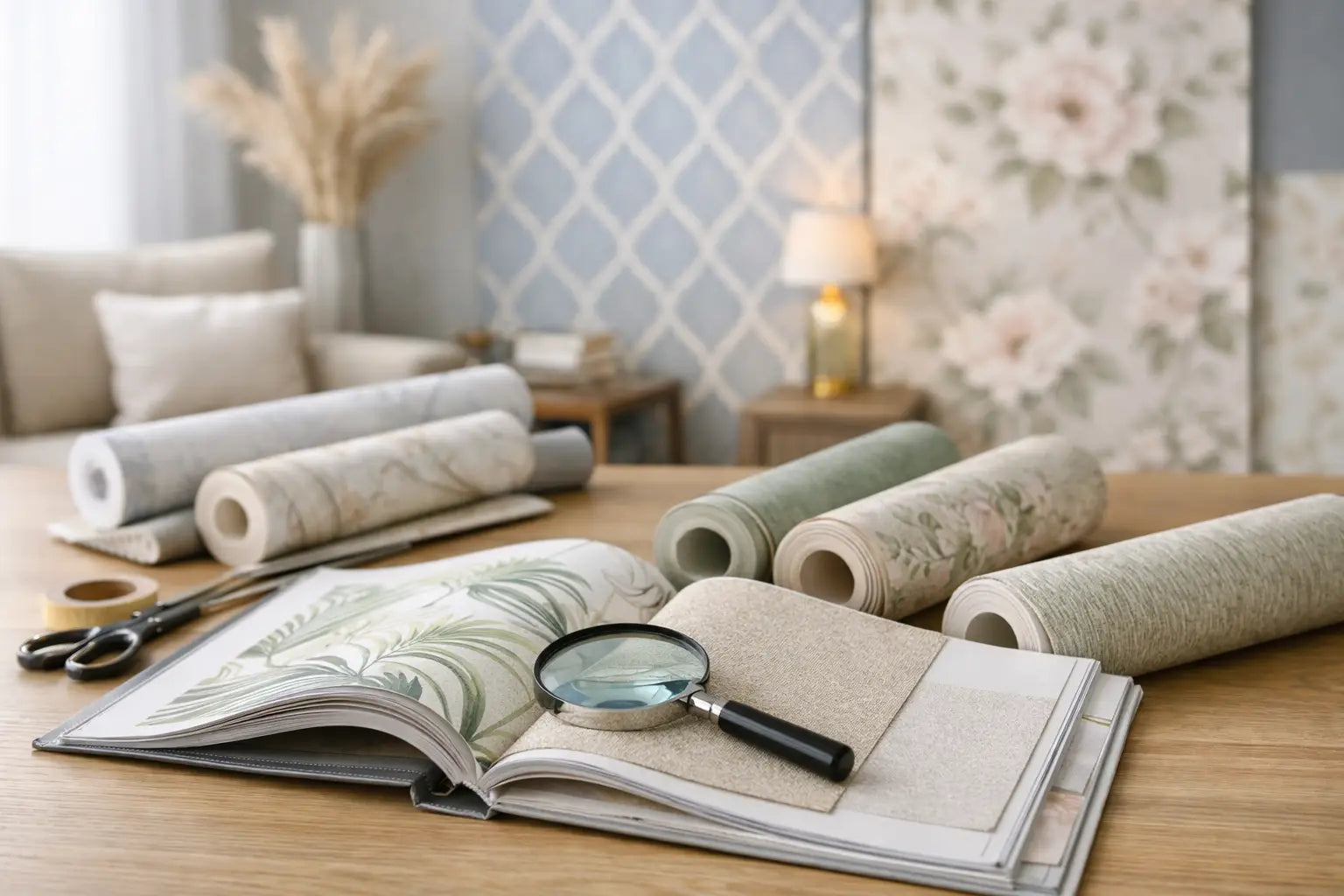
Wallpaper Buying Guide for Beautiful Rooms
A wallpaper choice can make a quiet powder room feel memorable, give a dining room its sense of occasion, or bring needed warmth to a bedroom that still feels unfinished. The best results start before the roll reaches the wall. This wallpaper buying guide will help you narrow the options by room, material, pattern, and practical installation needs, so the finish you choose looks as good in your home as it does in a sample.
Start With the Room, Not the Pattern
A beautiful print is only part of the decision. Consider how the room is used, how much natural light it receives, and whether its walls are likely to see moisture, fingerprints, or daily wear. A softly textured grasscloth may be exactly right for a formal dining room or a serene primary bedroom, while a durable vinyl wallcovering is often a wiser choice for a busy hallway, laundry room, or family-friendly bathroom.
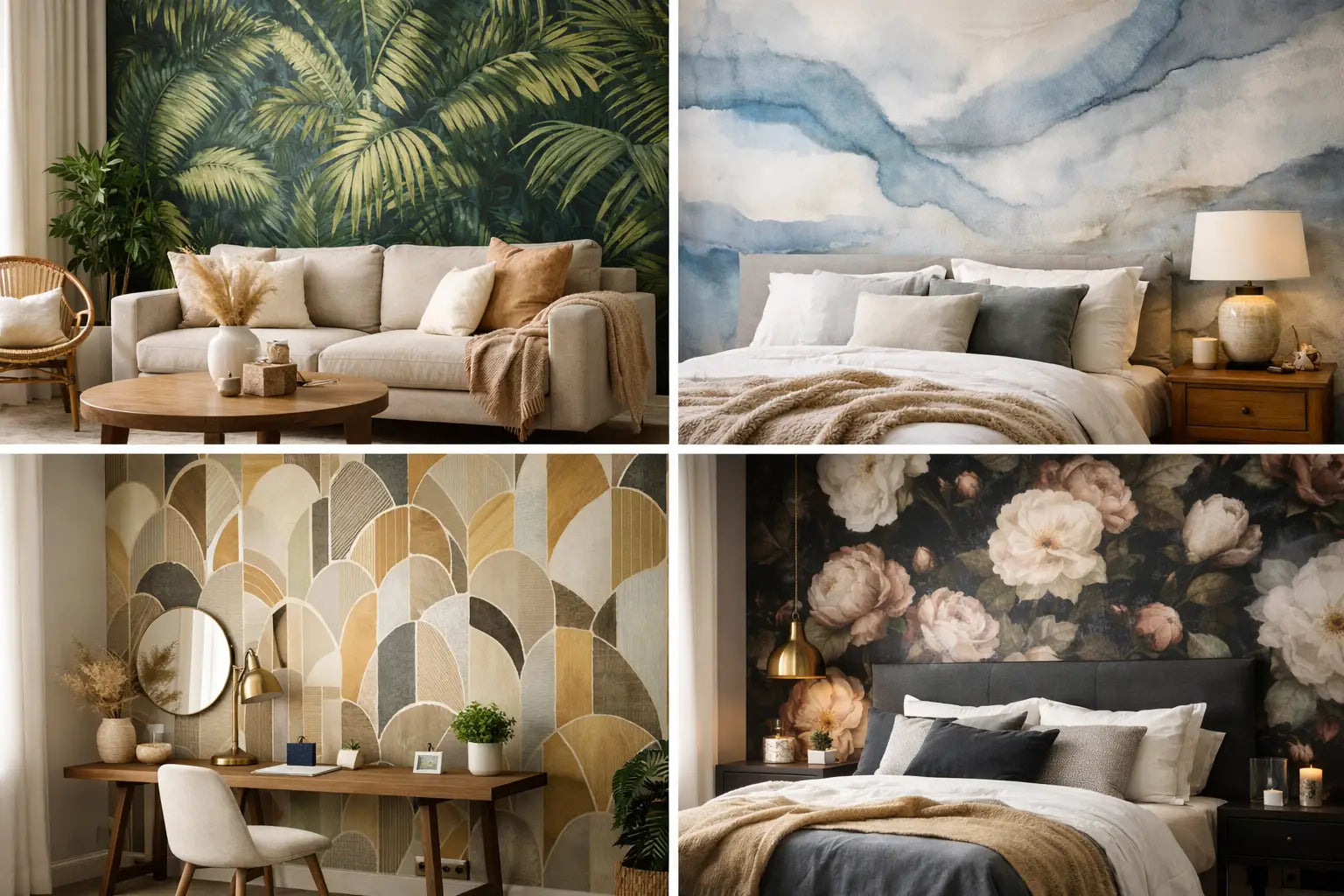
Look at the room from its most common viewpoint. In a living room, that may be from the sofa. In a bedroom, it is often from the doorway and the bed. In a powder room, the view is close and personal, which makes it an ideal place for a bold botanical, a rich color, or a sophisticated geometric. Small rooms can handle statement wallpaper exceptionally well because there is less wall area competing for attention.
It also helps to decide what role the wallpaper should play. An all-over pattern can establish the room's mood, while a quieter texture can add depth without taking over. If you have a favorite artwork, rug, or fabric, pull one or two colors from it to guide your search. Wallpaper should feel connected to the room, not merely placed in it.
Choose a Wallpaper Material That Fits Your Lifestyle
Wallpaper is not one product category. The surface, backing, texture, and installation method all affect its appearance and performance. Choosing the right type helps you enjoy the look longer and makes the installation process more predictable.
Non-woven wallpaper
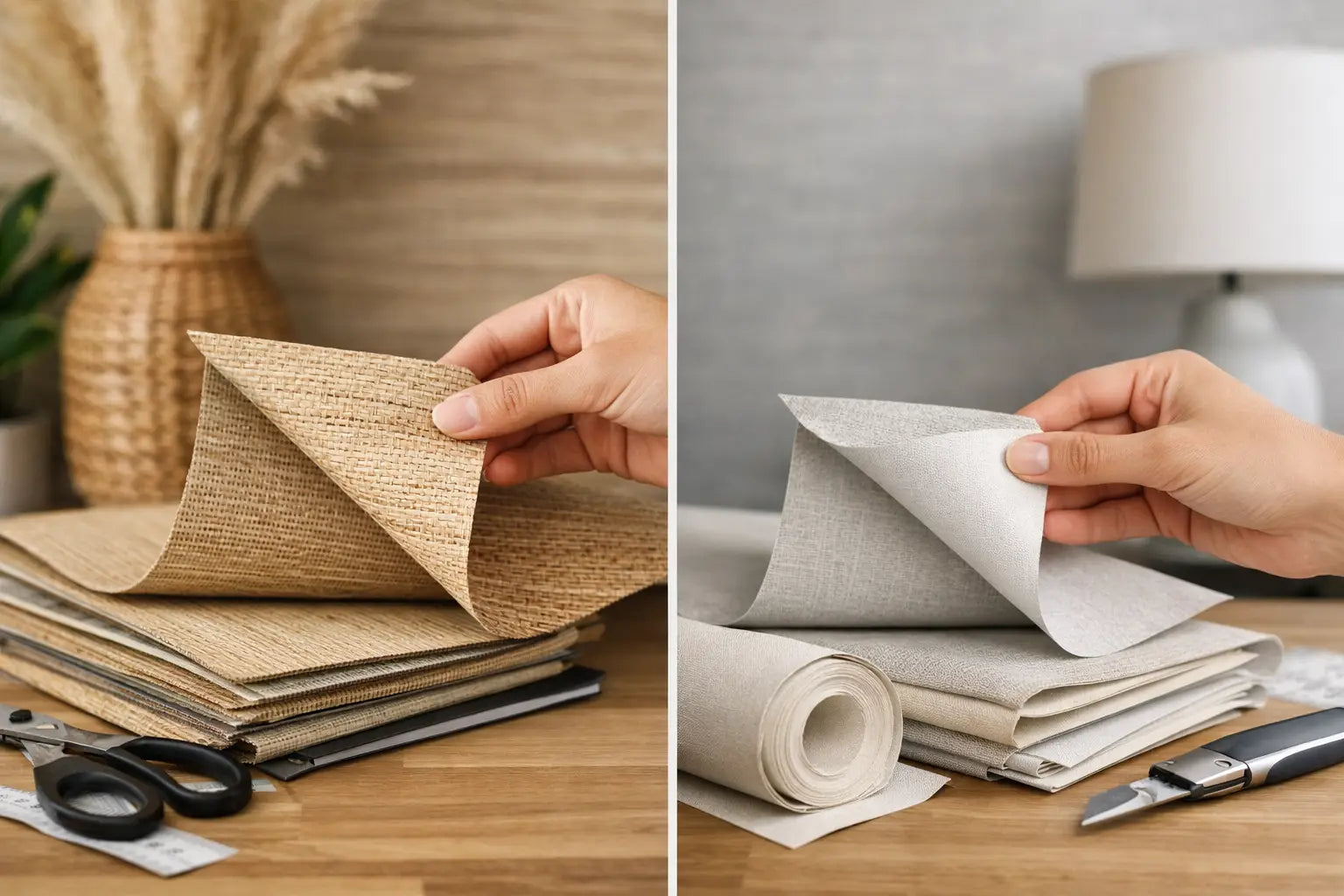
Non-woven wallpaper is a popular option for residential interiors because it offers a polished look with practical benefits. Many non-woven styles are paste-the-wall, meaning adhesive goes directly on the wall rather than the back of each strip. This can make hanging and future removal more manageable. It is a strong choice for bedrooms, living spaces, offices, and feature walls.
Vinyl wallpaper
Vinyl is valued for durability and cleanability. Depending on the specific construction, it can be a smart fit for kitchens, bathrooms with good ventilation, entryways, and spaces where walls need to stand up to everyday life. Vinyl has come a long way in appearance, with options ranging from refined linen effects to bold prints and convincing natural textures.
Grasscloth, cork, and other natural textures
Natural wallcoverings bring dimension that paint cannot replicate. Grasscloth, cork, and similar materials introduce variation in color and weave, giving walls an organic, tailored quality. That variation is part of their character, not a flaw. Seams may be more visible than with printed paper, and panels can vary slightly, so these materials are best selected with an appreciation for their handcrafted appearance.
They are especially striking in dining rooms, libraries, bedrooms, and formal living areas. If the room has high humidity or frequent splashes, a vinyl or non-woven option may be more practical.
Paintable, flock, and decorative specialty finishes
Paintable wallpaper adds raised texture that can be customized with your preferred paint color. It is useful when you want architectural interest without committing to a printed pattern. Flock, crystal beaded, and other specialty finishes are more decorative by nature. They can create a dramatic focal point in a powder room, dressing area, or formal entertaining space, but they deserve thoughtful placement away from heavy wear.
Understand Pattern Scale Before You Commit
One of the most common wallpaper surprises is scale. A pattern that looks delicate in a small swatch may appear much larger once it covers an entire wall. Conversely, a print with a larger repeat can feel balanced and elegant in a spacious room.
Do not assume a large pattern only works in a large room. Big botanicals, murals, and generous geometrics can make a compact room feel intentional rather than busy, particularly when the room has simple fixtures and limited furnishings. The trade-off is that a bold print becomes the visual center of the space, so it may ask for quieter fabrics, artwork, and accessories nearby.
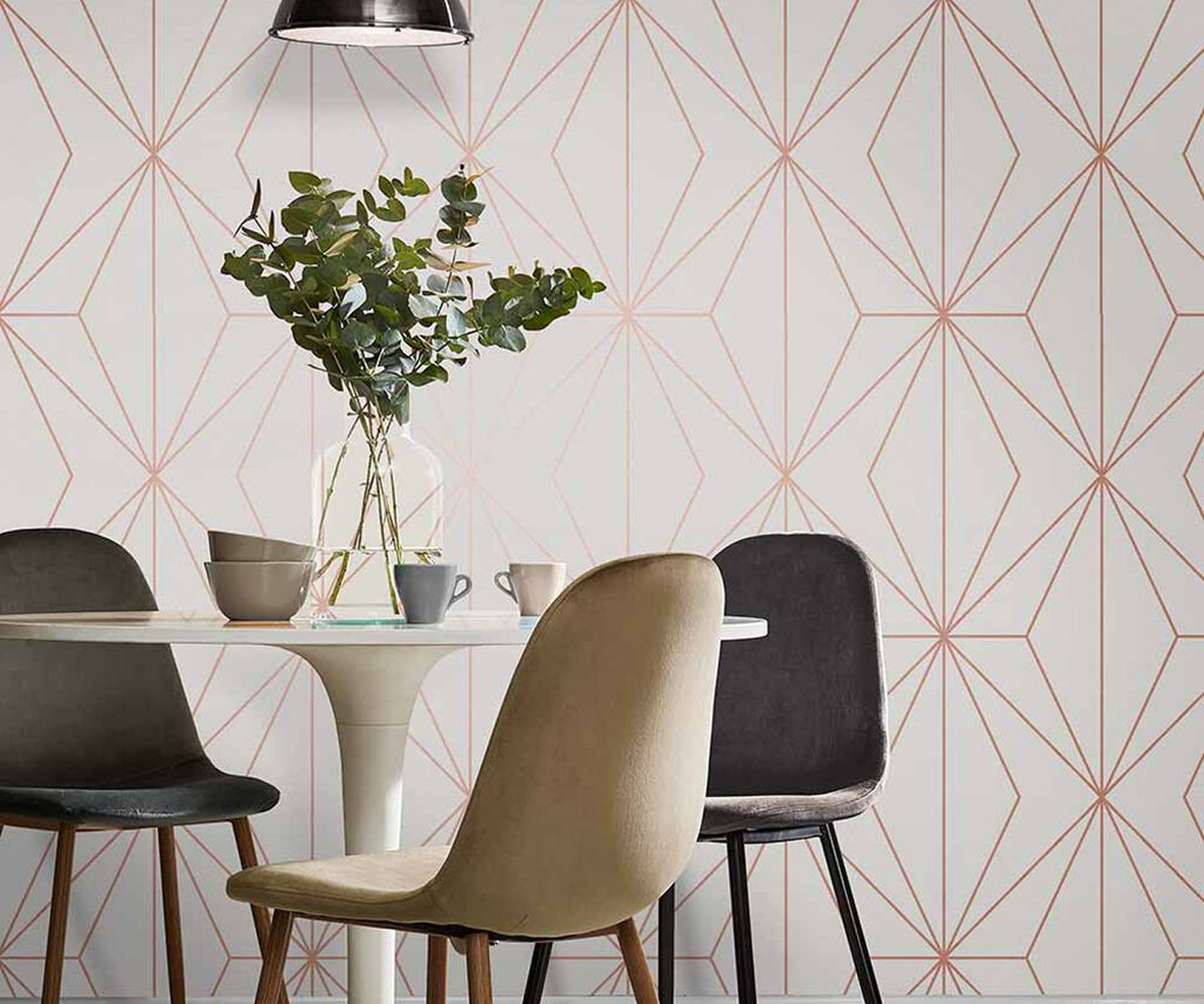
For an open living area or large bedroom, consider how the pattern reads from a distance. Fine, low-contrast prints can bring softness and movement without dominating. High-contrast designs create more energy. Stripes can visually lengthen or heighten a room depending on their direction, while organic patterns tend to soften straight architectural lines.
Before ordering, view the sample on the intended wall at different times of day. Tape it beside your trim, cabinetry, flooring, and upholstery. Morning light can pull out colors that disappear at night, while warm lamps can make a cool gray look more taupe. A sample is not just a color check. It is your chance to see whether the finish has the right presence in the room.
Color and Texture Set the Mood
Wallpaper gives you a rare opportunity to combine color, pattern, and texture in a single design decision. Start with the feeling you want when you enter the room. Warm neutrals, woven textures, and muted botanicals create an inviting, layered atmosphere. Deep blue, forest green, charcoal, and jewel tones bring intimacy and drama. Bright florals and playful geometrics can add personality to spaces that need a lift.
For rooms with limited light, there is no rule that says you must choose pale wallpaper. A deep, enveloping color can make a small or windowless room feel intentional and cozy. If you want to keep the room airy, choose a lighter ground color, subtle contrast, or a pattern with open space between motifs.
Texture deserves equal consideration. A smooth printed wallpaper feels crisp and graphic. A grasscloth or linen-inspired finish brings warmth. Raised or dimensional surfaces add shadow and movement as light changes through the day. In a room that already has patterned tile, ornate drapery, or a statement rug, a textured solid can be the perfect visual counterpoint.
Measure Carefully and Buy From the Same Run
Wallpaper is sold by the roll, but the amount you need depends on more than the square footage of the room. Pattern repeat creates waste because strips must be aligned, and doorways or windows do not always reduce the requirement as much as expected. A large-scale pattern usually requires more allowance than a small random texture.
Measure the width and height of every wall you plan to cover. Then account for ceilings, sloped areas, doors, windows, and any wall that needs extra cuts around built-ins. A wallpaper calculator is useful for a starting estimate, but an installer can be especially helpful for complex rooms, murals, large repeats, or specialty materials.
Order enough wallpaper at one time whenever possible. Production runs can vary slightly in color, even within the same design. Check the run or lot number on every roll before installation to make sure they match. It is also wise to keep one unopened roll for future repairs, especially in high-traffic rooms or homes with children and pets.
Plan for Installation Before You Place the Order
Some wallpaper is well suited to a confident do-it-yourself project, particularly straightforward non-woven designs on smooth, properly prepared walls. Other materials need an experienced installer. Grasscloth, specialty finishes, murals, wallcoverings with a large repeat, and rooms with many corners or obstacles often benefit from professional expertise.
Wall preparation is where a lasting installation begins. Walls should be clean, smooth, dry, and properly primed for wallcovering. Wallpaper can emphasize bumps, old paint ridges, and uneven repairs, especially when it has a sheen or a precise geometric pattern. A good primer supports adhesion and can make future removal easier.
If your home has textured walls, ask whether the texture needs to be skim-coated first. This added step can be worthwhile for a clean, high-end result. It may not be necessary for every heavily textured wallcovering, but it matters for smooth papers and detailed prints.
Shop With Confidence, Then Let the Room Lead
Browsing by color, pattern, and material is a practical way to begin, but your final choice should always come back to the room itself. At Wallpaper and Stuff, shoppers can compare in-stock options, request samples, and visit the Smyrna showroom to see how finishes look and feel in person. That tactile step is especially valuable with grasscloth, cork, flock, and other textured wallcoverings.
Give yourself permission to choose the paper that creates a reaction. The right wallpaper does more than fill an empty wall. It gives the room a point of view, and every time you walk in, it should feel like home.