Celebrating 35+ Years

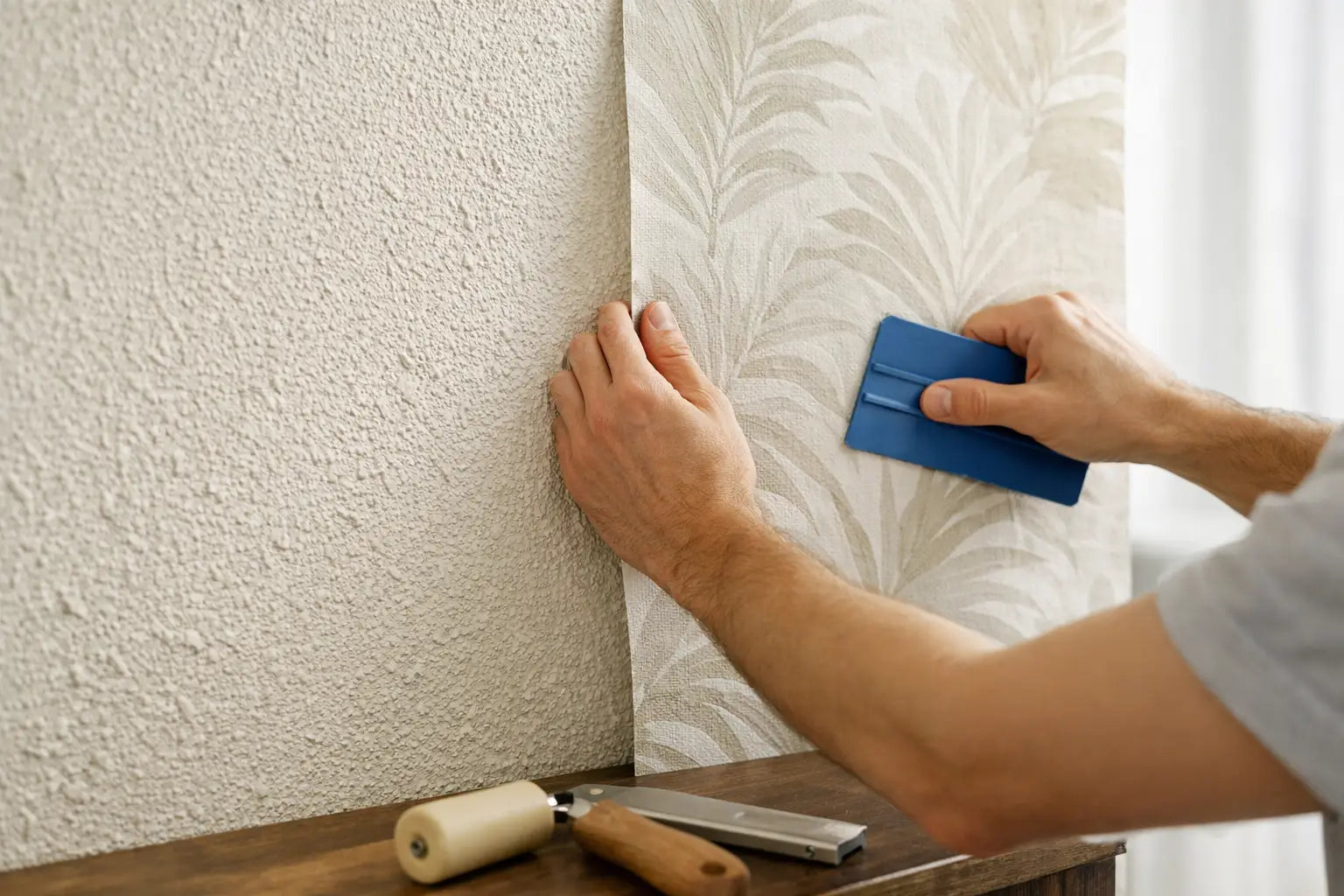
Can You Wallpaper Textured Walls?
Texture can make a wall interesting in paint, but it changes the equation fast when wallpaper enters the picture. If you are wondering, can you wallpaper textured walls, the honest answer is yes - sometimes. The real question is whether you should, and that depends on how deep the texture is, what wallpaper you choose, and how polished you want the finished room to look.
Wallpaper performs best on a clean, smooth, properly prepared surface. That is true whether you are installing a soft botanical print in a bedroom, a dramatic geometric in a dining room, or a durable vinyl in a busy hallway. Texture underneath the paper can show through, interfere with adhesion, and make seams more noticeable than you expected.
Can You Wallpaper Textured Walls Successfully?
You can wallpaper over light texture in some situations, especially if the texture is subtle and the wallpaper is thick enough to disguise minor variation. A lightly sanded orange peel wall may be workable. A heavy knockdown, popcorn, or aggressively troweled finish is a different story.
The more texture you have, the more likely you are to see shadows, raised areas, bubbling, or seams that refuse to lie flat. Wallpaper is decorative, but it is also honest. It tends to reveal what is underneath rather than hide it completely.
That is why experienced installers usually start by evaluating the wall itself before talking about pattern, color, or material. If the foundation is wrong, even a beautiful paper can look disappointing once it is on the wall.
Which Wall Textures Cause Problems?
Not all texture behaves the same way. Light orange peel is often the most forgiving, particularly if it has been primed and is in good condition. If the surface only has a fine, shallow texture, some heavier non-woven or vinyl wallcoverings may perform reasonably well.
Knockdown texture is more unpredictable because of its flattened ridges and uneven high spots. Those broad raised areas can telegraph through wallpaper and create visible irregularities across the wall. Heavier decorative papers might soften the look, but they rarely erase it.
Popcorn texture is usually a no. It is too uneven, too fragile, and too prone to poor adhesion. Wallpaper needs contact with the wall, and popcorn creates too many voids between the adhesive and the surface.
Heavily textured plaster, swirl finishes, and pronounced hand-applied textures also tend to be poor candidates unless the wall is skim coated first. Even if the wallpaper sticks at first, long-term performance can be questionable.
When Wallpaper Over Texture Can Work
There are cases where wallpapering over texture makes sense. If the wall has very light texture, the room is low-moisture, and you are using a thicker material, you may be able to move forward with less prep. This is often more realistic in secondary spaces or casual areas where a perfectly flat, tailored finish is not the goal.
Material choice matters here. Some wallpapers are more forgiving than others. Thicker non-woven papers and certain vinyl wallcoverings can help mask a slightly uneven surface. Grasscloth and other natural textured wallcoverings may also visually distract from minor wall imperfections, though they bring their own installation considerations and natural shading variation.
Even in the best-case scenario, there is a difference between acceptable and ideal. If you want crisp seams, a refined finish, and a result that feels custom, smoothing the wall is still the better route.
When You Should Smooth the Wall First
If the texture is obvious to the touch, it will usually be obvious under wallpaper. That is the simplest rule. Skim coating creates a flatter surface by applying a thin layer of joint compound over the wall, then sanding it smooth once dry. It takes more preparation, but it also creates a much better base for wallpaper to adhere properly and look its best.
This step is especially worthwhile in powder rooms, dining rooms, bedrooms, and feature walls where wallpaper is meant to make a design statement. Bold prints, metallic finishes, and smoother high-end papers show surface flaws more readily, so prep becomes part of the finished look.
A skim-coated wall also helps with future removability. Wallpaper installed over a properly primed smooth wall is generally easier to remove cleanly than wallpaper installed over unstable texture.
Can You Wallpaper Textured Walls Without Skim Coating?
Yes, but only in limited situations, and with realistic expectations. If you skip skim coating, you are accepting some level of texture telegraphing through the paper. In some interiors that may be perfectly fine. In others, it can undermine the whole effect.
The decision often comes down to priorities. If speed and convenience matter most, and the texture is minimal, a careful installer may be able to proceed with the right primer and a suitable wallpaper. If appearance is the top priority, prep is rarely the place to cut corners.
For homeowners updating a space they want to enjoy for years, smoothing the wall is usually the smarter investment. Wallpaper is a finish material. It deserves a finish-ready surface.
The Best Wallpaper Types for Slightly Textured Walls
If your wall texture is mild, look for wallpapers with a bit more body. Non-woven wallpaper is often a practical choice because it is dimensionally stable, user-friendly, and available in a wide range of patterns and styles. Heavier vinyl wallcoverings can also offer more coverage and durability, especially in hard-working areas.
Textural designs can be helpful too. Linen-look patterns, tonal prints, or wallpapers with visual depth tend to be more forgiving than very flat, solid, or glossy styles. A paper with movement in the pattern can distract from minor inconsistencies in the wall beneath it.
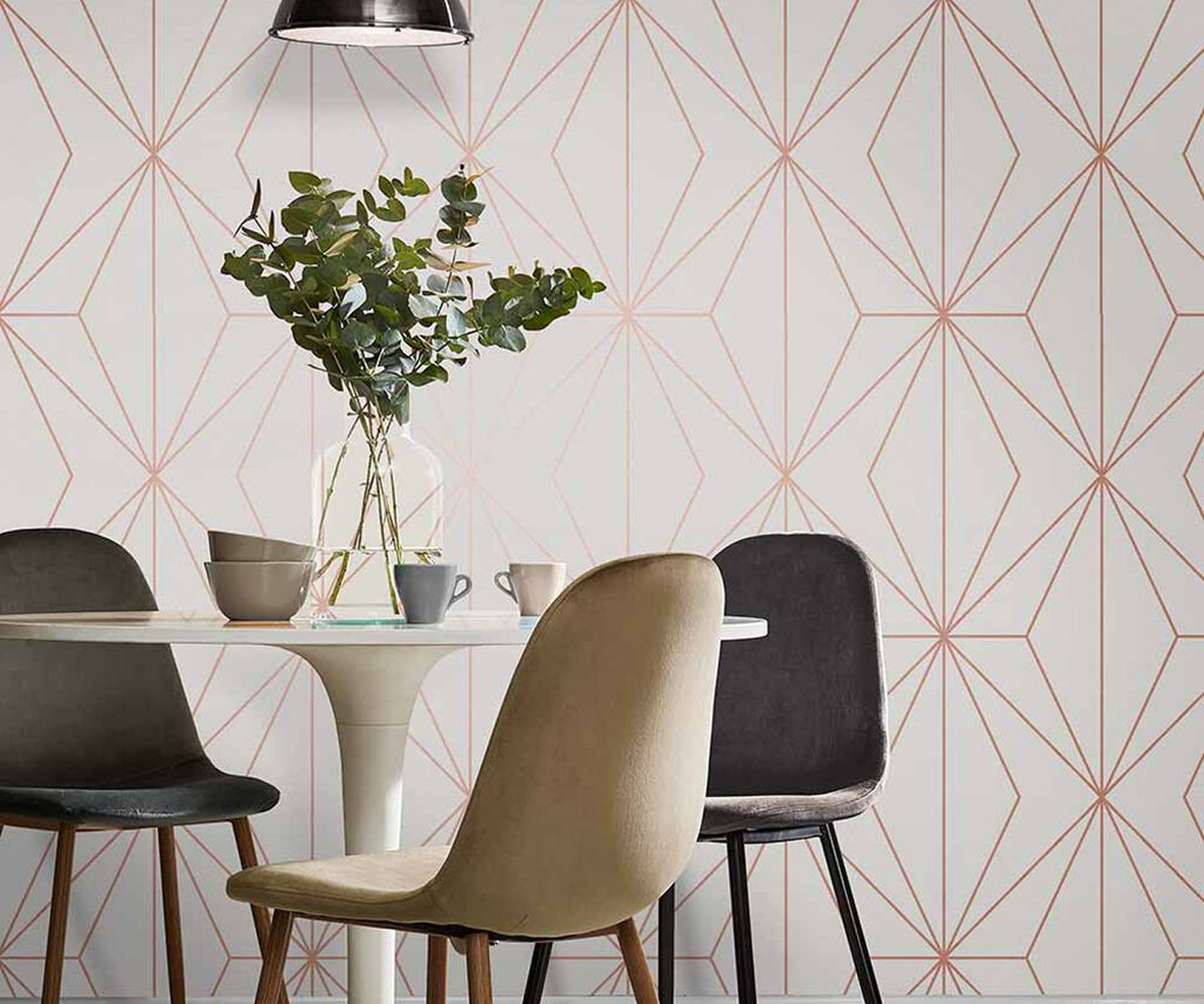
On the other hand, thin papers, highly reflective finishes, and precise geometric prints are less forgiving. Every bump has a better chance of showing, and any seam irregularity becomes easier to spot. If your wall is not smooth, these choices ask more from the surface than it may be able to deliver.
Prep Still Matters, Even on Light Texture
Whether you skim coat or not, surface preparation should never be skipped. The wall needs to be clean, dry, stable, and primed with a wallpaper-appropriate primer. Dust, grease, patchy paint, or flaking texture can all affect adhesion.
If the existing texture has loose areas, those need attention before any wallpaper goes up. The same goes for cracks, nail pops, or patched sections that create uneven absorption. Primer helps create a more uniform surface and improves both adhesion and removability later.
This is also the stage where samples earn their keep. A sample lets you see how a material behaves against your wall and in your room's lighting. That is especially valuable when you are weighing thicker vinyl against a softer non-woven, or choosing between a subtle texture and a cleaner print.
A Better Way to Decide
If you are standing in front of a textured wall trying to decide whether wallpaper is still on the table, start with touch as much as sight. Run your hand across the wall. If it feels only faintly textured, you may have options. If it feels noticeably ridged, bumpy, or rough, smoothing the wall first is likely the better path.
Then think about the finish you want. For a relaxed guest room or a softly textured natural wallcovering, slight wall variation may be less of an issue. For a formal dining room, a sleek powder room, or a statement wall where pattern alignment matters, a smooth surface will give you a far more polished result.
For many shoppers, this is where expert guidance makes all the difference. With so many wallpaper types, textures, and pattern scales available, the right recommendation depends on the wall, the room, and the look you are trying to create. At Wallpaper and Stuff, that is part of the value - helping customers match the right wallcovering to the real conditions in their home, not just the photo they love.
Wallpaper can absolutely transform a textured room, but the best results come from respecting the surface first. When the wall is properly evaluated and the material is chosen with care, the finished space feels intentional, elevated, and ready to enjoy every day.