Celebrating 35+ Years

How Much Wallpaper Do I Need?
A wallpaper project usually feels easy right up until the math starts. If you are asking how much wallpaper do i need, the short answer is this: more precision up front means a smoother install, a better pattern match, and far less chance of running short when your room is halfway done.
Wallpaper can transform a powder room, soften a bedroom, or give a dining room the kind of finish paint rarely delivers. But ordering the right quantity takes more than measuring one wall and guessing. Roll size, pattern repeat, ceiling height, and whether you are covering a full room or a single accent wall all affect the final number.
How much wallpaper do I need for a room?
Start with the wall dimensions, not the floor plan. Wallpaper is sold to cover vertical surface area, so what matters most is the width and height of each wall you plan to paper.
Measure the width of every wall in feet, then add those widths together. Next, measure the wall height from the top of the baseboard or floor to the ceiling. If the ceiling height varies, use the tallest point. It is always better to order for the longest drop than to come up short.
For a standard room, multiply the total wall width by the wall height to get the total square footage. Then subtract large openings like doors and oversized windows only if they are significant. In many cases, especially with patterned wallpaper, homeowners do not subtract smaller windows or doors because that extra material often gets used for trimming, matching, and waste.
That gives you a starting point, but not your final order quantity.
Why square footage alone is not enough
This is the part many people miss. Wallpaper is not simply sold by square foot like flooring or tile. It comes in rolls, and each roll yields a certain number of usable strips based on your wall height and the pattern.
A 20.5-inch by 33-foot double roll and a wider European roll do not behave the same way. Neither does a solid texture compared with a large-scale floral or geometric print. The more dramatic the pattern repeat, the more material you may need to align it from strip to strip.
That is why two rooms with the same square footage can require different quantities. If one room uses a subtle grasscloth look with no obvious repeat, and the other uses a bold botanical with a long repeat, the second room may need extra rolls even though the room size is identical.
The easiest way to calculate wallpaper quantity
The most practical method is to calculate by usable strips.
First, convert your wall width into inches. Then divide by the wallpaper width to estimate how many strips you need across the room. Always round up. If your total wall width is 144 inches and your wallpaper is 20.5 inches wide, you need just over 7 strips, so you would order for 8 strips.
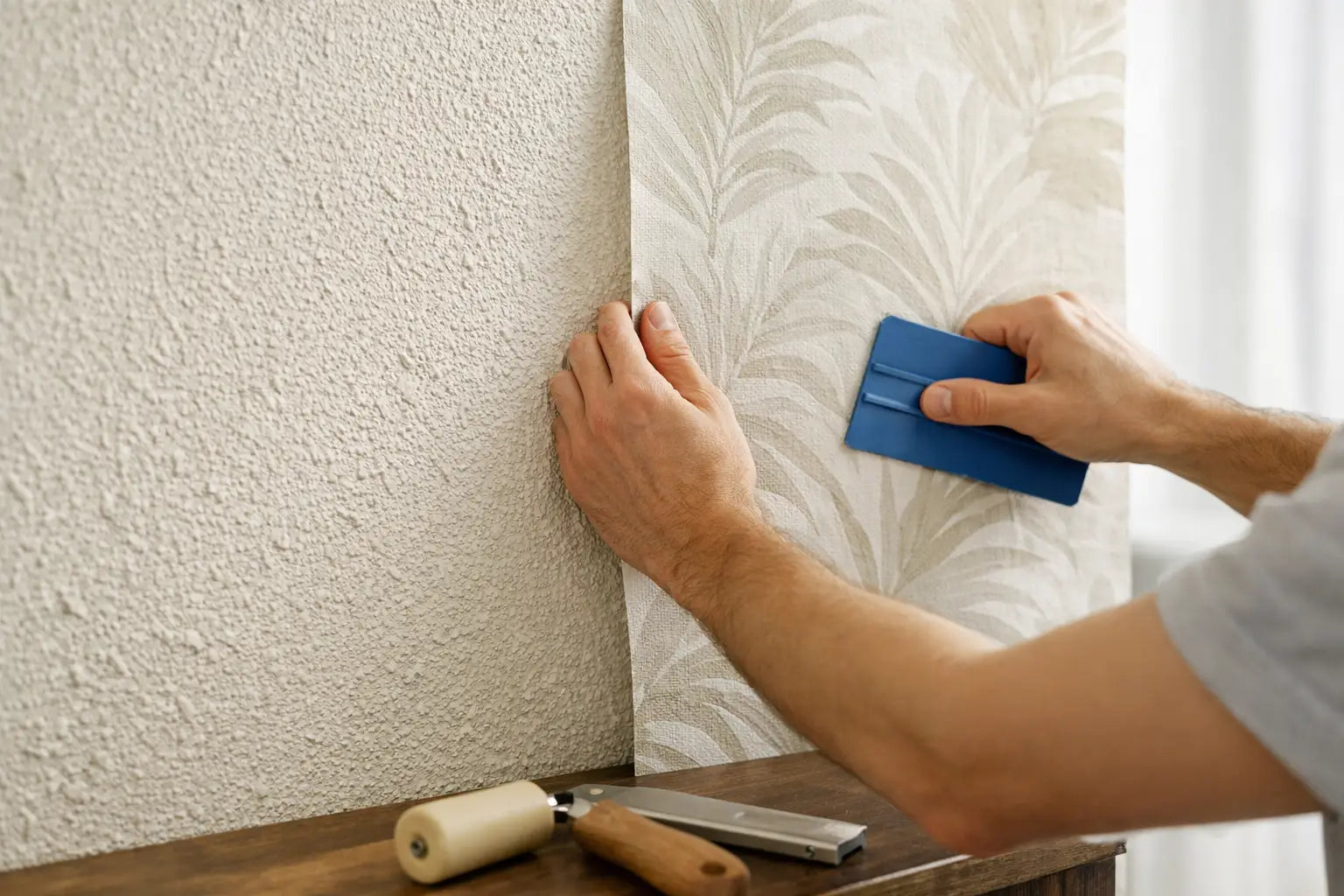
Next, determine how many full-length strips you can get from one roll or one double roll. This depends on your wall height plus extra allowance for trimming and pattern matching. Most installers add a few inches at the top and bottom, so an 8-foot wall may require a cut length closer to 8 feet 4 inches or more.
Then account for pattern repeat. If your wallpaper has a repeat, each strip may need additional length so the design lands in the right place. This can reduce the total number of strips you get from each roll.
Once you know how many strips you need and how many strips come from each roll, the quantity becomes much clearer.
A quick example
Let us say you are wallpapering one accent wall that is 12 feet wide and 8 feet high. Your wallpaper is 27 inches wide.
A 12-foot wall is 144 inches wide. Divide 144 by 27 and you get 5.33, which means you need 6 strips.
If each strip must be cut to around 9 feet to allow for trimming and pattern placement, and your roll length gives you 4 usable strips per double roll, then 6 strips would require 2 double rolls.
That sounds simple because it is a single wall with a manageable layout. Full rooms, taller ceilings, stairwells, and large repeats get more technical fast.
Pattern repeat changes everything
Pattern repeat is the distance before the design starts over. Small repeats waste less material. Large repeats can use considerably more because each strip must be aligned with the one beside it.
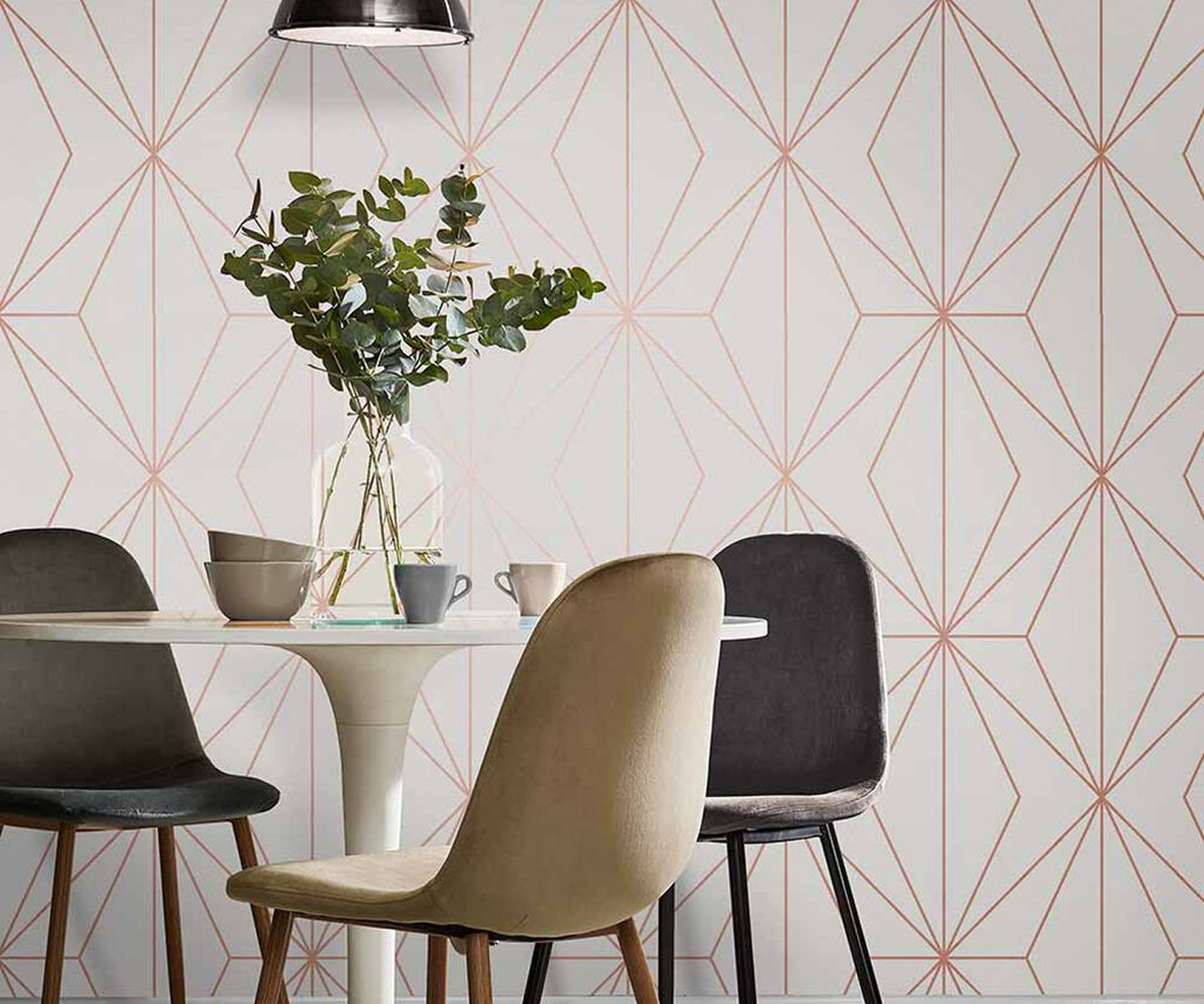
Straight match patterns tend to be more predictable. Drop match patterns can require extra planning and extra paper. This does not mean you should avoid them. Some of the most striking wallpapers use bold repeats and dramatic matching. It simply means the quantity estimate needs to reflect the design, not just the room size.
This is especially relevant in statement spaces like dining rooms, foyers, and powder rooms where shoppers often choose larger prints for impact. Beautiful pattern is worth it, but it is rarely the place to cut the order too close.
Full room, accent wall, or ceiling?
The answer to how much wallpaper do i need also depends on where it is going.
A full room usually creates the most waste because you are working around corners, doors, windows, and sometimes uneven walls. Accent walls are easier to estimate, though you still need enough material to center the pattern attractively if the design calls for it.
Ceilings can be a different calculation altogether. The orientation of the pattern, the room shape, and the challenge of installation can all affect material use. The same goes for niches, built-ins, and rooms with sloped ceilings.
If you are wallpapering a powder room, for example, the square footage may be small, but the number of cuts around a vanity, mirror, toilet, and door frame can add waste. A bedroom accent wall may look simpler on paper, yet a mural-style print may need exact panel placement and leave little room for error.
When to order extra wallpaper
A little extra is smart. Too much extra is unnecessary. The right balance depends on the product and the project.
Ordering an additional roll is often wise if you have a large pattern repeat, older walls that may be less square, or a room with several obstacles. It also helps if you want material on hand for future repairs. If a section gets damaged later, having the same run can make touch-ups much easier.
This matters because wallpaper colors can vary slightly between production runs. If you order later, the next batch may not be a perfect match. For specialty finishes like grasscloth, cork, flock, or beaded styles, variation is part of the beauty, but it also makes planning ahead more important.
Common measuring mistakes to avoid
The most common mistake is relying only on square footage from a real estate listing or builder plan. Those measurements are for the room footprint, not the wall surface.
Another mistake is forgetting that wallpaper is often sold as a double roll even when pricing may look like a single roll format. Always check the actual coverage and roll dimensions.
Homeowners also tend to underestimate pattern repeat and overestimate how much can be subtracted for doors and windows. In reality, those areas do not always reduce the order by much because cuts and matching still consume material.
And one more thing - if your home has crown molding, chair rail, picture rail, or unusual ceiling lines, measure to the actual stopping point of the wallpaper. Decorative details can help define the install area, but they do change the math.
The smartest way to buy with confidence
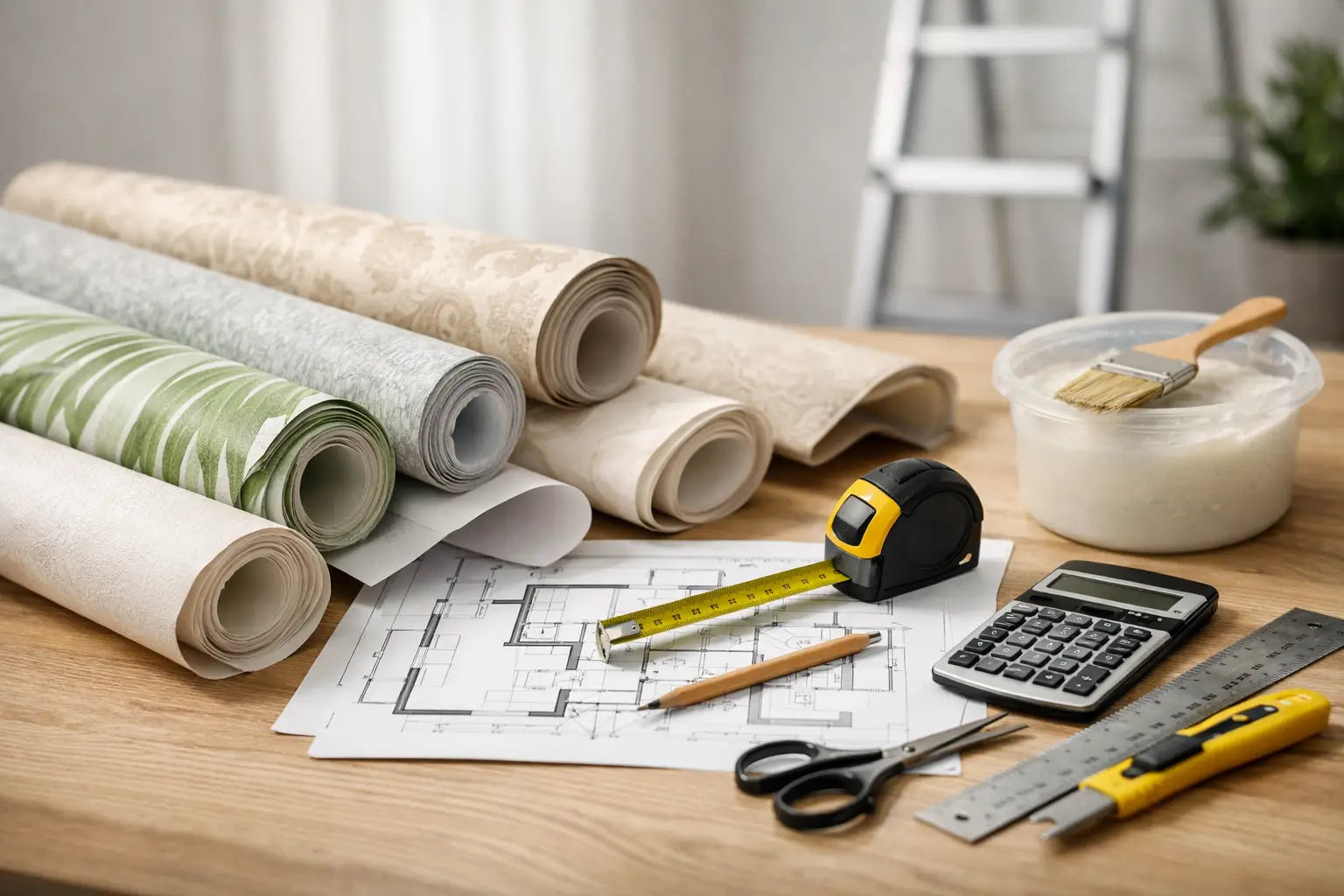
If you want the cleanest estimate, gather four things before you shop: wall width, wall height, wallpaper roll size, and pattern repeat. With those numbers, you can get much closer to the right quantity before placing your order.
Samples also help more than people expect. They are useful for color and texture, of course, but they can also reveal whether a pattern feels tight and efficient or broad and statement-making. That affects not just style, but planning.
For homeowners who want a second layer of reassurance, a wallpaper calculator can save time and reduce guesswork. And if you are choosing from a wide assortment of in-stock and special-order wallcoverings, it is worth confirming the quantity before checkout so your project stays on schedule. That is one reason shoppers turn to specialists like Wallpaper and Stuff when they want both design inspiration and practical support.
Wallpaper works best when the planning feels as polished as the finished room. Measure carefully, allow for pattern and trimming, and give yourself a little margin where it counts. The right quantity does more than cover a wall - it sets up the entire space to look intentional from the first strip to the final corner.