Celebrating 35+ Years

12 Best Wallpapers for Nurseries That Grow Well
A nursery is one of the few rooms where a wall can be whimsical, calming, and genuinely memorable all at once. The best wallpapers for nurseries do more than fill an empty wall behind the crib. They set the room’s mood during late-night feedings, give a simple furniture collection a finished look, and can still feel right when the baby becomes a toddler with very firm opinions.
The secret is choosing a pattern with staying power. Rather than designing only for a newborn phase, look for color, scale, and subject matter that can evolve with the room. A well-chosen wallcovering makes it easy to refresh bedding, art, and accessories later without starting over.
What Makes a Nursery Wallpaper a Smart Choice?
The right nursery wallpaper balances personality with practicality. Soft color palettes are popular for good reason, but they are not the only route to a restful room. A warm terracotta botanical, a dusty blue plaid, or a cheerful animal print can feel just as soothing when the overall palette is edited and the furnishings have room to breathe.
Pattern scale matters as much as color. Small, tightly repeated motifs can read as delicate from across the room, but may feel busy on every wall in a compact nursery. Large-scale prints create a striking focal point, especially behind a crib or changing table, yet they need enough open wall space to show their full effect. If the room has low ceilings, vertical stems, gentle stripes, or upward-moving patterns can subtly draw the eye higher.
Also consider how the wallpaper will live in the space. Nurseries eventually become playrooms, reading nooks, and bedrooms where little hands may meet the walls. In a high-contact area, a durable, wipeable wallpaper can be a practical choice. For a quieter accent wall, a textured non-woven paper or grasscloth-inspired design brings warmth and dimension that paint cannot replicate.
Before ordering, check the manufacturer’s care and installation guidance. If indoor-air considerations are a priority, review the product specifications, adhesives, and recommended ventilation during installation. Samples are especially useful here, letting you see both the true color and finish in your own home.
12 Best Wallpaper Ideas for Nurseries
1. Soft Botanical Prints
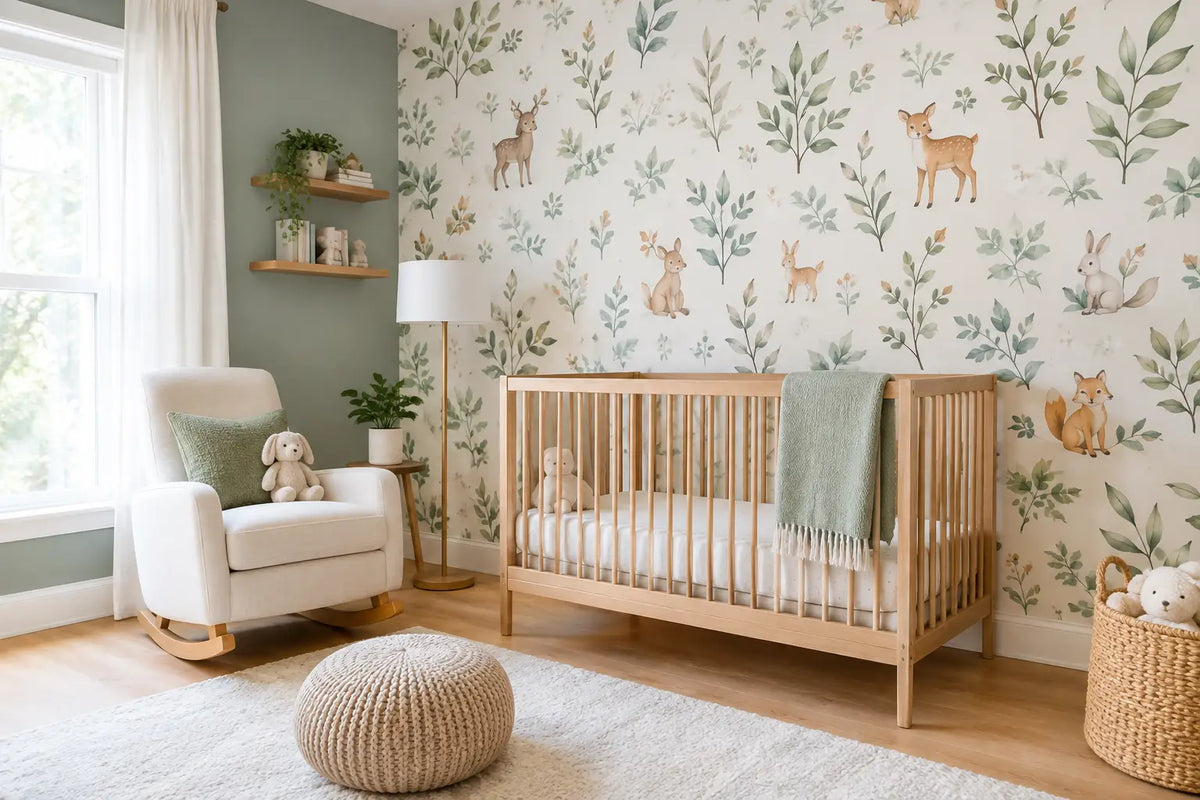
Leaves, branches, meadow flowers, and trailing vines bring the calm of nature indoors without feeling overly themed. Choose a watercolor-style botanical for a gentle, layered effect, or a more graphic leaf print for a modern nursery. Sage, muted olive, pale peach, and soft sky blue are easy partners for natural wood furniture and woven accents.
2. Whimsical Woodland Animals
Foxes, rabbits, deer, bears, and birds remain nursery favorites because they feel sweet without being too babyish. The most versatile versions use hand-drawn illustrations, subtle color, and plenty of open background. A woodland print can later work beautifully with a toddler bed, framed animal art, and a few new pillows.
3. Starry Skies and Celestial Motifs
Tiny stars, moon phases, clouds, and constellations create a dreamy nighttime feeling. This category works well in gender-neutral nurseries and in rooms where you want a little wonder without a loud theme. Navy can be dramatic behind light furniture, while cream, pale gray, or muted blue celestial prints keep the mood light.
4. Classic Stripes
Stripes are among the best wallpapers for nurseries when longevity is the main goal. A fine ticking stripe, broad cabana stripe, or soft pinstripe gives a room structure while leaving plenty of freedom for changing décor. Vertical stripes can also be helpful in rooms that need visual height.
The trade-off is that stripes are less playful on their own. Add personality through a colorful rug, a sculptural light fixture, or framed art rather than asking the wallpaper to carry every decorative detail.
5. Gingham and Plaid
Gingham has a cheerful, tailored quality that suits traditional, cottage, and modern farmhouse interiors. Small-scale checks feel especially charming in a nursery with painted furniture or vintage-inspired pieces. In richer colors such as forest green, rust, or navy, plaid can grow with the room for years.
6. Gentle Geometrics
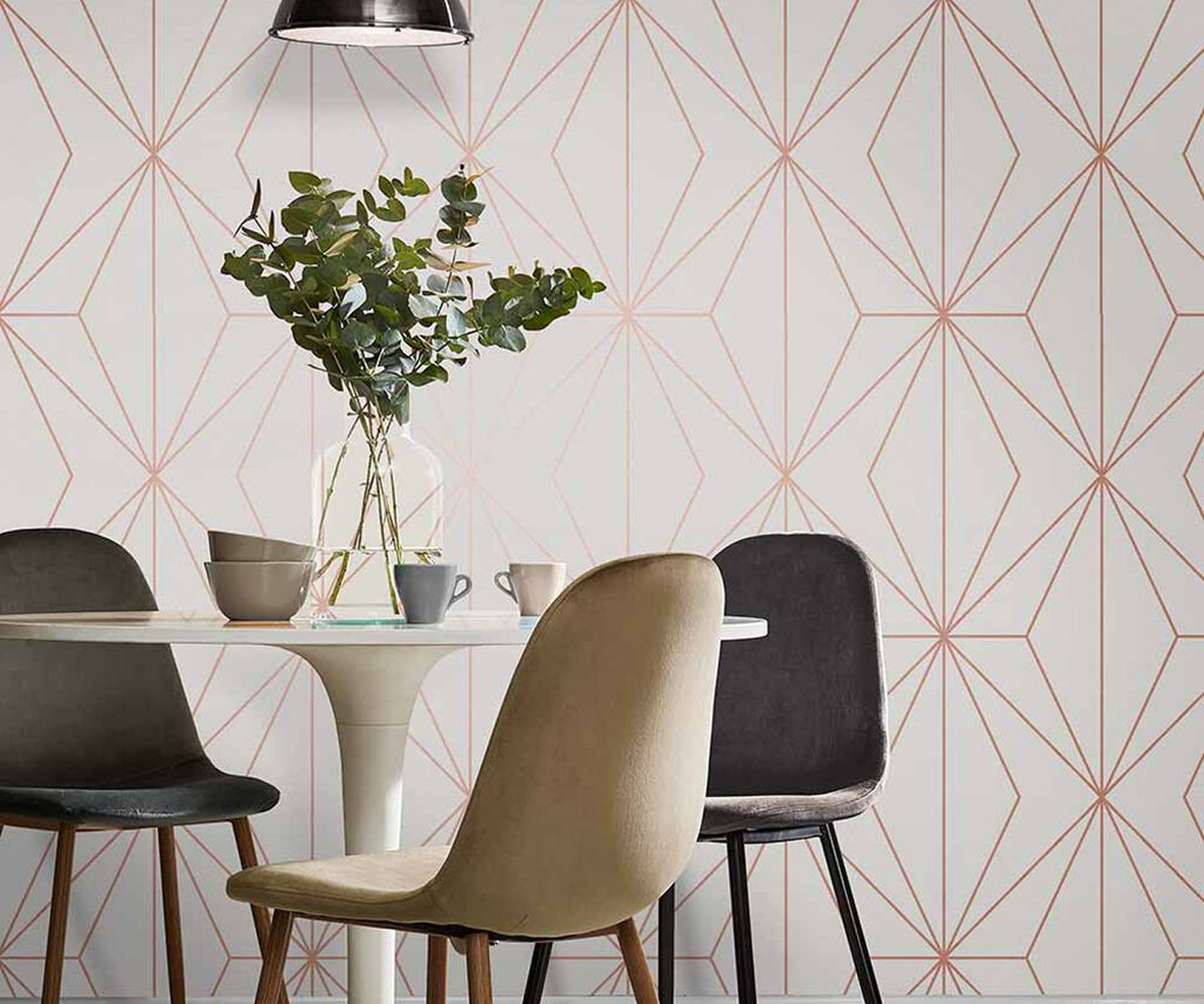
Arches, dots, scallops, triangles, and simple linework bring a current look without tying the room to a specific character or trend. A restrained geometric is a strong choice for parents who prefer clean interiors but still want more visual interest than a solid painted wall. Look for rounded shapes and muted contrast to keep the effect friendly rather than stark.
7. Safari and Animal Sketches
Animal wallpaper does not have to mean a busy jungle mural. Delicate giraffe, elephant, zebra, or lion sketches can feel refined in neutral or earth-tone nurseries. Choose an airy design with a light ground color if the room lacks natural light. If you love a bolder safari print, use it on one feature wall and let the other walls stay quiet.
8. Floral Prints With Room to Grow
Florals can be soft and traditional, bright and joyful, or surprisingly modern. Small ditsy florals bring a vintage touch, while oversized blooms make a confident focal point. For a nursery that will become a child’s room, skip overly sugary pink-and-purple combinations if they do not suit your long-term plan. Blush, marigold, moss, and faded blue offer more flexibility.
9. Clouds and Sky-Inspired Patterns
Cloud wallpaper is a natural choice for a room designed around rest. It can be barely there in ivory and pale gray or more graphic in blue and white. This is one of the easiest patterns to pair with nearly any furniture finish, from white-painted cribs to warm oak dressers.
10. Storybook Scenes
Illustrated villages, sailing ships, garden scenes, hot-air balloons, and friendly landscapes turn the wall into something a child can revisit as they grow. These designs are especially effective behind a reading chair or on the wall visible from the crib. Because storybook papers often include many colors, pull just two or three shades for textiles and accessories to avoid a crowded room.
11. Textured Neutrals
Not every nursery needs a printed wallcovering. Linen-look wallpaper, subtle grasscloth designs, soft plaster effects, and finely woven textures create a polished foundation for colorful art and toys. They are also ideal for families furnishing a nursery that may later serve another purpose, such as a guest room or home office.
Natural grasscloth delivers beautiful texture, but it is worth understanding the material before committing. Color variation and visible seams are part of its character, not flaws. If you want a similar look with easier care and more consistent repeat, a grasscloth-inspired vinyl or non-woven option may be a better fit.
12. Playful Murals and Scenic Panels
A mural can make a small nursery feel like a complete little world. Mountains, painted forests, underwater scenes, and soft cityscapes are all strong choices when the design has enough visual depth to enjoy from different parts of the room. Measure carefully and plan the layout around windows, doors, and furniture before ordering. A beautiful focal scene can lose impact if its main detail lands behind a tall dresser.
How to Choose Color Without Overthinking It
Start with the room’s fixed elements: flooring, trim color, window treatments, and any furniture you already own. Then decide whether you want the wallpaper to lead the palette or support it. A colorful wallpaper can become the room’s starting point, while a neutral paper lets a favorite rug, crib quilt, or painted dresser take center stage.
Natural light changes everything. Hold samples on multiple walls and view them in morning light, afternoon light, and under the lamps you will actually use at night. Cool gray can turn blue in one room and lavender in another. Cream may look warm and inviting beside one trim color but slightly yellow beside another.
For small nurseries, light wallpaper is not the only answer. A deeper color or richly patterned wall can create a cozy, enveloping room, particularly if the ceiling and remaining walls are kept simple. It depends on whether you want the space to feel airy or cocoon-like.
Sample First, Then Measure Carefully
Wallpaper is a visual decision, but it is also a measurement decision. A sample helps you assess scale, sheen, texture, and color at home. It also gives you a chance to see how the pattern sits next to the crib finish, curtains, and flooring rather than judging it under showroom lighting alone.
When calculating quantity, account for pattern repeat and waste, not just the room’s square footage. A large repeat may require extra material to align each strip. Measure wall height and width, note obstructions, and identify whether you are papering one wall or the full room. Wallpaper and Stuff offers samples, practical guidance, and a broad selection of in-stock designs for shoppers who want more confidence before making their final choice.
A nursery does not need to predict every stage ahead. Choose a wallpaper that feels good to come home to now, then let it become the backdrop for first books, bigger beds, and the stories your family adds over time.