Celebrating 35+ Years

Wallcovering Materials Guide for Every Room
A wallpaper pattern can catch your eye in seconds, but the material behind that pattern determines how it will look, feel, install, and live in your home. This wallcovering materials guide helps you choose with confidence, whether you are refreshing a powder room, layering texture into a dining room, or creating a bedroom feature wall that feels entirely your own.
The right choice is rarely about what is “best” in every situation. It is about matching the wallcovering to the room, the condition of the walls, the amount of daily wear, and the level of texture you want to bring into the space.
Wallcovering Materials Guide: Start With the Room
Before falling in love with a print, consider what happens in the room on an ordinary Tuesday. Is there steam from showers? Splashing near a sink? Kids, pets, or dining chairs brushing against the wall? A formal dining room may invite a delicate natural texture, while a busy hallway often calls for a finish that is easier to clean.
Light matters, too. A deeply textured grasscloth can create beautiful shadows in a sunlit living room, while a reflective crystal beaded paper can add drama to a small powder room. In a dark room, a lighter ground color or a subtle sheen can keep the walls from feeling heavy.
Finally, take an honest look at the surface underneath. Some materials are more forgiving than others. Smooth walls help every wallcovering look its best, but heavily textured or imperfect walls may benefit from a paintable or thicker option designed to disguise minor inconsistencies.
Vinyl Wallpaper: Practical, Polished, and Easy to Live With
Vinyl is a favorite for rooms that need style with a little extra resilience. It is typically washable and more resistant to moisture than natural fibers, making it a smart choice for bathrooms, kitchens, laundry rooms, mudrooms, and active family spaces. Modern vinyl wallcoverings come in far more than basic utility looks. You can find convincing linen effects, refined geometrics, bold botanicals, grasscloth-inspired textures, and classic prints.
The trade-off is feel. Even high-quality vinyl may not have the natural variation or tactile depth of a true grasscloth, cork, or fabric wallcovering. For many homes, though, that is a worthwhile exchange for easier care. If a room sees frequent fingerprints, splashes, or scuffs, vinyl lets you choose a decorative finish without treating the walls as untouchable.
Non-Woven Wallpaper: A Favorite for Feature Walls
Non-woven wallpaper is made from a blend of synthetic and natural fibers and is known for its dimensional stability. In practical terms, it is often easier to handle during installation because it is less likely to expand when wet. Many non-woven designs use a paste-the-wall application, which can make the process cleaner and more manageable than traditional pasted-paper methods.
This material works beautifully in bedrooms, living rooms, dining rooms, home offices, and entryways. It is an excellent starting point for a statement pattern because it is available in a wide range of styles, from quiet textural designs to oversized murals and expressive florals.
Non-woven does not automatically mean washable or moisture-proof, so check the care instructions for the specific product. A non-woven paper in a guest bath may be perfectly appropriate if it is well ventilated, while a full bath with frequent steam may be better served by vinyl.
Grasscloth: Natural Texture With a Tailored Look
Grasscloth brings an unmistakable sense of warmth to a room. Made from natural fibers such as sisal, jute, hemp, or grasses, it offers organic variation that paint simply cannot duplicate. Each panel can show subtle differences in color, weave, and texture. Those shifts are part of its character, not flaws to correct.
It is especially striking in dining rooms, studies, living rooms, primary bedrooms, and powder rooms where the walls can be appreciated up close. Grasscloth gives traditional spaces depth, softens contemporary interiors, and pairs naturally with wood, stone, brass, and upholstered furniture.
There are a few considerations before choosing it. Seams are generally visible, and color variation from one strip to the next is expected. Natural grasscloth is also not the first choice for wet or high-splash areas, since it is more delicate and harder to clean than vinyl. If you love the look but need more durability, a vinyl grasscloth design can offer a practical alternative.
Cork Wallcovering: Warmth, Dimension, and Natural Character
Cork wallcovering creates a surface with quiet movement and surprising richness. Its natural flecks, tonal variation, and dimensional texture make it a beautiful option when you want the wall itself to become part of the room’s material palette. It can feel earthy and relaxed in a modern organic space or polished and dramatic when paired with darker furnishings and metallic accents.
Like grasscloth, cork is often best in lower-moisture rooms where it will not face repeated splashes or heavy scrubbing. Consider it for a home office, library, dining room, bedroom, or an accent wall behind a bed or console. Because natural materials vary, samples are particularly valuable here. Look at one in the actual room, in daylight and at night, before making your final choice.
Flock and Crystal Beaded Wallpaper: When the Wall Is the Statement
Some rooms are meant to be remembered. Flock wallpaper, with its raised velvet-like pattern, brings depth and a classic decorative sensibility to walls. It can feel historic, glamorous, moody, or playful depending on the color and scale of the design. It is a natural fit for formal dining rooms, jewel-box powder rooms, dramatic bedrooms, and sitting areas.
Crystal beaded wallcoverings add light-catching detail and a more theatrical finish. A small amount can go a long way. These designs are often most effective on a single focal wall or in a compact space where the texture can be seen and appreciated rather than overwhelmed by a large expanse.
Both materials need thoughtful placement. Their raised surfaces are not intended for hard-use walls or areas that need frequent cleaning. They reward a little care with a finish that feels far more layered than a flat printed paper.
Paintable Wallpaper: Texture Without a Fixed Color
Paintable wallpaper is a versatile answer when you want architectural texture but need control over the final color. Available in raised patterns ranging from beadboard and tin-ceiling looks to subtle geometric textures, it can help disguise minor wall imperfections while giving a room more dimension than paint alone.
It works well in hallways, foyers, bathrooms with appropriate ventilation, and ceilings where a decorative surface adds unexpected interest. Because it is painted after installation, it can be refreshed later without removing the paper. That flexibility is a major advantage for homeowners who like to update color over time.
The final result depends on careful prep and painting. Use the recommended paint type and apply it evenly so the raised design remains crisp. A heavy hand can fill in the details that made the wallcovering appealing in the first place.
A Few Details That Make Selection Easier
Material is only one part of the decision. Scale, color, repeat, and finish shape how the wallcovering will read across an entire room. A large botanical can make a small powder room feel intentional and immersive, while a soft textured neutral may give an open living area the visual warmth it needs without competing with furniture or art.
Always order enough from the same dye lot when possible, particularly for natural materials and highly color-sensitive designs. Allow for pattern matching, trimming, and future repairs. Measuring square footage is useful, but wallpaper is purchased by usable coverage after the pattern repeat is considered. A wallpaper calculator can provide a helpful starting point, and a professional installer can confirm quantities for complicated rooms, stairwells, or walls with many openings.
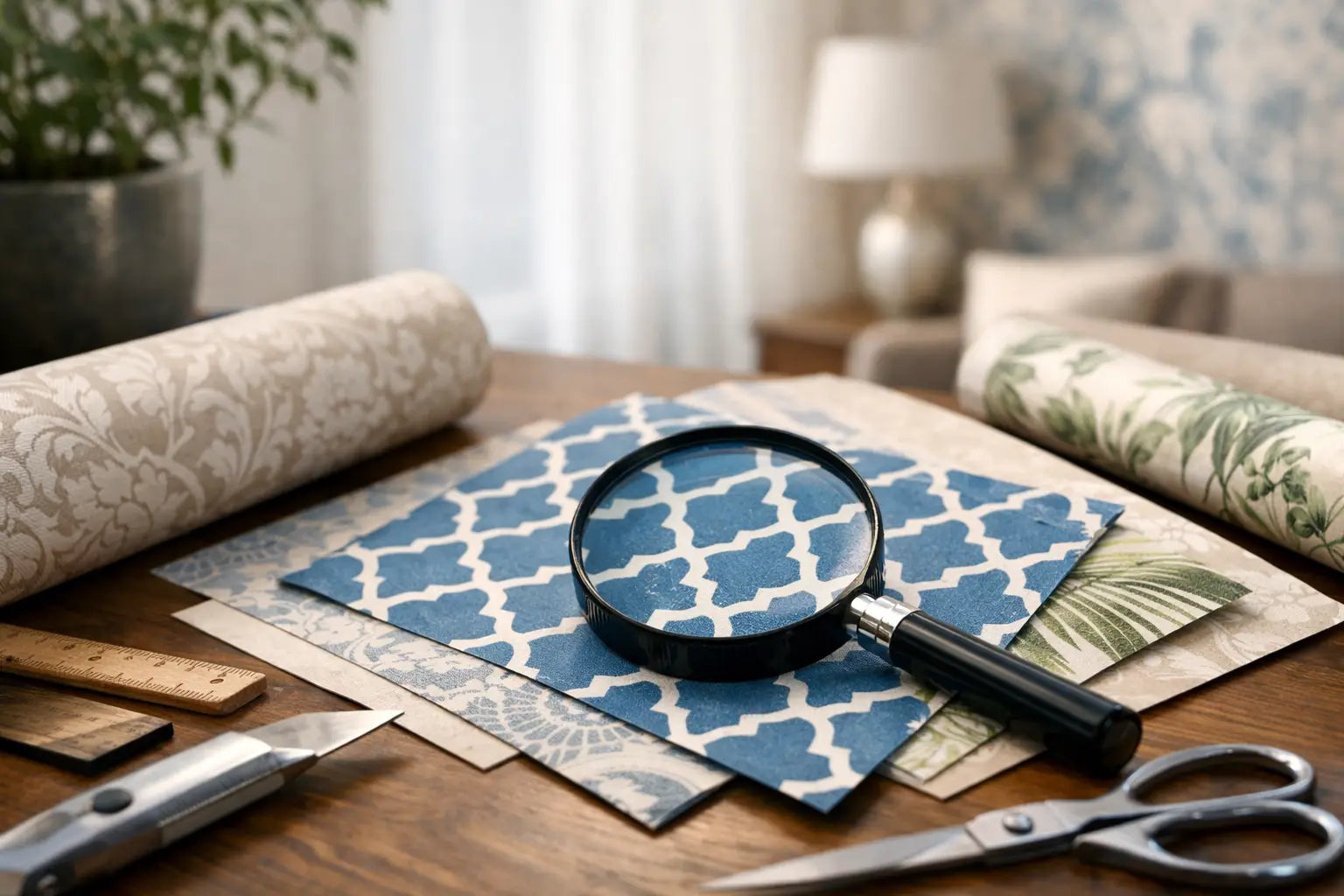
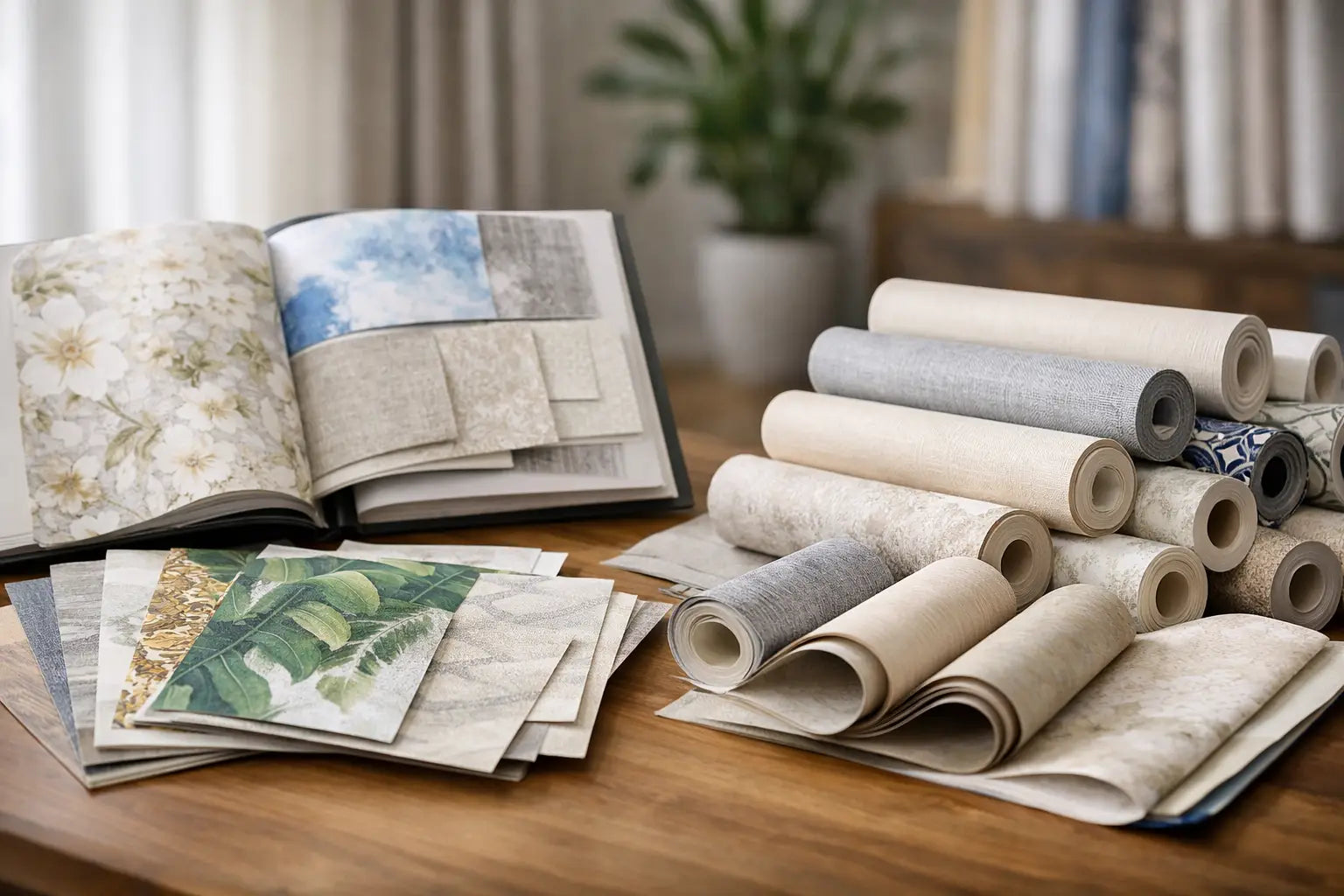
Samples are equally useful. Tape them to the wall and live with them for a day or two. See how the color changes from morning to evening, how the texture looks beside flooring and trim, and whether the scale still feels right from across the room. At Wallpaper and Stuff, the showroom experience and sample options make it easier to compare finishes in person before committing to a full order.
Let the Material Set the Mood
A wallcovering does more than cover a wall. Vinyl can bring confidence to hardworking spaces. Non-woven designs make a fresh feature wall feel approachable. Grasscloth and cork bring natural depth, while flock and crystal beaded papers turn a small room into a moment. Start with how you want the room to feel, then choose the material that lets that feeling hold up beautifully in real life.