Celebrating 35+ Years

Can Wallpaper Work in Kitchens? Yes, With Care
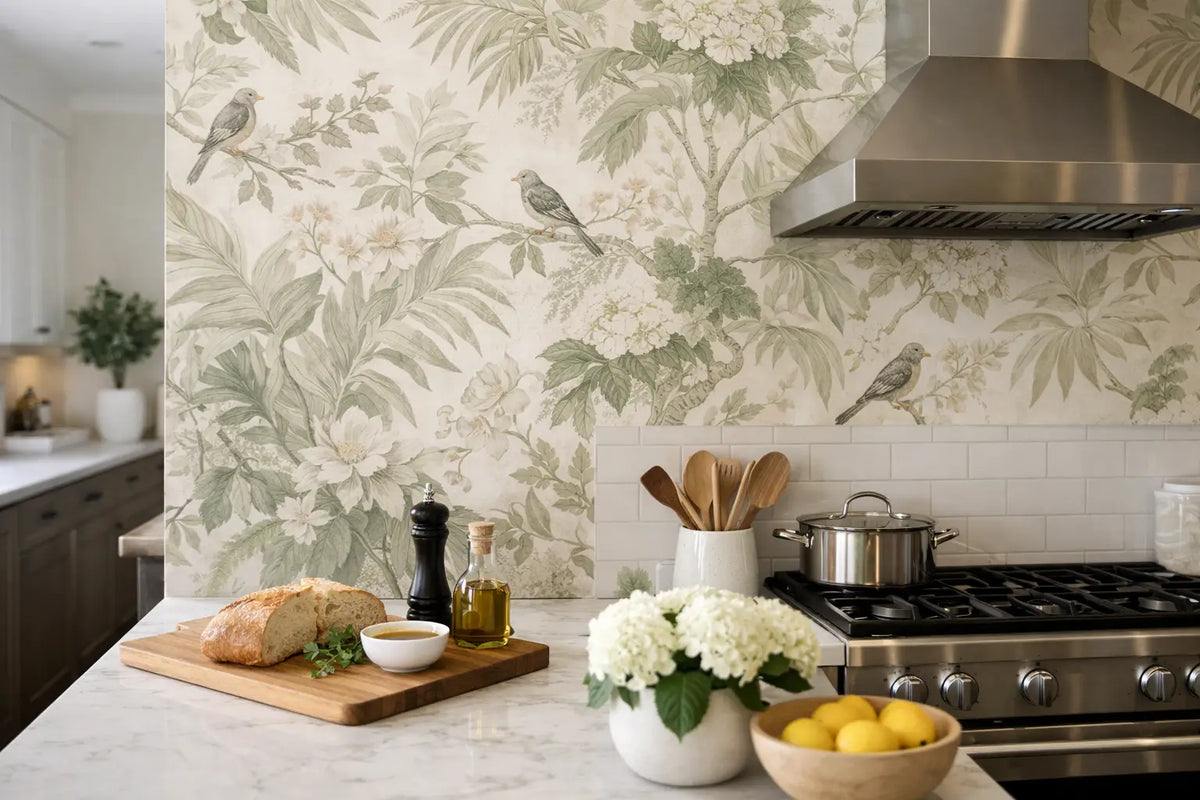
A kitchen backsplash may handle the splatter, but the walls still do plenty of visual work. So, can wallpaper work in kitchens? Absolutely - provided you choose a wallcovering suited to the room, place it thoughtfully, and give the installation the same attention you would any hardworking kitchen finish.
Wallpaper brings something paint often cannot: pattern, depth, and a finished point of view. A quiet stripe can make a compact breakfast nook feel taller. A botanical print can soften rows of cabinets and stone. A textured neutral can add warmth to a polished white kitchen without competing with the countertops. The key is designing for real life, not just the first reveal.
Can Wallpaper Work in Kitchens? The Short Answer
Yes, wallpaper can be a beautiful and practical choice in a kitchen, especially on walls away from direct water, grease, and high heat. Today's washable vinyl and vinyl-coated options offer more durability than many homeowners expect. Non-woven wallpaper can also be an excellent choice in lower-exposure areas, with easy handling and a refined, paper-like finish.
The answer depends on where the wallpaper will go. A wall behind a dining table, a pantry door surround, a breakfast nook, or the open expanse above a chair rail has a very different job than the wall directly behind a range. Treating every kitchen wall the same is where costly mistakes begin.
Kitchens are humid, active spaces. Steam from the dishwasher, everyday cooking residue, and frequent cleaning all affect how a wallcovering performs. Select the material for the location, then protect it with smart layout choices.
Choose the Material Before You Choose the Pattern
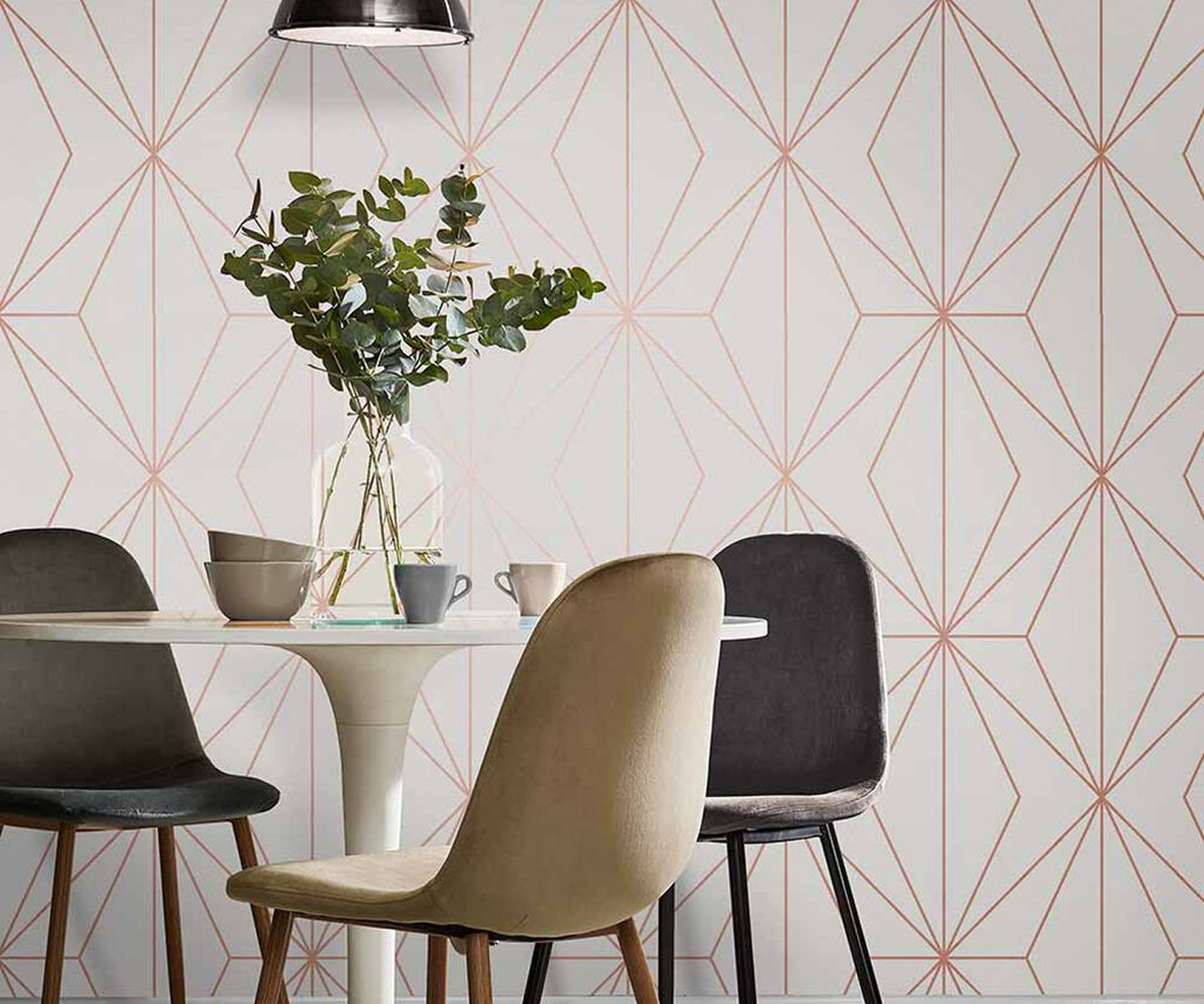
A pattern may be what catches your eye first, but material should guide the final decision. In most kitchens, washable wallpaper is the sensible starting point. Vinyl wallpaper is especially well suited to busy family kitchens because its surface can generally be wiped clean with a soft cloth and mild soap. It also offers an impressive range of looks, from crisp geometric prints to linen-like texture and classic florals.
Vinyl-coated paper offers another practical option for walls with ordinary kitchen traffic but less direct exposure. It can provide the character of traditional wallpaper with a more forgiving finish than uncoated paper. Always review the manufacturer's care instructions before ordering, since washability varies by product.
Non-woven wallpaper is popular for its installation benefits and sophisticated appearance. Many non-woven styles are paste-the-wall, which can make hanging easier, and they often remove more cleanly when it is time for a change. Use them on a breakfast-area wall, pantry exterior, or kitchen accent wall where they will not be routinely hit by grease or water.
Natural materials deserve a little more caution. Grasscloth, cork, flock, and other tactile wallcoverings add remarkable dimension, but they are not the first choice near a sink, stovetop, or heavily used prep area. Their beauty lies in their texture, and that texture can make splashes and stains difficult to remove. Save them for a dry kitchen wall or an adjacent dining space where they can make a stronger decorative statement without taking on the room's messiest jobs.
Where Wallpaper Belongs in a Kitchen
The best wallpaper placement is often not the most obvious one. Instead of covering every wall, look for a surface that benefits from definition. The wall around a breakfast banquette is a natural candidate. It frames the dining zone and gives the kitchen a sense of destination. A single wall opposite the cabinetry can provide color and movement while letting the cabinets remain the visual anchor.
Pantries are another opportunity. Wallpaper inside a walk-in pantry or on the wall visible when a pantry door is open adds a small moment of delight to an otherwise functional space. In a butler's pantry or beverage station, wallpaper can help create a distinct mood that connects the kitchen to the rest of the home.
If you want wallpaper near the sink or range, keep a durable backsplash between the wallcovering and the source of moisture or heat. Tile, stone, glass, or metal provides the protective barrier. Wallpaper above that backsplash can still bring personality to the space, as long as the material is appropriate and the wall is not receiving constant splatter.
Avoid placing standard wallpaper directly behind an open range, where heat and airborne grease are concentrated. Even a washable surface will be harder to maintain in that location. For that wall, a full-height backsplash is usually the better long-term finish.
Match the Scale to the Kitchen
A small kitchen does not automatically require a small pattern. In fact, a larger-scale print on one wall can make a compact room feel intentional rather than crowded. What matters is contrast and visual clutter. If your cabinets, counters, floor, and backsplash already feature strong movement, choose a wallpaper with a simpler repeat or tonal color story.
In a kitchen with quiet cabinetry and broad painted walls, wallpaper can carry more of the design. A lively botanical, traditional block print, or graphic lattice brings energy without requiring a complete remodel. Pull one or two colors from the paper for window treatments, counter stools, or dishware to make the room feel considered, not overly matched.
Light conditions matter, too. Kitchens with abundant daylight can handle deeper colors and bolder prints beautifully. In a darker kitchen, a pale ground color, reflective finish, or open pattern helps preserve brightness. Before committing, view a sample on the intended wall throughout the day. Overhead lighting, under-cabinet lights, and natural light can each reveal a different side of the design.
Preparation Is What Makes It Last
Wallpaper is only as reliable as the wall beneath it. Kitchen walls should be clean, dry, smooth, and free from cooking residue before installation. Even a thin film of grease can interfere with adhesion. Wash the wall thoroughly, allow it to dry completely, and repair cracks, dents, or loose paint.
Proper priming is equally important. A wallpaper-specific primer helps the adhesive bond consistently and makes future removal more manageable. This is not the step to skip, particularly in a room where temperature and moisture levels change frequently.
Pay attention to ventilation. A good range hood that vents effectively and routine use of exhaust fans help limit steam and airborne grease throughout the kitchen. If condensation regularly gathers on walls or windows, address that issue before adding wallpaper. No wallcovering is designed to solve an underlying moisture problem.
For intricate patterns, tricky corners, or walls around cabinetry and appliances, professional installation can be a worthwhile investment. Pattern matching, clean trimming, and secure edges make a noticeable difference in a highly visible room.
Everyday Care for Kitchen Wallpaper
Kitchen wallpaper does not need fussy maintenance, but it does benefit from prompt attention. Wipe small splashes before they set, using the cleaning method recommended for that specific wallcovering. Do not scrub textured or delicate papers, and avoid abrasive cleaners, bleach, and saturated sponges.
A washable vinyl surface is the easiest choice for households where cooking is frequent, children help in the kitchen, or pets have access to dining walls. Even then, gentler cleaning preserves the finish longer. Think of wallpaper as a decorative finish, not a backsplash substitute.
Keep an extra roll after installation whenever possible. It is useful for a future repair, a small panel inside a pantry, or a coordinating project elsewhere in the home. Since dye lots and availability can change, ordering a little extra at the beginning is often the simplest path to consistency.
Start With a Sample, Then Trust Your Eye
Wallpaper has a physical presence that is hard to judge from a screen. Texture, sheen, scale, and undertones all become clearer when you can hold a sample against cabinet doors, countertop material, and flooring. A warm white background may look creamy beside cool marble; a soft gray may pick up blue under kitchen lighting.
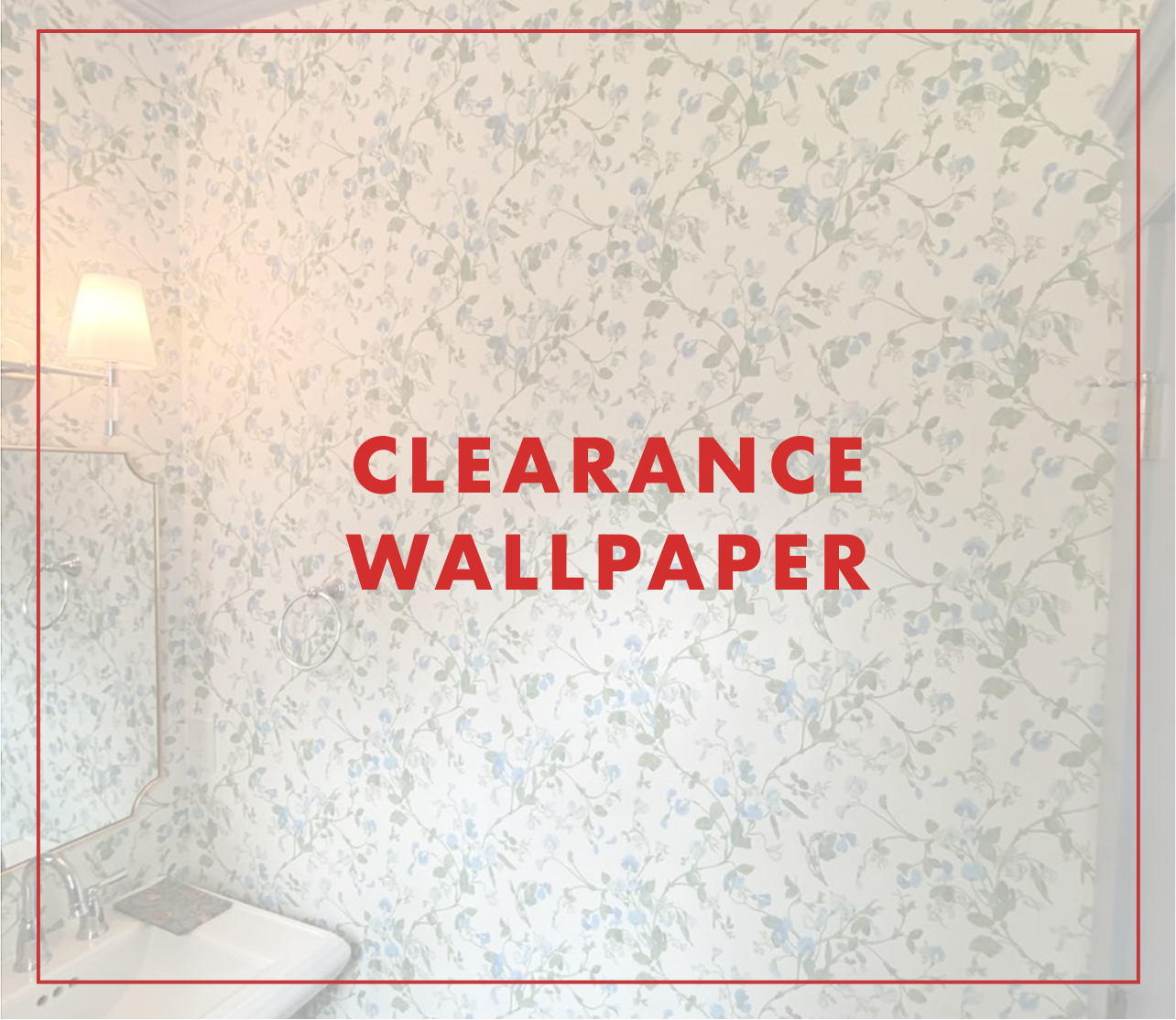
For homeowners in the Atlanta area, Wallpaper and Stuff's Smyrna showroom offers the chance to compare patterns and materials in person, while samples help bring that same confidence to decisions made at home. Look at the paper beside the finishes you already have, then imagine it after breakfast, after dinner, and on an ordinary busy weekday.
The right kitchen wallpaper should feel like more than a decorative layer. Chosen for the right wall and material, it gives a hardworking room warmth, character, and a reason to linger a little longer.